Of course! Let's break down what openconnection means in the context of Java. It's not a single method, but rather the fundamental concept of establishing a connection to an external resource, most commonly a database.
We'll cover the following:
- The Core Concept: What does "opening a connection" mean?
- The Standard API:
java.sql.Connectionand the JDBC workflow. - A Complete Code Example: A simple, runnable JDBC program.
- Modern Alternatives: Connection Pooling (e.g., HikariCP) and JPA/Hibernate.
- Best Practices: How to manage connections safely.
The Core Concept: What is a Connection?
In Java, when you "open a connection," you are creating a communication channel between your Java application and another system. This system is most often a database (like MySQL, PostgreSQL, Oracle, or SQLite), but it could also be another service.
Think of it like making a phone call:
- Your Application: The person making the call.
- The Database: The person you're calling.
- The Connection Object (
Connection): The active phone line. Once you have it, you can talk (send SQL queries) and listen (receive results). - Closing the Connection: Hanging up the phone. It's crucial to do this to free up resources.
The Standard API: JDBC (Java Database Connectivity)
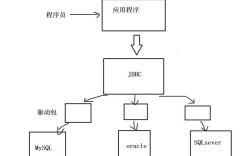
For traditional database access, Java uses the JDBC API. The central interface is java.sql.Connection. Here is the standard workflow to get a Connection object.
Step 1: Add the Database Driver
You need a "driver," which is a library that understands how to speak the specific database's protocol. For Maven projects, you add it to your pom.xml:
Example for PostgreSQL:
<dependency>
    <groupId>org.postgresql</groupId>
    <artifactId>postgresql</artifactId>
    <version>42.7.3</version> <!-- Use the latest version -->
</dependency>
Step 2: Load the Driver (Modern JDBC 4.0+)
For JDBC 4.0 (Java 6+) and later, you don't need to explicitly load the driver with Class.forName(). The driver manager will automatically find and load the correct registered driver when you provide the URL.
Step 3: Get the Connection using DriverManager
This is the core of "opening a connection." You use the DriverManager.getConnection() method, which requires three things:
- JDBC URL: A string that specifies the database location, type, and any connection parameters.
- Username: The database user.
- Password: The password for that user.
Common JDBC URL Formats:
- PostgreSQL:
jdbc:postgresql://hostname:port/database_name - MySQL:
jdbc:mysql://hostname:port/database_name - SQLite:
jdbc:sqlite:path/to/database/file.db
A Complete Code Example
Here is a full, runnable example that connects to a PostgreSQL database, executes a simple query, and properly closes all resources.
Prerequisites:
- Have a PostgreSQL server running.
- Create a database (e.g.,
testdb). - Create a user and grant permissions (e.g., user
postgreswith passwordpassword). - Add the PostgreSQL JDBC driver to your project.
import java.sql.Connection;
import java.sql.DriverManager;
import java.sql.ResultSet;
import java.sql.SQLException;
import java.sql.Statement;
public class OpenConnectionExample {
    // Database connection details
    // IMPORTANT: It's better to use environment variables or a config file for credentials.
    private static final String DB_URL = "jdbc:postgresql://localhost:5432/testdb";
    private static final String USER = "postgres";
    private static final String PASS = "password";
    public static void main(String[] args) {
        // The 'try-with-resources' statement ensures the connection is closed automatically.
        try (Connection conn = DriverManager.getConnection(DB_URL, USER, PASS)) {
            if (conn != null) {
                System.out.println("Connection to PostgreSQL successful!");
                // Create a statement object to execute queries
                try (Statement stmt = conn.createStatement();
                     // The result set is also a resource that needs to be closed
                     ResultSet rs = stmt.executeQuery("SELECT version()")) {
                    // Loop through the result set and print the version
                    if (rs.next()) {
                        System.out.println("PostgreSQL Database Version: " + rs.getString(1));
                    }
                }
            }
        } catch (SQLException e) {
            System.err.println("Connection to PostgreSQL failed!");
            e.printStackTrace();
        }
    }
}
Explanation of Key Parts:
try (Connection conn = ...): This is the try-with-resources statement. It's the modern, recommended way to handle resources like connections. It automatically calls theclose()method on theConnectionobject when thetryblock is exited, even if an exception occurs. This prevents resource leaks.DriverManager.getConnection(...): This is the method that actually "opens" the connection. It can throw aSQLExceptionif the connection fails (wrong URL, bad credentials, database is down).Statement stmt = conn.createStatement(): Once you have a connection, you create aStatementobject, which is used to execute SQL queries.ResultSet rs = stmt.executeQuery(...): TheexecuteQuery()method runs aSELECTstatement and returns aResultSet, which is a table of data representing the database result set.rs.next(): This method moves the cursor to the next row in theResultSet. It returnsfalsewhen there are no more rows.catch (SQLException e): Catches any database-related errors.
Modern Alternatives
Manually creating connections with DriverManager is simple but inefficient for real-world applications.
A. Connection Pooling
Opening a new database connection is a relatively slow and resource-intensive process. Connection pooling is a technique where a pool of reusable connections is maintained. When your application needs a connection, it borrows one from the pool, and when it's done, it returns it to the pool instead of closing it.
This is the standard practice in any serious application.
Popular Java Connection Pools:
- HikariCP: The de-facto standard. It's extremely fast and reliable.
- Apache DBCP: A classic, robust choice.
- c3p0: Another well-known option.
Example with HikariCP: First, add the dependency:
<dependency>
    <groupId>com.zaxxer</groupId>
    <artifactId>HikariCP</artifactId>
    <version>5.1.0</version> <!-- Use the latest version -->
</dependency>
Then, configure and use it:
import com.zaxxer.hikari.HikariConfig;
import com.zaxxer.hikari.HikariDataSource;
import java.sql.Connection;
import java.sql.ResultSet;
import java.sql.Statement;
public class HikariCPExample {
    public static void main(String[] args) {
        // 1. Configure the connection pool
        HikariConfig config = new HikariConfig();
        config.setJdbcUrl("jdbc:postgresql://localhost:5432/testdb");
        config.setUsername("postgres");
        config.setPassword("password");
        config.addDataSourceProperty("cachePrepStmts", "true");
        config.addDataSourceProperty("prepStmtCacheSize", "250");
        config.addDataSourceProperty("prepStmtCacheSqlLimit", "2048");
        // 2. Create the data source (the pool)
        try (HikariDataSource ds = new HikariDataSource(config)) {
            System.out.println("Connection pool created successfully.");
            // 3. Get a connection from the pool
            try (Connection conn = ds.getConnection()) {
                System.out.println("Got a connection from the pool: " + conn);
                try (Statement stmt = conn.createStatement();
                     ResultSet rs = stmt.executeQuery("SELECT 1")) {
                    if (rs.next()) {
                        System.out.println("Query result: " + rs.getInt(1));
                    }
                }
            } // The connection is returned to the pool here
        } // The pool is closed here
    }
}
B. JPA (Java Persistence API) and Hibernate
For most modern applications, you don't even write SQL directly. You use an ORM (Object-Relational Mapping) framework like Hibernate, which is the most popular implementation of JPA.
With JPA/Hibernate, you work with Java objects (Customer, Product, etc.), and the framework automatically generates and executes the necessary SQL to save, update, delete, and retrieve them from the database. The framework manages the underlying database connections for you through its own internal connection pool.
Best Practices
- NEVER Hardcode Credentials: Never put database usernames and passwords directly in your source code. Use environment variables, configuration files (like
application.properties), or a secrets management system. - Always Close Connections: Use
try-with-resourcesto guarantee