Of course! "Thinking in Java" is a legendary book in the programming world, and the phrase itself has become a synonym for a deep, object-oriented, and rigorous approach to Java development.
Let's break down what "Thinking in Java" means on several levels: the book, the philosophy, and the core concepts it champions.
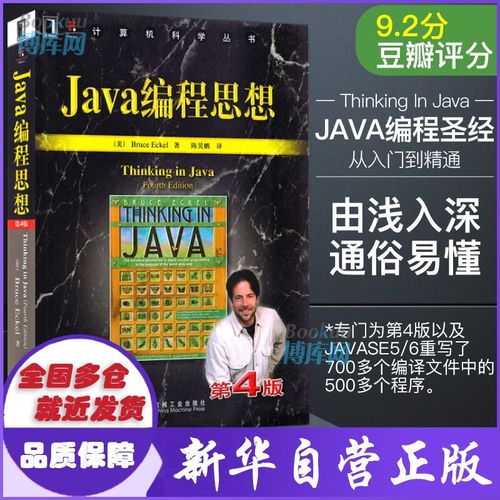
The Book: "Thinking in Java" by Bruce Eckel
This is the foundational text. Written by Bruce Eckel, it's not just a tutorial on Java syntax; it's a comprehensive guide to the mindset required to master the language and its underlying principles.
Key Characteristics of the Book:
- Depth over Breadth: It dives deep into the "why" behind Java's design choices, not just the "how." For example, it doesn't just show you how to write a
forloop; it explains iteration from theIterableandIteratorinterfaces up. - "Thinking" First: The book starts with the fundamental concepts of object-oriented programming (OOP) and problem-solving before introducing the first
public static void main. You learn to think in objects first. - Exceptional Clarity: Eckel is known for his clear, patient, and often witty writing style. Complex topics like concurrency, generics, and inner classes are broken down into digestible parts.
- Comprehensive Coverage: It covers the entire language, from the basics to advanced topics like:
- Collections Framework
- Concurrency (threads, locks, executors)
- Networking
- I/O (Streams, NIO)
- Generics
- Annotations
- JavaBeans
- And much more.
- Focus on Fundamentals: It emphasizes the core principles that apply not just to Java but to many other languages, making it an excellent book for learning programming fundamentals in general.
For whom is it best?
- Programmers coming from C/C++ who want to understand Java's OOP paradigm.
- Experienced developers who want to fill in the gaps and truly master Java.
- Ambitious beginners who are willing to put in the effort to learn "the right way" from the start.
The Philosophy: What "Thinking in Java" Means
This is the more abstract and important part. "Thinking in Java" is a programming philosophy. It means approaching code with a set of principles that lead to robust, maintainable, and scalable software.
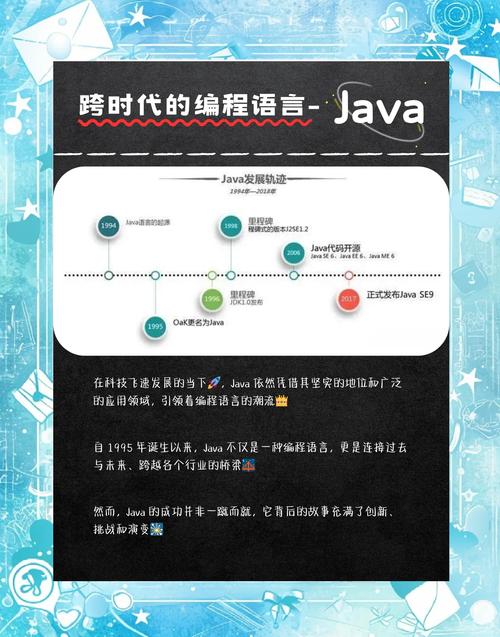
Here are the core tenets of this philosophy:
A. Embrace Object-Oriented Programming (OOP)
This is the absolute heart of the matter. It means thinking of your program as a collection of interacting objects, rather than a sequence of instructions.
- Encapsulation: Bundling data (fields) and the methods that operate on that data into a single unit (a class). You hide the internal state and only expose what's necessary through public methods. This protects the object's integrity.
- Inheritance: Creating a new class (a subclass) that is a modified version of an existing class (a superclass). This promotes code reuse and establishes an "is-a" relationship (e.g., a
Dogis anAnimal). - Polymorphism: The ability of an object to take on many forms. This is most commonly achieved through method overriding. A reference of a superclass type can refer to a subclass object, and the correct overridden method is called at runtime. This allows for flexible and decoupled code.
- Example: You can have a
Listreference point to anArrayList, aLinkedList, or aVector. Your code can work with theListinterface without caring about the specific implementation.
- Example: You can have a
B. Think in Terms of Interfaces, Not Just Implementations
This is a crucial step up from basic OOP. Instead of depending on a concrete class, you depend on an abstract interface.
- Why? It makes your code incredibly flexible and decoupled. You can change the underlying implementation without breaking any of the code that uses the interface.
- Example: Instead of writing a method that takes an
ArrayList:// Bad: Tightly coupled to ArrayList public void processList(ArrayList<String> list) { ... }You write a method that takes the
Listinterface: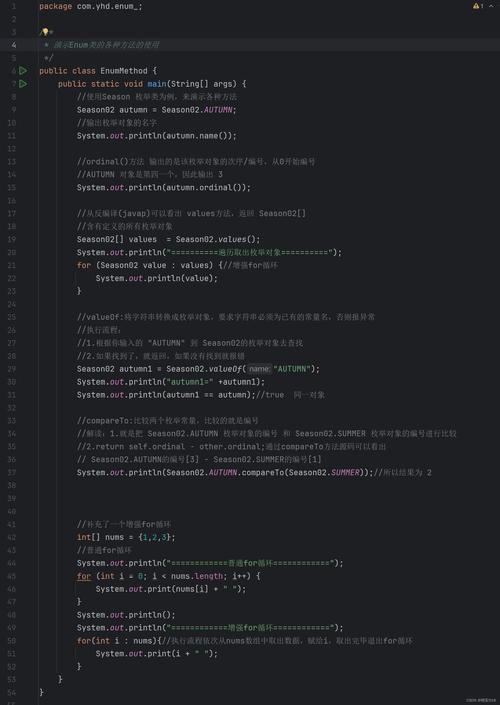 (图片来源网络,侵删)
// Good: Loosely coupled. Works with ANY List implementation. public void processList(List<String> list) { ... }This is a cornerstone of good design and is heavily emphasized in "Thinking in Java".
C. Master the Foundations (The "Java Way")
Java has a rich set of core libraries and idioms. "Thinking in Java" means knowing and using them effectively.
- The Collections Framework: Understand the differences and use cases for
List(ordered),Set(unique), andMap(key-value). Know your implementations:ArrayListvs.LinkedList,HashSetvs.TreeSet,HashMapvs.TreeMap. - Exception Handling: Use
try-catch-finallyblocks to manage errors gracefully, not to control program flow. Understand checked vs. unchecked exceptions. - Concurrency: Understand that Java is a multithreaded language. Learn about the
synchronizedkeyword, thejava.util.concurrentpackage (ExecutorService,Future,Atomicclasses), and the dangers of race conditions and deadlocks. - Generics: Use generics to write type-safe, reusable code without the need for casting. Understand type erasure and its limitations.
D. Write Reusable and Maintainable Code
This is the ultimate goal. The "thinking" part leads to code that is:
- Readable: Well-named variables, methods, and classes. Consistent formatting.
- Reusable: Encapsulated logic in small, single-purpose methods and classes that can be used in many different contexts.
- Testable: Decoupled code (thanks to interfaces!) is much easier to unit test in isolation.
- Extensible: Designed so that new features can be added with minimal changes to existing code (Open/Closed Principle).
Core Concepts Championed by "Thinking in Java"
Here is a list of specific topics that the book and philosophy hold in high regard:
- Everything is an Object (almost): Even primitive types have wrapper classes (
Integer,Character) that allow them to be treated as objects. - The
Stringis Immutable: Understand the implications of this for performance, security, and thread-safety. - The
mainMethod: The entry point, but not the center of the universe. Logic should be in separate classes. - Garbage Collection: You don't manage memory manually; the JVM does. Understand how it works (generational, mark-and-sweep) to write efficient applications.
- JavaDoc: Documentation is not an afterthought. It's a integral part of the code.
- The
ObjectClass: Every class in Java inherits fromObject. Knowing its methods (toString(),equals(),hashCode(),clone(),finalize()) is essential.
Summary
To "think in Java" is to move beyond being a coder who simply writes Java syntax. It is to become a software designer who:
- Architects solutions using objects and interfaces.
- Leverages the powerful, built-in libraries of the Java platform.
- Writes code that is robust, safe, and easy for others (and your future self) to understand and maintain.
It's a mindset that values correctness, clarity, and design over quick hacks and shortcuts. It's a journey, not a destination, and "Thinking in Java" is arguably the best map for that journey.