Of course! This is an excellent question because return and break are both used to exit from a certain block of code, but they do so in fundamentally different ways.
Let's break them down with clear definitions, analogies, and examples.
The Quick Analogy
-
breakis like saying "I'm done with this specific task." Imagine you're searching for a key in a set of boxes. You open one box, look inside, and the key isn't there. Youbreakout of that box and move on to the next one. You haven't finished your overall mission (finding the key), you've just finished with the current sub-task (searching that box). -
returnis like saying "I have completed the entire mission and here is the result." Imagine you're a chef in a kitchen. Your mission is to make a cake. Once the cake is done, youreturnthe finished cake to the customer. You are leaving the kitchen function entirely because your job is complete.
break: Exiting a Loop
The break statement is used to immediately terminate the current loop (for or while). The program's execution will jump to the first line of code after the loop.
Key Characteristics:
- Scope: Only affects the innermost loop it is in.
- Action: Exits the loop.
- Return Value: A
breakdoes not return a value. It simply stops the loop.
Example: Finding an Item in a List
Let's say we want to find the number 5 in a list and stop searching as soon as we find it.
numbers = [1, 9, 7, 5, 3, 4, 8]
# We are searching for the number 5
target = 5
print("Starting the search...")
for number in numbers:
    print(f"Checking if {number} is the target...")
    if number == target:
        print(f"Found it! The number is {number}.")
        break  # Exit the loop immediately, we don't need to check the rest
print("The loop has finished.")
# Output:
# Starting the search...
# Checking if 1 is the target...
# Checking if 9 is the target...
# Checking if 7 is the target...
# Checking if 5 is the target...
# Found it! The number is 5.
# The loop has finished.
Without the break, the loop would have continued to check 3, 4, and 8 even after finding 5.
return: Exiting a Function
The return statement does two things:
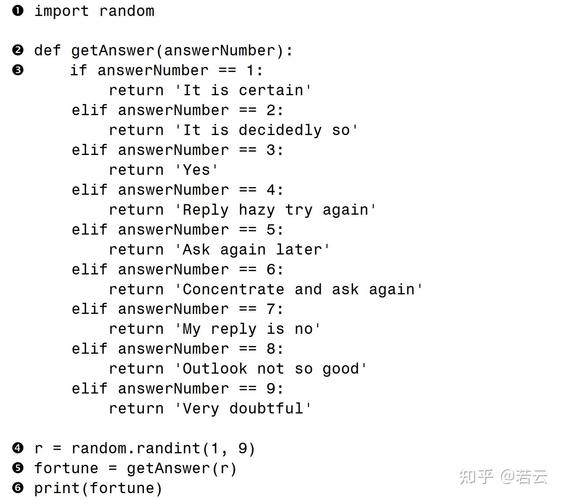
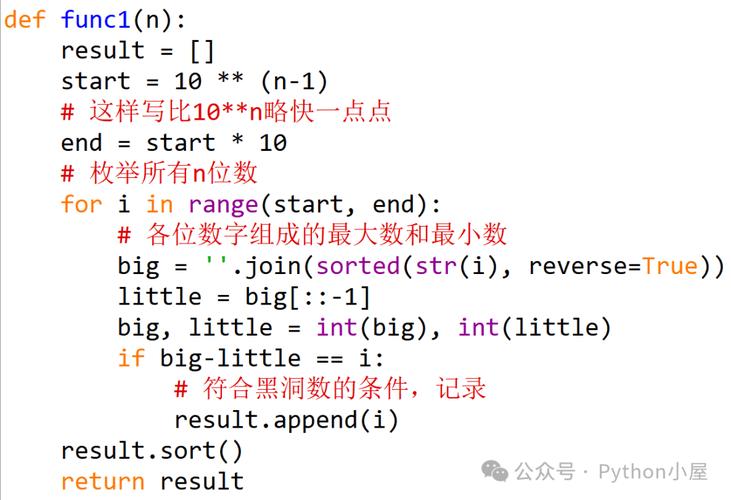
- It immediately terminates the execution of the entire function it is in.
- It optionally sends a value back to the code that called the function.
Key Characteristics:
- Scope: Exits the entire function.
- Action: Exits the function and can pass back a value.
- Return Value: You can (and often should) specify a value to return. If you don't, the function returns the special value
None.
Example: A Function to Check for an Item
Let's turn the previous search into a reusable function. The function's job is to find the number. If it finds it, it returns the number. If it goes through the whole list and doesn't find it, it returns None.
def find_number(data_list, target):
    """Searches for a target number in a list and returns it if found."""
    print(f"Searching for {target} in the list...")
    for number in data_list:
        if number == target:
            print(f"Found {target}!")
            return number  # Exit the function AND send the number back
        else:
            print(f"{number} is not the target.")
    # This line is only reached if the loop finishes without finding the target
    print(f"{target} was not found in the list.")
    return None # Explicitly return None if not found
# --- Let's use the function ---
my_numbers = [1, 9, 7, 5, 3, 4, 8]
# Case 1: The number is in the list
result = find_number(my_numbers, 5)
print(f"The function returned: {result}\n") # Output will be 5
# Case 2: The number is NOT in the list
result_not_found = find_number(my_numbers, 99)
print(f"The function returned: {result_not_found}") # Output will be None
In this example, when return number is executed, the find_number function stops completely. The for loop is also terminated because it's inside the function, but the primary action is exiting the function.
Key Differences Summarized
| Feature | break |
return |
|---|---|---|
| Purpose | Exit a loop (for or while). |
Exit a function. |
| Scope | Only affects the loop it is in. | Exits the entire function. |
| What it Returns | Nothing. It does not return a value. | Can return a value to the caller. If no value is given, it returns None. |
| Analogy | "I'm done with this one box." | "I'm done with my entire job, here is the result." |
| Common Use Case | Searching for an item and stopping when found. | Sending a calculated result back from a function. |
Can You Use return in a Loop? Yes!
This is where it can get confusing. You can absolutely use return inside a loop. When you do, the return statement takes precedence. It will exit the loop and the function immediately.
def find_even_number(data_list):
    """Finds the first even number in a list and returns it."""
    for number in data_list:
        if number % 2 == 0:
            print(f"Found an even number: {number}")
            return number  # This exits the loop AND the function
    # This line is only reached if the loop finishes (no even number found)
    return None
my_numbers = [1, 3, 7, 9, 11]
result = find_even_number(my_numbers)
print(f"The function returned: {result}")
# Output:
# The function returned: None
In this code, the return number is inside the loop. As soon as it finds an even number (which it doesn't in this case), it would stop the loop and the function.
The Ultimate Conflict: break vs. return in a Loop Inside a Function
This is the most important distinction to understand.
break: Stops the loop, but the function continues to execute.return: Stops the loop, and the function stops completely.
Let's prove it.
def demonstrate_break_vs_return():
    print("Function started.")
    for i in range(5):
        print(f"Loop iteration: {i}")
        if i == 2:
            print("\n--- Using break ---")
            break  # Exits the loop, but not the function
            print("This line will never be reached.")
    print("Loop finished, but function continues to run.")
    print("Function finished.\n")
def demonstrate_return_vs_break():
    print("Function started.")
    for i in range(5):
        print(f"Loop iteration: {i}")
        if i == 2:
            print("\n--- Using return ---")
            return  # Exits the loop AND the function
            print("This line will never be reached.")
    print("This line will also never be reached.")
    print("Function finished.")
print("--- Calling function with break ---")
demonstrate_break_vs_return()
print("\n--- Calling function with return ---")
demonstrate_return_vs_return()
Output:
--- Calling function with break ---
Function started.
Loop iteration: 0
Loop iteration: 1
Loop iteration: 2
--- Using break ---
Loop finished, but function continues to run.
Function finished.
--- Calling function with return ---
Function started.
Loop iteration: 0
Loop iteration: 1
Loop iteration: 2
--- Using return ---
Notice how after break, the code after the loop (print("Loop finished...")) was executed. After return, nothing else in the function was executed. The program jumped directly back to the caller.