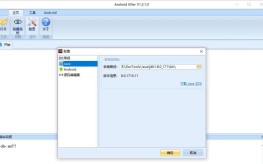
Of course! Let's dive deep into Eric IDE, a powerful and feature-rich Integrated Development Environment for Python.

Here's a comprehensive breakdown covering what it is, who it's for, its key features, pros and cons, and how to get started.
What is Eric IDE?
Eric IDE (often just called "Eric") is a free, open-source, and cross-platform Python IDE. It's built using the Qt framework and is written in Python itself.
Its most defining characteristic is that it's not just a text editor; it's a fully integrated development environment that combines a powerful code editor with a graphical debugger, a project management tool, and a suite of other utilities, all within a single, cohesive application.
Think of it as a "Swiss Army knife" for Python development, designed to give you a professional, all-in-one workspace without needing to install a dozen different tools.
Who is Eric IDE For?
Eric IDE is a fantastic choice for a specific type of developer:
- Python Developers: It's its primary target audience.
- Developers who prefer a self-contained IDE: If you like having your editor, debugger, and project manager in one window, Eric is for you.
- Qt/C++ Developers: Since Eric is built on Qt, it has excellent support for Qt development, making it a great choice for Python developers using PyQt or PySide.
- Developers on Linux: Eric has deep roots in the Linux community and is a staple on many distributions (often available in the default repositories).
- Users who value customization: Eric is highly configurable, allowing you to tailor the interface and behavior to your liking.
It might be overkill for someone who just wants to write simple, one-off Python scripts. For them, a simpler editor like VS Code or Thonny might be a better fit.
Key Features
This is where Eric truly shines. It packs a huge number of features under the hood.
The Editor
- Syntax Highlighting: Supports not just Python, but C/C++, HTML, CSS, JavaScript, SQL, and many more languages.
- Code Completion: Intelligent autocompletion based on built-in keywords, imported modules, and your own code.
- Code Folding: Allows you to collapse and expand blocks of code (functions, classes, loops) for better readability.
- Calltips: Displays function signatures and docstrings as you type a function call.
- Integrated Python Shell: A Python interpreter window is built right in, so you can test code snippets on the fly without leaving the IDE.
The Debugger (Star of the Show)
This is Eric's killer feature. It's a graphical front-end for the standard Python pdb debugger.
- Visual Breakpoints: Click in the gutter to set breakpoints. The IDE will show you exactly where the execution has stopped.
- Variable Inspection: When the code is paused, you can inspect the values of all local and global variables in a dedicated window.
- Step-by-Step Execution: You can execute your code line-by-line (
Step Over), dive into function calls (Step Into), or step out of the current function (Step Out). - Stack Viewer: See the call stack, showing you the path the program took to get to the current line.
- Conditional Breakpoints: You can set breakpoints that only trigger when a certain condition is met (e.g.,
if x > 100).
Project Management
- Project Browser: A dedicated tree view of your project files, making it easy to navigate large codebases.
- Integrated Version Control: Eric has built-in support for Git, Mercurial (Hg), and Subversion (SVN), allowing you to commit, push, pull, and see diffs without leaving the IDE.
Integrated Tools
Eric comes with a suite of useful tools that you can launch directly from the interface:
- UML Diagram Generator: Create class and sequence diagrams from your Python code. This is incredibly useful for visualizing application architecture.
- Regular Expression Tester: A tool for building and testing regular expressions in real-time.
- Icon Editor: A simple tool for creating icons for your applications.
- Task Manager: A to-do list manager where you can add comments in your code (e.g.,
# TODO: Refactor this function) and have them all appear in a single list.
Customization
- Themes: You can change the color scheme of the editor and interface.
- Toolbars and Layouts: You can customize which toolbars are visible and even save different window layouts for different tasks (e.g., a "Debugging" layout and a "Writing" layout).
Pros and Cons
Pros ✅
- All-in-One Solution: No need to configure a separate debugger, terminal, or project manager.
- Powerful Debugger: The graphical debugger is arguably one of the best available for Python and is very easy to use.
- Excellent for Qt Development: Seamless integration with PyQt/PySide.
- Highly Customizable: Can be tailored to almost any workflow.
- Free and Open Source: No cost, no vendor lock-in.
- Cross-Platform: Works on Windows, macOS, and Linux.
Cons ❌
- Steeper Learning Curve: The sheer number of features and windows can be overwhelming for beginners. It's not as immediately intuitive as something like VS Code or Thonny.
- Can Feel Dated: The user interface, while functional, hasn't had a major modern redesign in years and can look a bit clunky compared to contemporary IDEs.
- Less Popular Community: This means fewer tutorials, extensions (though it has its own plugin system), and a smaller community to ask for help compared to giants like VS Code or PyCharm.
How to Get Started
-
Installation:
- Linux: The easiest way. Use your distribution's package manager.
- Debian/Ubuntu:
sudo apt-get install eric - Fedora:
sudo dnf install eric
- Debian/Ubuntu:
- Windows/macOS: The best way is to use a Python package installer like
pip.pip install eric-ide- This will install Eric and all its dependencies.
- Linux: The easiest way. Use your distribution's package manager.
-
First Run:
- Launch Eric. You'll be greeted with a project dialog. You can create a new project or open an existing one.
- The main window will open, likely with several panels: the editor, a file browser, and a Python shell.
-
Creating a Simple Script:
-
In the file browser, right-click and select "New..." -> "Python File".
-
Paste this simple code:
def greet(name): """A simple function to greet someone.""" return f"Hello, {name}!" if __name__ == "__main__": user_name = "World" message = greet(user_name) print(message) -
Save the file (e.g.,
hello.py).
-
-
Running Your Code:
- You can press F5 to run the script in the integrated Python shell. The output will appear at the bottom of the screen.
-
Using the Debugger (A Quick Example):
- Click in the gray margin next to the line
message = greet(user_name)to set a breakpoint (a red dot will appear). - Press F5 again to run the script.
- Execution will pause at your breakpoint.
- Look at the "Variables" window. You will see that
user_nameis now defined and its value is "World". - Press the Step Over button (or press F7) to execute the current line.
- Now, look at the variables again. The
messagevariable has appeared with the value "Hello, World!". - Press the Continue button (or F5) to let the script finish.
- Click in the gray margin next to the line
Eric IDE vs. The Competition
| Feature | Eric IDE | VS Code | PyCharm Community | Thonny |
|---|---|---|---|---|
| Type | Self-contained IDE | Extensible Editor | Full-featured IDE | Beginner's IDE |
| Debugger | Excellent (Graphical) | Excellent (Graphical) | Excellent (Graphical) | Excellent (Graphical) |
| Setup | Can be complex | Very Easy | Easy | Very Easy |
| Customization | High (built-in) | Extremely High (Extensions) | High (built-in) | Low |
| Learning Curve | Medium | Low | Medium | Very Low |
| Best For | Python/Qt devs who want a powerful, all-in-one tool. | Versatility, web dev, data science, massive extension library. | Professional Python development, large web frameworks (Django, Flask). | Absolute beginners, kids, learning programming fundamentals. |
Final Verdict
Eric IDE is a hidden gem. It's a powerful, mature, and incredibly capable Python IDE that offers a professional development experience without any cost.
While it may not have the modern sheen or massive community of VS Code, its integrated nature and, in particular, its outstanding graphical debugger make it a top-tier choice for serious Python developers who value a streamlined workflow. If you're willing to invest a little time to learn its interface, you'll be rewarded with a tool that can handle nearly any task you throw at it.