Of course! "Boring stuff" is the absolute best kind of stuff to learn with Python. It's the foundation that lets you do the cool stuff.

Let's break down the "boring" but essential parts of Python. This is the stuff that makes you a reliable programmer, not just a "hacker" who can script a few things together.
We'll cover:
- Variables and Data Types: The basic building blocks.
- Control Flow: The "if/else" and "for/while" logic.
- Functions: Creating reusable blocks of code.
- Error Handling: Dealing with things going wrong gracefully.
- Working with Files: Reading and writing data.
- Modules and Libraries: Using other people's code to save time.
Variables and Data Types (The "Nouns" of Programming)
This is where you store information. Think of them as labeled boxes.
# Assigning values to variables (putting stuff in boxes)
name = "Alice"        # A string (text) - needs quotes
age = 30              # An integer (a whole number)
height = 5.6          # A float (a number with a decimal)
is_student = True     # A boolean (True or False)
# You can print them to see what's inside
print(name)
print(age)
print("Is Alice a student?", is_student)
Why it's "boring" but essential: Every single program you ever write will use variables. Getting comfortable with them is like learning the alphabet. You can't write a sentence without knowing the letters.

Control Flow (The "Verbs" - Making Decisions and Repeating Actions)
This is the logic that makes your program smart.
if, elif, else (Making Decisions)
This lets your program run different code based on a condition.
temperature = 15
if temperature > 25:
    print("It's a hot day! Wear sunscreen.")
elif temperature > 15:  # "else if"
    print("It's a pleasant day.")
else:
    print("It's a bit chilly. Bring a jacket.")
Why it's "boring" but essential: Real-world problems are full of conditions. "If the user is logged in, show their dashboard. If not, show the login page." This is the core of that logic.
for and while Loops (Repeating Tasks)
Sometimes you need to do the same thing over and over again.

for loop: Do something a specific number of times.
Perfect for going through a list of items.
# A list of tasks
tasks = ["wash dishes", "do laundry", "buy groceries"]
# For each 'task' in the 'tasks' list...
for task in tasks:
    print(f"I need to: {task}")
while loop: Keep doing something as long as a condition is true.
Be careful! If the condition is never false, you get an "infinite loop."
countdown = 5
while countdown > 0:
    print(f"Countdown: {countdown}")
    countdown = countdown - 1 # Or use the shortcut: countdown -= 1
print("Blast off!")
Why it's "boring" but essential: Imagine manually processing 1,000 lines of data from a file. Without a loop, you'd be writing 1,000 lines of code. Loops automate this, making you incredibly efficient.
Functions (Creating Your Own Tools)
If you find yourself writing the same block of code over and over, you should put it in a function.
# Define a function that takes a name and a greeting
def greet(greeting, name):
    """This is a docstring. It explains what the function does."""
    message = f"{greeting}, {name}! Welcome."
    print(message)
# Now you can "call" or use the function as many times as you want
greet("Hello", "Bob")
greet("Good morning", "Charlie")
Why it's "boring" but essential: Functions are the key to writing clean, organized, and reusable code. They break down a huge problem into small, manageable pieces. This is the difference between a messy script and a professional application.
Error Handling (Preparing for the Worst)
Things go wrong. Files don't exist, users enter text instead of numbers, network connections fail. try...except lets you handle these errors without crashing your program.
# Let's try to open a file that might not exist
filename = "non_existent_file.txt"
try:
    with open(filename, 'r') as file:
        content = file.read()
        print("File content:", content)
except FileNotFoundError:
    print(f"Error: The file '{filename}' was not found.")
except Exception as e:
    print(f"An unexpected error occurred: {e}")
Why it's "boring" but essential: A program that crashes on the first error is useless. Error handling makes your code robust. It's the difference between a fragile house of cards and a building with a solid foundation.
Working with Files (Interacting with the Real World)
Most programs need to read or write data. Python makes this easy with the open() function.
# --- WRITING to a file ---
# 'w' mode means "write". It will create the file or overwrite it.
with open("my_tasks.txt", 'w') as f:
    f.write("1. Learn Python\n")
    f.write("2. Build a cool project\n")
    f.write("3. Get a job\n")
print("File written successfully.")
# --- READING from a file ---
# 'r' mode means "read".
with open("my_tasks.txt", 'r') as f:
    print("\n--- Reading file contents ---")
    # .read() reads the whole file at once
    content = f.read()
    print(content)
    # .readlines() reads each line into a list
    f.seek(0) # Go back to the start of the file
    lines = f.readlines()
    print("\n--- Reading line by line ---")
    for line in lines:
        print(line.strip()) # .strip() removes extra whitespace/newlines
Why it's "boring" but essential: This is how you save data, process logs, read configuration files, and import/export data from other systems. It's the bridge between your Python code and the files on your computer.
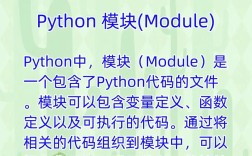
Modules and Libraries (Standing on the Shoulders of Giants)
You don't have to reinvent the wheel. Python has a massive collection of pre-written code called "modules" and "libraries" that you can import to do complex things easily.
# Import the 'math' module for advanced math
import math
print(f"The square root of 16 is: {math.sqrt(16)}")
print(f"Pi is approximately: {math.pi}")
# Import a specific function from the 'random' module
from random import choice
names = ["Alice", "Bob", "Charlie", "Diana"]
winner = choice(names)
print(f"The winner is: {winner}")
# Use a powerful third-party library (you'd first need to install it with pip)
# Example: pip install requests
# import requests
# response = requests.get("https://api.github.com")
# print(f"GitHub API status: {response.status_code}")
Why it's "boring" but essential: This is what makes Python so powerful. Instead of writing 100 lines of code to make a web request, you import the requests library and do it in 2 lines. Learning to use libraries is the fastest way to move from "boring" basics to "cool" projects.
Summary: Why "Boring Stuff" is Awesome
Mastering these "boring" fundamentals is like learning grammar. It's not as flashy as writing a poem, but it's the only way you'll ever be able to write one. With these tools, you can:
- Organize your code with functions and variables.
- Build logic with
ifstatements and loops. - Create reliable programs that handle errors.
- Interact with real data by reading and writing files.
- Solve complex problems by using powerful libraries.
Once you're comfortable with these, you'll be amazed at how quickly you can start building the "cool stuff."