Of course! The question of how to get the length of a ResultSet in Python is very common, but the answer depends entirely on what kind of ResultSet you are using.
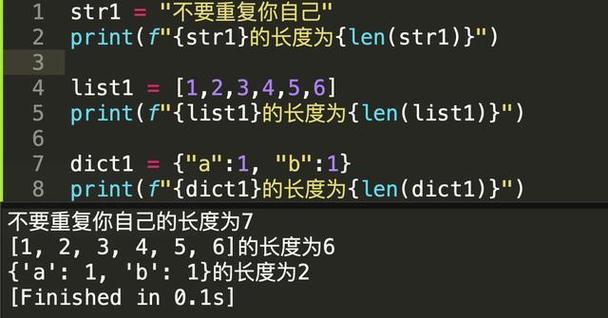
There isn't a single, universal ResultSet object in Python. It's a term used by different database libraries to represent the results of a query.
Here’s a breakdown of the most common scenarios.
When len() Works Directly (The Easy Case)
Some database libraries have a ResultSet that behaves like a Python list or tuple, and you can simply use len() on it.
Example: sqlite3
The built-in sqlite3 library returns a list of tuple objects when you fetch all results. Since list has a length, len() works perfectly.

import sqlite3
# Create an in-memory database and a table
conn = sqlite3.connect(':memory:')
cursor = conn.cursor()
cursor.execute('''
    CREATE TABLE users (id INTEGER, name TEXT)
''')
cursor.execute("INSERT INTO users VALUES (1, 'Alice'), (2, 'Bob'), (3, 'Charlie')")
conn.commit()
# Fetch all results
results = cursor.fetchall()  # This returns a list: [(1, 'Alice'), (2, 'Bob'), (3, 'Charlie')]
# Now you can use len()
print(f"The type of 'results' is: {type(results)}")
print(f"The length of the result set is: {len(results)}")  # Output: 3
conn.close()
Key takeaway: sqlite3's fetchall() returns a standard Python list, so len() is the correct and most efficient way to get the count.
The Most Common Case: psycopg2 (PostgreSQL)
When using the popular psycopg2 library for PostgreSQL, the cursor.description attribute holds the count of columns, not the count of rows. Trying len() on the result of fetchall() will give you the number of rows, but it's inefficient because it loads the entire dataset into memory first.
The best and most efficient way to get the row count is to use a SELECT COUNT(*) query.
Example: Inefficient vs. Efficient
Let's assume you have a table logs with millions of rows.
import psycopg2
# --- Setup (replace with your actual connection details) ---
conn = psycopg2.connect(
    dbname="your_db",
    user="your_user",
    password="your_password",
    host="localhost"
)
cursor = conn.cursor()
# ---------------------------------------------------------
# --- Method 1: The WRONG way (Inefficient for large datasets) ---
# This will fetch ALL rows into memory, which is bad for a large table.
cursor.execute("SELECT * FROM logs")
all_rows = cursor.fetchall()
# print(len(all_rows)) # This works, but can crash your program with a large table.
# --- Method 2: The RIGHT way (Efficient) ---
# This sends a separate, highly optimized query to the database to get just the count.
cursor.execute("SELECT COUNT(*) FROM logs")
row_count = cursor.fetchone()[0] # fetchone() gets the single result, [0] gets the count value
print(f"The number of rows in the 'logs' table is: {row_count}")
# --- Cleanup ---
cursor.close()
conn.close()
*Why is `SELECT COUNT()` better?**
- Memory Efficiency: The database does all the counting. You never transfer millions of rows to your Python application.
- Performance: Databases have highly optimized indexes and internal counters for
COUNT(*). It's often a near-instantaneous operation, even on massive tables.
Other Popular Libraries (MySQL, Oracle, etc.)
The principle from psycopg2 applies to most other database libraries like mysql-connector-python, cx_Oracle, etc.
- Avoid
len(cursor.fetchall())for large datasets. - *Use `SELECT COUNT()`** for an efficient, memory-safe way to get the total number of rows a query would return.
The Modern Approach: SQLAlchemy
SQLAlchemy is an Object-Relational Mapper (ORM) that provides a more abstracted way to interact with databases. The recommended way to get a count is to use its built-in functions.
Example: Using SQLAlchemy Core (the SQL Expression Language)
from sqlalchemy import create_engine, func, MetaData, Table, select
# Setup (replace with your connection string)
engine = create_engine('sqlite:///:memory:') # Using in-memory SQLite for this example
metadata = MetaData()
# Define a table
users = Table('users', metadata,
    Column('id', Integer, primary_key=True),
    Column('name', String)
)
metadata.create_all(engine)
# Insert some data
with engine.connect() as conn:
    conn.execute(users.insert().values(id=1, name='Alice'))
    conn.execute(users.insert().values(id=2, name='Bob'))
    conn.commit()
# --- The SQLAlchemy way to get a count ---
stmt = select(func.count()).select_from(users)
with engine.connect() as conn:
    result = conn.execute(stmt)
    row_count = result.scalar_one() # .scalar_one() is perfect for a single-value result
print(f"The number of users is: {row_count}") # Output: 2
Example: Using SQLAlchemy ORM (Object Relational Mapper)
If you are using the ORM, the process is even simpler.
from sqlalchemy import create_engine, Column, Integer, String
from sqlalchemy.orm import sessionmaker
from sqlalchemy.ext.declarative import declarative_base
Base = declarative_base()
class User(Base):
    __tablename__ = 'users'
    id = Column(Integer, primary_key=True)
    name = Column(String)
# Setup (same as above)
engine = create_engine('sqlite:///:memory:')
Base.metadata.create_all(engine)
Session = sessionmaker(bind=engine)
session = Session()
# Insert some data
session.add(User(id=1, name='Alice'))
session.add(User(id=2, name='Bob'))
session.commit()
# --- The SQLAlchemy ORM way to get a count ---
user_count = session.query(User).count()
print(f"The number of users is: {user_count}") # Output: 2
session.close()
Summary: Which Method to Use?
| Library/Framework | Recommended Method | Why? |
|---|---|---|
sqlite3 |
len(cursor.fetchall()) |
fetchall() returns a standard Python list, so len() is efficient and correct. |
psycopg2 |
SELECT COUNT(*) query |
fetchall() loads all data into memory. COUNT(*) is highly optimized by the database. |
mysql-connector-python |
SELECT COUNT(*) query |
Same reason as psycopg2. |
cx_Oracle |
SELECT COUNT(*) query |
Same reason as psycopg2. |
| SQLAlchemy Core | select(func.count()).select_from(...) |
The idiomatic, database-agnostic way to perform a count. |
| SQLAlchemy ORM | session.query(Model).count() |
The simplest and most direct method when using the ORM. |
Final Rule of Thumb: If you just need the number of rows and not the actual data, *always prefer `SELECT COUNT()`**. It is the most performant and memory-efficient solution for any database.