Of course! Let's break down "parameters in Java" from the ground up. This is a fundamental concept, so we'll cover everything from the basics to more advanced topics.
The Core Concept: What is a Parameter?
Think of a method as a machine or a recipe. A parameter is an input you give to that method to help it do its job.
- Analogy: A recipe for a cake might say "add 2 cups of flour". The "2 cups of flour" is a parameter. You can't make the cake without providing that specific input.
- In Code: A method is declared with parameters, and when you call that method, you must provide arguments that match those parameters.
Key Distinction:
- Parameter: The variable listed inside the parentheses in the method definition. It's a placeholder.
- Argument: The actual value you pass to the method when you call it.
Basic Syntax: Declaring and Using Parameters
Here is the basic structure for a method with parameters.
a. Method Definition (Declaring the Parameter)
public returnType methodName(DataType parameterName1, DataType parameterName2) {
    // Method body (code that uses the parameters)
    // ...
}
returnType: The type of data the method returns (e.g.,int,String,void).methodName: The name of your method.DataType: The type of data the parameter will hold (e.g.,int,String,double).parameterName: The name of the variable inside the method.
b. Method Call (Passing the Argument)
// Calling the method and providing arguments
methodName(actualValue1, actualValue2);
actualValue1,actualValue2: These are the arguments. They must be of a type that can be assigned to the parameters.
Practical Examples
Let's see this in action with a few examples.
Example 1: A Simple Method with One Parameter
This method takes a String name and prints a personalized greeting.
public class Greeter {
    // Method definition: 'name' is the parameter
    public void sayHello(String name) {
        System.out.println("Hello, " + name + "!");
    }
    public static void main(String[] args) {
        Greeter greeter = new Greeter();
        // Method call: "Alice" and "Bob" are the arguments
        greeter.sayHello("Alice"); // Output: Hello, Alice!
        greeter.sayHello("Bob");   // Output: Hello, Bob!
    }
}
Example 2: A Method with Multiple Parameters
This method calculates the area of a rectangle. It needs two pieces of information: the width and the height.
public class Calculator {
    // Method definition: 'width' and 'height' are parameters
    public int calculateArea(int width, int height) {
        return width * height;
    }
    public static void main(String[] args) {
        Calculator calc = new Calculator();
        // Method calls: 5, 10 and 8, 3 are the arguments
        int area1 = calc.calculateArea(5, 10);
        System.out.println("Area 1: " + area1); // Output: Area 1: 50
        int area2 = calc.calculateArea(8, 3);
        System.out.println("Area 2: " + area2); // Output: Area 2: 24
    }
}
Example 3: A Method with Different Data Types
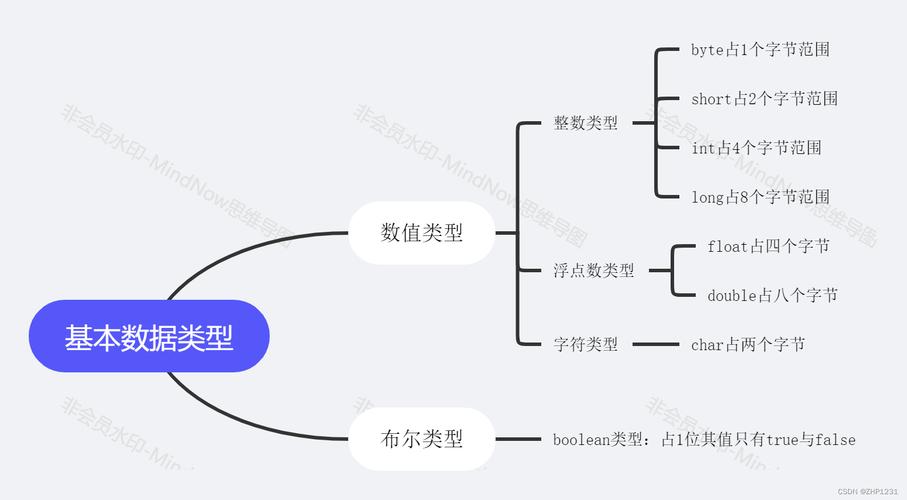
Methods can have parameters of any valid Java type.
public class DataPrinter {
    // This method takes a String and an integer
    public void printDetails(String productName, int quantity) {
        System.out.println("Product: " + productName);
        System.out.println("Quantity in stock: " + quantity);
    }
    public static void main(String[] args) {
        DataPrinter printer = new DataPrinter();
        printer.printDetails("Laptop", 50);
        // Output:
        // Product: Laptop
        // Quantity in stock: 50
    }
}
Advanced Topics
Now let's explore more complex but crucial aspects of parameters in Java.
a. Pass-by-Value
This is one of the most important concepts in Java. Java is always pass-by-value.
What does this mean?
- For primitive types (
int,double,char,boolean, etc.), Java passes a copy of the value. - For object references (e.g.,
String,ArrayList, any custom class), Java passes a copy of the reference (the memory address), not the object itself.
Let's illustrate both.
Pass-by-Value with Primitives
When you pass a primitive, the method gets a copy. Changes to the copy inside the method do not affect the original variable.
public class PrimitivePass {
    public static void modifyValue(int x) {
        x = 100; // This only changes the copy of 'x'
        System.out.println("Inside method: x = " + x);
    }
    public static void main(String[] args) {
        int num = 10;
        System.out.println("Before method call: num = " + num);
        modifyValue(num);
        System.out.println("After method call: num = " + num); // The original 'num' is unchanged
    }
}
Output:
Before method call: num = 10
Inside method: x = 100
After method call: num = 10
Pass-by-Value with Object References
When you pass an object, the method gets a copy of the reference. This copy points to the same original object. Therefore, if the method uses that reference to modify the object's state, the change will be visible outside the method. However, if the method re-assigns the reference variable to a new object, the original reference is not affected.
public class ObjectPass {
    // A simple class to demonstrate
    static class Dog {
        String name;
        Dog(String name) {
            this.name = name;
        }
    }
    // This method changes the object's state
    public static void changeDogName(Dog d) {
        d.name = "Rex"; // 'd' points to the same dog object as 'myDog'
    }
    // This method re-assigns the reference
    public static void reassignReference(Dog d) {
        d = new Dog("Buddy"); // 'd' now points to a new Dog object. This does NOT affect 'myDog'.
    }
    public static void main(String[] args) {
        Dog myDog = new Dog("Max");
        System.out.println("Before change: " + myDog.name); // Max
        changeDogName(myDog);
        System.out.println("After change: " + myDog.name); // Rex (The object was modified)
        reassignReference(myDog);
        System.out.println("After reassign: " + myDog.name); // Rex (The original reference is unchanged)
    }
}
Output:
Before change: Max
After change: Rex
After reassign: Rex
b. Varargs (Variable Arguments)
Sometimes you want a method to accept a variable number of arguments. Java provides a feature called varargs for this.
You use an ellipsis () after the parameter type.
Syntax: returnType methodName(DataType... parameterName)
Important: A method can have only one varargs parameter, and it must be the last parameter in the list.
public class VarargsExample {
    // This method can take 0 or more integers
    public static int sum(int... numbers) {
        int total = 0;
        for (int number : numbers) {
            total += number;
        }
        return total;
    }
    public static void main(String[] args) {
        System.out.println("Sum of nothing: " + sum());      // Output: Sum of nothing: 0
        System.out.println("Sum of 1: " + sum(5));         // Output: Sum of 1: 5
        System.out.println("Sum of 2: " + sum(1, 2, 3));   // Output: Sum of 2: 6
        System.out.println("Sum of 4: " + sum(10, 20, 30, 40)); // Output: Sum of 4: 100
    }
}
c. Method Overloading
You can have multiple methods with the same name in the same class, as long as their parameter lists are different. This is called method overloading. The difference can be in the number of parameters or their data types.
Return type alone is NOT enough to distinguish overloaded methods.
public class Overloader {
    // Method 1: One int parameter
    public void print(int number) {
        System.out.println("Printing an integer: " + number);
    }
    // Method 2: One String parameter (Overloaded based on type)
    public void print(String text) {
        System.out.println("Printing a string: " + text);
    }
    // Method 3: Two int parameters (Overloaded based on number)
    public void print(int num1, int num2) {
        System.out.println("Printing two integers: " + num1 + ", " + num2);
    }
    public static void main(String[] args) {
        Overloader o = new Overloader();
        o.print(100);      // Calls the first method
        o.print("Hello");  // Calls the second method
        o.print(5, 10);   // Calls the third method
    }
}
Summary
| Topic | Key Takeaway |
|---|---|
| Parameter vs. Argument | A parameter is a placeholder in a method definition. An argument is the actual value passed when the method is called. |
| Syntax | methodName(DataType param) (definition) and methodName(value) (call). |
| Pass-by-Value | Java is always pass-by-value. Primitives are copied by value. Object references are copied by value, but they point to the same original object. |
| Varargs | Use to allow a method to accept a variable number of arguments of the same type. It must be the last parameter. |
| Method Overloading | Multiple methods can have the same name if they have different parameter lists (different number or types of parameters). |