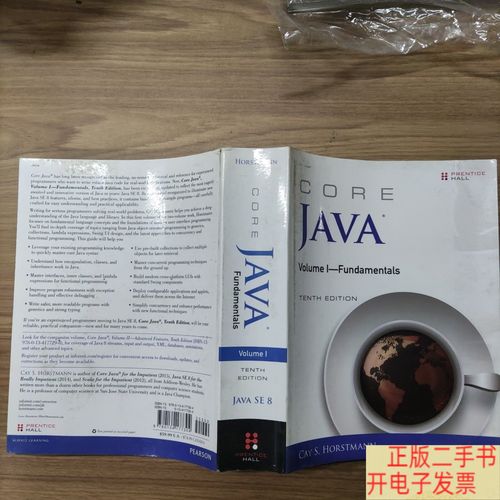
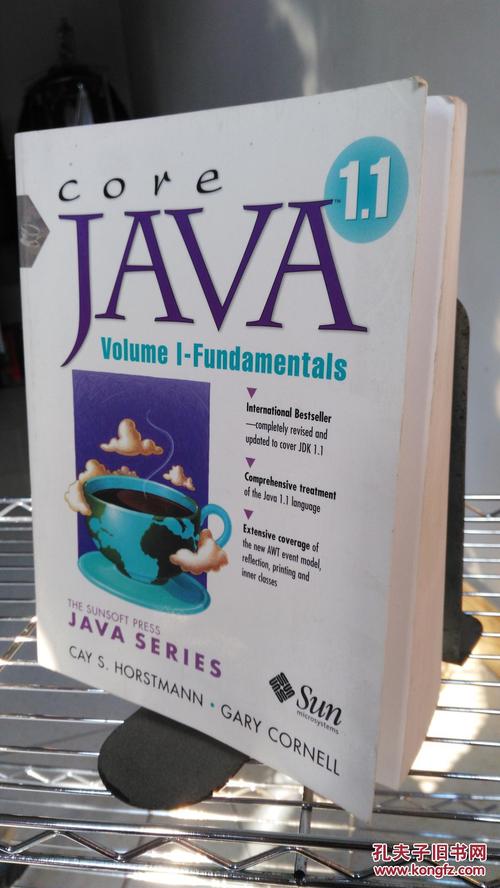
Of course! Core Java, Volume II—Advanced Features by Cay S. Horstmann is a classic and highly regarded text for experienced Java developers looking to deepen their knowledge. It's the natural successor to the foundational Core Java, Volume I.
Here's a comprehensive breakdown of what Volume II covers, its target audience, its pros and cons, and how it fits into modern Java development.
The Big Picture: What is Volume II About?
While Volume I covers the essential building blocks of the Java language (syntax, OOP, basic libraries, GUI, etc.), Volume II is dedicated to the advanced APIs and technologies that are crucial for building robust, high-performance, and scalable applications.
Think of it as moving from "learning Java" to "mastering the Java ecosystem for professional development."
Target Audience
This book is not for beginners. It is aimed at:
- Developers who have completed Volume I or have a solid understanding of Java fundamentals.
- Professional Java programmers working on enterprise-level, server-side, or complex desktop applications.
- Developers preparing for certifications like the Oracle Certified Professional (OCP) Java Programmer exam.
- Anyone who needs to understand the "how" and "why" behind Java's more complex APIs, not just the syntax.
Core Topics Covered (The Table of Contents)
The book is typically organized into the following major parts, covering the most critical advanced areas of Java.
Part I: Advanced Language Features
- Annotations: A deep dive into creating and using custom annotations, and understanding meta-annotations like
@Retention,@Target, and@Documented. - Lambda Expressions: While introduced in modern Java, this book provides a thorough treatment of functional programming concepts in Java, method references, and streams.
- Modules (Java 9+): An explanation of the Java Platform Module System (JPMS) for creating modular, maintainable, and secure applications.
Part II: Collections and Concurrency
- Advanced Collections: Detailed coverage of the Java Collections Framework, including
Comparator/Comparable,Mapimplementations (HashMap,TreeMap,ConcurrentHashMap), andQueue/Dequeinterfaces. - Concurrency: This is a cornerstone of the book. It covers:
- The
java.util.concurrentpackage in depth. - Threads, executors, and thread pools.
- Synchronization primitives (
synchronized,volatile). - Locks and condition variables (
ReentrantLock,Condition). - Atomic variables (
AtomicInteger, etc.). - Concurrent collections.
- The
CompletableFuturefor asynchronous programming.
- The
Part III: Networking and Security
- Networking: Comprehensive coverage of sockets (both client and server), URL handling, and the HTTP client API.
- Security: A practical guide to Java's security architecture, including:
- The
java.securitypackage. - Digital signatures and certificates.
- Authentication and authorization.
- The
Part IV: Scripting, Databases, and Internationalization
- Scripting Languages: How to embed and use scripting engines (like JavaScript via Nashorn) within Java applications.
- Databases with JDBC: A complete guide to using the Java Database Connectivity (JDBC) API for database access, including connection pooling, transactions, and using
RowSetobjects. - Internationalization (i18n) and Localization (l10n): How to build applications that can be easily adapted for different languages and regions, covering
Locale, resource bundles, and formatting dates, numbers, and currencies.
Part V: Advanced GUI Development (Swing)
- Swing Components: A detailed look at the more complex Swing components like
JTable,JTree, andJTextPane. - 2D Graphics: How to use the Java 2D API for custom drawing, shapes, text, and images.
- JavaFX: While Swing is the main focus, newer editions often include an introduction to JavaFX as the modern successor for rich client applications.
Part VI: Annotations and Reflection
- Reflection: A deep dive into the Java Reflection API, allowing a program to inspect and manipulate its own structure at runtime (e.g., inspecting classes, methods, fields, and invoking methods dynamically).
- Annotations: Often covered in more detail here, showing how to use reflection to process annotations at runtime (e.g., for dependency injection or ORM frameworks).
Pros and Cons
Pros:
- Authoritative and Thorough: Cay S. Horstmann is a renowned author and educator. The explanations are clear, accurate, and go deep into the "why."
- Practical Examples: The book is filled with well-commented, practical code examples that you can run and learn from.
- Comprehensive Coverage: It covers nearly every advanced topic you'll encounter as a professional Java developer.
- Excellent Reference: Its structure makes it a great book to keep on your shelf to look up specific APIs and concepts.
- Updated Editions: The book is regularly updated to cover new Java features (e.g., lambdas, modules, records, sealed classes).
Cons:
- Density: It's a dense read. It's not a "page-turner" but a reference manual that requires careful study.
- Cost: As a physical book, it can be expensive. However, older editions are often very affordable and still cover 90% of the core concepts.
- Pacing: It can feel overwhelming if you try to read it cover-to-cover without a specific goal. It's best used as a reference or studied topic by topic.
- Focus on Server-Side/Desktop: While essential, it doesn't cover modern web development frameworks like Spring, Jakarta EE, or microservices in depth (though it provides the foundational knowledge needed to understand them).
How Does it Fit in Today's World?
This book is more relevant than ever, but its role has evolved.
- Foundation for Frameworks: Modern frameworks like Spring Boot and Jakarta EE are built on top of the APIs covered in this book. You don't need to know the nitty-gritty of
java.lang.reflectto use Spring's dependency injection, but understanding it gives you a massive advantage in debugging, performance tuning, and truly mastering the framework. - Essential for Core Knowledge: For roles involving performance-critical systems, low-level libraries, custom frameworks, or any situation where you can't rely on a high-level abstraction, this book is indispensable.
- The Bedrock: It teaches you the "standard library" of advanced Java. No matter what new tool or framework comes along, this core knowledge remains constant and valuable.
Conclusion
Core Java, Volume II is not just a book; it's a professional development toolkit. It's the text that separates a Java coder from a Java engineer. If you are serious about a career in Java development and want to build a rock-solid understanding of the platform's most powerful features, this book is an essential investment. It will empower you to write better, more efficient, and more robust code.