Of course! Using LIBSVM with Python is a very common task for training Support Vector Machine (SVM) models. Here's a comprehensive guide covering everything from installation to a practical example with parameter tuning.
LIBSVM is a powerful and widely used library for SVMs, but it's written in C/C++. To use it from Python, we need a wrapper. The most popular and official wrapper is svm.py.
Installation
You need to install two things: the LIBSVM library itself and the Python wrapper.
Step 1: Install the LIBSVM Library
This is the core C++ library. The easiest way is using a package manager like pip or conda.
Using pip (Recommended):
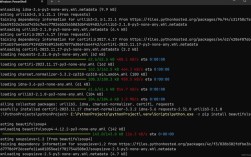
pip install libsvm
This command will download and compile the latest LIBSVM source and install it along with the necessary Python wrapper.
Using conda:
conda install -c conda-forge libsvm
Manual Installation (if needed): If you need a specific version or face issues, you can install it manually.
- Go to the LIBSVM Official Download Page.
- Download the latest tarball (e.g.,
libsvm-3.32.tar.gz). - Extract it and navigate to the directory.
- Run the following commands:
make
sudo python setup.py install  # Or `python setup.py install` if you're in a virtual environment
Step 2: Verify Installation
After installation, you can verify it in Python by importing the module and checking its version.

import svm
print(svm.__version__)
# Expected output: something like '3.32'
Data Preparation: The LIBSVM Format
This is a crucial step. LIBSVM has its own specific, simple text format for data. Each line represents a single data instance.
Format:
<label> <index1>:<value1> <index2>:<value2> ...
<label>: The target class for the instance. For classification, this is an integer (e.g., 0, 1, 2). For regression, it's a floating-point number.<index>: The feature index, starting from 1. It does not need to be contiguous. You can skip indices.<value>: The value of the feature at that index.
Example: Let's say we have two data points with 3 features each.
- Point 1: Features
[1.2, 0.0, -5.4], Label1 - Point 2: Features
[0.0, 3.1, 2.2], Label-1
In LIBSVM format, this would be:
1 1:1.2 2:0.0 3:-5.4
-1 1:0.0 2:3.1 3:2.2
Notice how the second feature of the first point (0) can be omitted to save space, as it's implicitly zero.
How to prepare your data:
You can write a small Python script to convert your standard CSV or NumPy array into this format. The svm module also provides helper functions for loading and saving these files.
A Complete Python Workflow: Classification Example
Let's walk through a complete example: loading data, training a model, making predictions, and evaluating it.
Step 1: Generate Sample Data
We'll use scikit-learn to create a simple dataset and then convert it to the LIBSVM format.
import numpy as np
from sklearn.datasets import make_classification
from sklearn.model_selection import train_test_split
from sklearn.metrics import accuracy_score, classification_report
import svm  # The LIBSVM python module
# 1. Generate a sample dataset
X, y = make_classification(
    n_samples=1000,
    n_features=20,
    n_informative=10,
    n_redundant=5,
    n_classes=2,
    random_state=42
)
# 2. Split data into training and testing sets
X_train, X_test, y_train, y_test = train_test_split(X, y, test_size=0.3, random_state=42)
# 3. Convert data to LIBSVM format
# The svm.svm_problem class is used to hold the training data.
# It takes labels and a list of feature vectors.
# We also need to specify the number of features.
prob = svm.svm_problem(y_train, X_train.tolist())
# 4. Set up the SVM parameters
# The svm.svm_parameter class holds all the SVM options.
# -s: SVM type (0 = C-SVC, 1 = nu-SVC, 2 = one-class SVM, etc.)
# -t: Kernel type (0 = linear, 1 = polynomial, 2 = RBF, 3 = sigmoid)
# -c: Cost parameter (C)
# -g: Gamma parameter (for RBF, polynomial, sigmoid kernels)
param = svm.svm_parameter()
param.svm_type = 0  # C-SVC
param.kernel_type = 2 # RBF kernel
param.C = 1.0
param.gamma = 0.1
print("Training the SVM model...")
# 5. Train the model
# The svm.svm_model.train function takes the problem and parameters.
model = svm.svm_model.train(prob, param)
print("Training complete.")
Step 2: Make Predictions and Evaluate
# 6. Make predictions on the test set
# The model.predict function expects a list of feature vectors.
predictions = model.predict(X_test.tolist())
# 7. Evaluate the model
accuracy = accuracy_score(y_test, predictions)
print(f"\nAccuracy: {accuracy:.4f}")
print("\nClassification Report:")
print(classification_report(y_test, predictions))
Parameter Tuning with Cross-Validation
Choosing the right C and gamma parameters is critical for SVM performance. LIBSVM has a built-in cross-validation tool for this.
The svm.svm_train function can perform cross-validation if you provide the -v option in the parameters.
from sklearn.model_selection import GridSearchCV
# Note: We can't use GridSearchCV directly from sklearn with libsvm.
# We have to use libsvm's own cross-validation mechanism.
# Let's try to find the best C and gamma using a grid search and cross-validation.
# Define the parameter grid
C_values = [0.1, 1, 10, 100]
gamma_values = [0.01, 0.1, 1, 10]
best_accuracy = 0
best_C = 0
best_gamma = 0
print("\nPerforming Grid Search for C and gamma...")
for C in C_values:
    for g in gamma_values:
        # Set parameters for this iteration
        param = svm.svm_parameter()
        param.svm_type = 0
        param.kernel_type = 2
        param.C = C
        param.gamma = g
        param.cross_validation = True # Enable cross-validation
        param.nr_fold = 5            # 5-fold cross-validation
        # Train with cross-validation. This returns the accuracy, not a model.
        accuracy = svm.svm_model.train(prob, param)
        print(f"C={C}, gamma={g} -> CV Accuracy: {accuracy:.4f}")
        if accuracy > best_accuracy:
            best_accuracy = accuracy
            best_C = C
            best_gamma = g
print(f"\nBest parameters found: C={best_C}, gamma={best_gamma}")
print(f"Best cross-validation accuracy: {best_accuracy:.4f}")
# 5. Train the final model with the best parameters
print("\nTraining the final model with best parameters...")
final_param = svm.svm_parameter()
final_param.svm_type = 0
final_param.kernel_type = 2
final_param.C = best_C
final_param.gamma = best_gamma
final_model = svm.svm_model.train(prob, final_param)
# 6. Make predictions and evaluate with the final model
final_predictions = final_model.predict(X_test.tolist())
final_accuracy = accuracy_score(y_test, final_predictions)
print(f"\nFinal Model Test Accuracy: {final_accuracy:.4f}")
Important Notes and Tips
-
Data Scaling: SVMs are sensitive to the scale of features. It is highly recommended to scale your data (e.g., using
sklearn.preprocessing.StandardScaler) before training.from sklearn.preprocessing import StandardScaler scaler = StandardScaler() X_train_scaled = scaler.fit_transform(X_train) X_test_scaled = scaler.transform(X_test) # Use X_train_scaled and X_test_scaled in the svm_problem
-
One-Class SVM: For anomaly detection, use
-s 4(one-class SVM). In this case, all your training labels should be1. -
Probability Estimates: To get probability estimates for classification (e.g., P(class=0)), add
param.probability = 1to your parameters. Then usemodel.predict_probability(test_data). -
Saving and Loading Models: You can save a trained model to a file and load it later without retraining.
# Save the model model.save('my_svm_model.model') # Load the model loaded_model = svm.svm_model('my_svm_model.model') -
Alternatives: While
libsvmis excellent,scikit-learn'sSVCclass (from sklearn.svm import SVC) is often more convenient for Python users. It has a more object-oriented API, integrates seamlessly with thescikit-learnecosystem (likeGridSearchCVandPipeline), and handles data scaling and formatting for you. For many tasks,scikit-learnis the preferred choice. Use LIBSVM when you need its specific features, advanced kernels, or if you're following a research paper that relies on it.