Of course! "Python vediocapture" is a common misspelling or typo for "Python video capture". This is a very popular task in Python, used for everything from computer vision and deep learning to creating simple security cameras or video analysis tools.

I'll guide you through the most common and effective ways to capture video in Python, starting with the simplest and moving to the more powerful and flexible methods.
The Short Answer: The Easiest Way
For most use cases, especially beginners, the opencv-python library is the best choice. It's powerful, well-documented, and works on Windows, macOS, and Linux.
Installation: First, you need to install the library. Open your terminal or command prompt and run:
pip install opencv-python
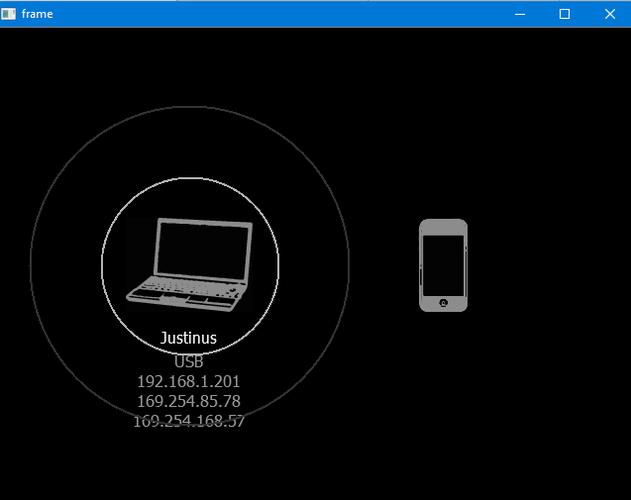
Code to Capture from a Webcam: This code will open a window from your default webcam and display the live video feed. Press 'q' to quit.
import cv2
# Create a VideoCapture object to access the webcam (0 is usually the default webcam)
cap = cv2.VideoCapture(0)
# Check if the webcam is opened correctly
if not cap.isOpened():
    print("Error: Could not open video device.")
    exit()
while True:
    # Capture frame-by-frame
    # ret is a boolean that returns True if a frame is read correctly
    ret, frame = cap.read()
    if not ret:
        print("Error: Failed to capture frame.")
        break
    # Display the resulting frame
    cv2.imshow('Webcam Feed', frame)
    # Wait for 'q' key to be pressed to exit
    if cv2.waitKey(1) & 0xFF == ord('q'):
        break
# When everything is done, release the capture and destroy all windows
cap.release()
cv2.destroyAllWindows()
Detailed Guide to Video Capture in Python
Let's break down the different methods and their use cases.
Method 1: OpenCV (cv2) - The All-Rounder
This is the most popular library for video capture and computer vision.
Strengths:
- Extremely versatile. Can capture from webcams, IP cameras, video files, and image sequences.
- Comes with a massive number of built-in functions for image and video processing (filtering, object detection, face recognition, etc.).
- Excellent performance.
Weaknesses:
- The installation file (
opencv-python) is large (~100MB+) because it includes many pre-compiled binaries.
Use Case: Capturing from a Video File
You can easily switch from a webcam to a video file by changing the source.
import cv2
# The source is now the path to a video file
cap = cv2.VideoCapture('my_video.mp4')
# The rest of the code is exactly the same!
while cap.isOpened():
    ret, frame = cap.read()
    if not ret:
        print("Reached the end of the video.")
        break
    cv2.imshow('Video Playback', frame)
    if cv2.waitKey(25) & 0xFF == ord('q'): # WaitKey might need a different delay for video
        break
cap.release()
cv2.destroyAllWindows()
Use Case: Capturing from an IP Camera
Many IP cameras provide a "motion JPEG" (mjpeg) stream that you can access directly with a URL.
import cv2
# Replace with your IP camera's stream URL
# The format is often: "http://<ip_address>:<port>/video"
ip_camera_url = "http://192.168.1.100:8080/video"
cap = cv2.VideoCapture(ip_camera_url)
while True:
    ret, frame = cap.read()
    if not ret:
        print("Failed to grab frame from IP camera.")
        break
    cv2.imshow('IP Camera Feed', frame)
    if cv2.waitKey(1) & 0xFF == ord('q'):
        break
cap.release()
cv2.destroyAllWindows()
Method 2: PyAV - The High-Performance Alternative
PyAV is a Pythonic binding for the FFmpeg libraries. FFmpeg is the industry-standard tool for handling multimedia.
Strengths:
- Potentially faster and more resource-efficient than OpenCV for certain tasks.
- Excellent support for a huge variety of video formats and codecs.
- More "low-level" and flexible, giving you fine-grained control.
Weaknesses:
- The API is less intuitive than OpenCV's. It requires understanding concepts like "containers," "streams," and "packets."
- Installation can sometimes be trickier due to its dependency on FFmpeg system libraries.
Installation:
# You need ffmpeg installed on your system first!
# On macOS: brew install ffmpeg
# On Ubuntu/Debian: sudo apt-get install ffmpeg
# On Windows: Download from ffmpeg.org and add to PATH
pip install av
Example: Capturing from a Webcam and Displaying with PyAV
import av
import numpy as np
import cv2 # We still use opencv to display the frame
# 'video4linux2' is the common driver for webcams on Linux.
# On Windows, you might need to use 'dshow' or 'vfwcap'.
# The device name can vary (e.g., /dev/video0).
input_container = av.open('/dev/video0', format='video4linux2')
# Get the first video stream
video_stream = next(s for s in input_container.streams if s.type == 'video')
# Set the frame rate to a reasonable value
video_stream.thread_count = 1
print("Capturing from webcam. Press 'q' in the OpenCV window to quit.")
for frame in input_container.decode(video_stream):
    # PyAV frames are in YUV420P format by default. We convert to RGB.
    # The .to_ndarray() method gives us a numpy array.
    img = frame.to_ndarray(format='bgr24') # Convert to BGR for OpenCV
    # Display the frame using OpenCV
    cv2.imshow('PyAV Webcam Feed', img)
    if cv2.waitKey(1) & 0xFF == ord('q'):
        break
input_container.close()
cv2.destroyAllWindows()
Method 3: imageio - The Simple File/Stream Reader
imageio is a fantastic library for reading and writing a wide range of image, video, and scientific file formats.
Strengths:
- Very easy to use and great for reading frames from videos or image sequences.
- Handles many formats gracefully.
Weaknesses:
- Less focused on real-time processing and camera interaction than OpenCV.
Installation:
pip install imageio[ffmpeg]
Example: Reading from a Video File
import imageio.v3 as iio
import cv2
# The 'plugin' specifies the backend to use, 'ffmpeg' is common.
reader = iio.get_reader('my_video.mp4', 'ffmpeg')
# Get the meta-data of the video
meta = reader.get_meta_data()
print(f"Video FPS: {meta['fps']}")
print(f"Video shape: {meta['shape']}") # (height, width, channels)
for frame in reader:
    # 'frame' is a numpy array, ready for processing
    # Display with OpenCV
    cv2.imshow('imageio Video', frame)
    if cv2.waitKey(1) & 0xFF == ord('q'):
        break
reader.close()
cv2.destroyAllWindows()
Summary: Which One Should You Choose?
| Library | Best For | Ease of Use | Performance | Flexibility |
|---|---|---|---|---|
OpenCV (cv2) |
Most use cases. Webcam, IP cam, video files, and computer vision tasks. | ★★★★★ | ★★★★☆ | ★★★★★ |
| PyAV | High-performance video processing, working with unusual formats, FFmpeg integration. | ★★☆☆☆ | ★★★★★ | ★★★★★ |
imageio |
Simple reading/writing of video files and image sequences. | ★★★★☆ | ★★★☆☆ | ★★★☆☆ |
Recommendation:
- Start with OpenCV (
cv2). It's the industry standard for a reason and will solve 95% of your video capture needs. - If you find OpenCV too slow for a specific task or need to work with a very obscure video format that OpenCV struggles with, try PyAV.
- If you just need to quickly read frames from a video file for analysis and don't need camera features,
imageiois a great lightweight option.