Of course. Let's break down "Python 2.7.13 shell" into its components and explore what it means, how to use it, and most importantly, why it's a significant topic.

What is "Python 2.7.13"?
This refers to a specific version of the Python programming language.
- Python 2.7: This is the major version. Python 2.7 was the final release in the Python 2 series. It was released in 2010 and was officially supported with bug fixes until January 2025. It is now considered end-of-life (EOL).
- .13: This is the minor/patch version, indicating it's the 13th maintenance release of the 2.7 series, containing bug fixes and security patches.
Why is Python 2.7.13 (and Python 2 in general) important? You will still encounter Python 2.7 in many places:
- Legacy Systems: Older enterprise applications, scientific computing tools, and server infrastructure were built on Python 2.
- Third-Party Libraries: Some popular libraries may not have been updated to be compatible with Python 3.
- Embedded Systems: Some hardware or devices might have come with Python 2.7 pre-installed.
What is a "Shell"?
In the context of programming, a "shell" is an interactive, command-line environment where you can type commands and get an immediate response. For Python, the shell is a powerful tool for:
- Experimentation: Quickly testing a piece of code without creating a file.
- Debugging: Inspecting variables and stepping through code interactively.
- Learning: Trying out Python syntax and features on the fly.
The most common Python shell is the one that comes built-in with your Python installation: the Read-Eval-Print Loop (REPL).

How to Use the Python 2.7.13 Shell (REPL)
Let's walk through the process of starting and using the shell.
Step 1: Check Your Python Version
First, you need to make sure you have Python 2.7.13 installed. Open your terminal (or Command Prompt on Windows) and type:
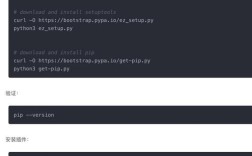
python --version
or sometimes, if you have multiple Python versions:
python2 --version
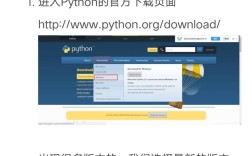
If you see Python 2.7.13, you're good to go. If you see a different version or an error, you'll need to install or configure Python 2.7.13. (You can download it from the official Python Archive).

Step 2: Start the Shell
In the same terminal window, simply type python or python2 and press Enter.
python2
You should see a message similar to this, followed by a >>> prompt:
Python 2.7.13 (default, Sep 26 2025, 10:33:58)
[GCC 4.2.1 Compatible Apple LLVM 10.0.0 (clang-1000.11.45.2)] on darwin
Type "help", "copyright", "credits" or "license" for more information.
>>>
The >>> is the Python shell's way of saying, "I'm ready for your command."
Step 3: Basic Shell Operations
Now you can start typing Python code.
A. Simple Math: The shell evaluates the expression and prints the result.
>>> 2 + 2
4
>>> 10 * 5
50
>>> (10 + 5) * 2
30
B. Using Variables: You can assign values to variables. The shell won't print anything unless you explicitly ask it to.
>>> message = "Hello, Python 2.7 World!"
>>> count = 100
>>> print message
Hello, Python 2.7 World!
>>> count
100
Notice that just typing count on a line by line prints its value. This is a shortcut for print count.
C. Multi-line Code (Indentation is Key!)
For blocks of code like if statements or loops, the shell uses as a continuation prompt. You must indent correctly.
>>> x = 10
>>> if x > 5:
...     print "x is greater than 5"
...     print "This is inside the if block"
...
x is greater than 5
This is inside the if block
To finish a multi-line block, you just press Enter on a new, empty line.
D. Getting Help
You can get help on any object or function using the help() command.
>>> help(len)
Help on built-in function len in module __builtin__:
len(...)
    len(object) -> integer
    Return the number of items of a sequence or mapping.
(To exit the help screen, type 'q' and press Enter)
Step 4: Exiting the Shell
When you're done, you can exit the shell in a few ways:
- Type
exit()orquit()and press Enter. - Press
Ctrl+D(on Linux/macOS). - Press
Ctrl+Zthen Enter (on Windows).
Critical Differences: Python 2.7 Shell vs. Python 3 Shell
Since Python 2.7 is EOL, it's crucial to understand the differences you'll encounter. The shell is a great place to see these in action.
| Feature | Python 2.7 Shell (Your Environment) | Python 3 Shell (Modern Standard) |
|---|---|---|
| Print Statement | print is a statement, not a function. It doesn't use parentheses. |
print() is a function and requires parentheses. |
| Example | >>> print "Hello, world!" |
>>> print("Hello, world!") |
| Integer Division | Division of two integers () results in an integer. The decimal part is truncated. | Division of two integers () results in a float. Use for integer division. |
| Example | >>> 5 / 22 |
>>> 5 / 25>>> 5 // 22 |
| Unicode | Unicode strings are a special type (u"..."). Regular strings are byte-strings. |
All strings are Unicode by default. Byte-strings are a special type (b"..."). |
| Example | >>> type("hello")<br<type 'str'>>>> type(u"hello")<type 'unicode'> |
>>> type("hello")<class 'str'>>>> type(b"hello")<class 'bytes'> |
Better Alternatives to the Basic Shell
While the built-in REPL is great, more advanced shells exist that are highly recommended for any serious work.
-
IPython: An enhanced interactive shell.
- Features: Tab completion, rich object printing, magic commands (e.g.,
%timeitto time code), better help system. - How to use:
pip install ipython(for Python 2.7), then just typeipythonin your terminal.
- Features: Tab completion, rich object printing, magic commands (e.g.,
-
Jupyter Notebook / JupyterLab: A web-based interactive computational environment.
- Features: You can mix code, text (Markdown), and visualizations in a single "notebook" document. This is the standard for data analysis and scientific computing.
- How to use:
pip install jupyter(for Python 2.7), then typejupyter notebookin your terminal.
Summary
The Python 2.7.13 shell is an interactive command-line tool (REPL) for executing Python 2.7 code on the fly. It's essential for testing and debugging legacy code. While powerful, be mindful of the key differences from Python 3, especially the print statement and integer division. For a more productive experience, consider using advanced shells like IPython or Jupyter.