Of course! This is a very common question for developers who love Python but want to work on Android. The landscape has changed significantly, and there are now several excellent ways to achieve this.
Let's break down the options into clear categories, from using your phone as a mini-computer to building full-fledged Android apps with Python.
Executive Summary: Which One Should You Choose?
| Your Goal | Best Option(s) | Key Benefit |
|---|---|---|
| Code on the go (edit, run scripts) | Pydroid 3, Termux | Complete Python environment on your phone. |
| Build a real Android App (with UI) | BeeWare, Kivy | Use Python to create native-looking apps. |
| Learn Android Development (in Python) | Kivy, BeeWare | Understand mobile app architecture with Python. |
| Run existing Python scripts on Android | Termux + pip |
Maximum control and access to the whole Python ecosystem. |
Category 1: Using Your Phone as a Python Development Environment
This is the most direct answer to "Android Python IDE." You install an app on your phone that turns it into a self-contained coding machine.
Pydroid 3
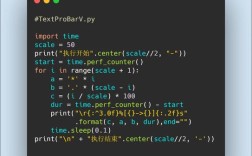
This is arguably the best and most popular "Python on Android" IDE. It's designed specifically for learning and running Python on mobile devices.
- Best for: Beginners, students, hobbyists, and anyone who wants to run Python scripts on the go.
- Key Features:
- Full IDE: Includes a code editor with syntax highlighting, auto-completion, and a dark theme.
- Package Manager: A simple, one-click way to install popular packages like
numpy,pandas,matplotlib,scipy, andtkinter. - External Storage: Can read and write files from your phone's storage.
- Pip Support: You can use
pipdirectly in its terminal to install packages. - QPython Integration: Can run QPython scripts.
- Limitations:
- Not designed for building complex, large-scale projects.
- Some advanced or niche packages might not be available.
- The UI is mobile-first, so it's not a replacement for a full desktop IDE.
Termux
Termux is a powerful terminal emulator and Linux environment for Android. It's not a traditional IDE, but it gives you a command-line interface where you can install a full-fledged Python environment.
- Best for: Developers who are comfortable with the command line, power users, and anyone who needs maximum flexibility and access to the entire Python ecosystem.
- Key Features:
- Real Linux Environment: It's not a simulated environment. You get a real package manager (
pkg). - Full Python Installation: You can install Python and
pipjust like on a Linux machine. - Access to All Packages: If a package has a Linux build, you can install it with
pip. This is its biggest advantage over Pydroid 3. - SSH Server: You can run an SSH server inside Termux and connect to your phone from your computer to code on it remotely.
- Git, Vim, Nano, etc.: Install your favorite command-line tools.
- Real Linux Environment: It's not a simulated environment. You get a real package manager (
- How to Use it for Python:
- Install Termux from the Google Play Store or F-Droid.
- Update packages:
pkg update && pkg upgrade - Install Python and necessary tools:
pkg install python clang make libffi - Verify Python:
python --version - Install packages:
pip install <package_name>
- Limitations:
- No GUI. You can only run command-line scripts. You'll need to pair it with a text editor app (like Spacedrive or Acode) to write code.
- Steeper learning curve for beginners.
Category 2: Building Android Apps with Python
If your goal is to create an app that you can publish to the Google Play Store, you need a framework. Python is not a native language for Android, so these frameworks wrap your Python code and package it into a standard Android app (an APK or AAB).
BeeWare
BeeWare is a suite of tools and libraries for building native user interfaces in Python. Its philosophy is "Write in Python, Deploy Everywhere."
- Best for: Developers who want to use Python to build apps that look and feel like they were written in native Java/Kotlin (for Android) or Swift (for iOS).
- Key Features:
- Native UIs: It uses a project called Briefcase to package your Python code and a set of native widgets for each platform. Your app doesn't run in a web view; it uses the platform's own UI components.
- Cross-Platform: Write your app once and deploy it to Android, iOS, Linux, macOS, and Windows.
- Tooling: Excellent command-line tools for managing the project, building, and deploying.
- How it Works:
- You write your app's logic in Python.
- You use the Toga library to define the UI. Toga provides a Python API that maps to native widgets.
- You use the Briefcase tool to package the Python code, a Python runtime, and the native UI stub into a final
.apkfile.
- Limitations:
- The Toga UI library is not as mature or feature-rich as Kivy or Flutter.
- The build process can be complex, especially on Windows.
Kivy
Kivy is an open-source, cross-platform GUI framework. It's been around for a long time and is very popular for Python mobile development.
- Best for: Creating apps with custom, animated, and unique user interfaces. It's great for games, data visualization apps, and anything that needs a non-standard look.
- Key Features:
- Custom UIs: Kivy has its own set of widgets. You are not bound by the native OS look. This gives you complete creative freedom.
- OpenGL Accelerated: Uses OpenGL for rendering, making it very fast for animations and graphics.
- Cross-Platform: Like BeeWare, you can deploy to Android, iOS, Windows, macOS, and Linux.
- Mature Ecosystem: Large community and many third-party libraries.
- How it Works:
- You write your app's logic in Python.
- You use the Kivy language (a declarative language similar to CSS) or Python code to design your UI.
- You use a tool like Buildozer (which can be tricky to set up) to package the Python code, the Kivy library, and a Python interpreter into an
.apk.
- Limitations:
- Apps do not look like native Android apps. They look like "Kivy apps," which can be a pro or a con.
- The Buildozer build tool can be difficult to configure and is sometimes unreliable.
Category 3: The "Hybrid" Approach (Web Technologies)
This isn't pure Python, but it's a very common way to build apps and is worth mentioning.
- What it is: You write a web app using HTML, CSS, and JavaScript (or a framework like React, Vue, or Svelte). Then, you use a tool like Capacitor or Cordova to wrap it in a native "shell" that can be installed from the Play Store.
- Can you use Python? Yes! You can write your backend API in a Python framework like Django or Flask. Your mobile app would then be a client that communicates with your Python-powered server.
- Best for: Apps where the core logic is on a server. The mobile app is primarily a user interface.
- Pros: Leverages the entire web ecosystem, which is massive and fast-moving.
- Cons: The app isn't truly "native" and can have performance limitations, especially for complex animations.
Final Recommendation
- To just run Python code on your phone: Start with Pydroid 3. If you outgrow it and need more power, switch to Termux.
- To build a real, publishable Android app with Python:
- Choose BeeWare if you want your app to look and feel like a native Android app.
- Choose Kivy if you want to create a custom, animated, or game-like UI.
- For most new developers: The learning curve for BeeWare and Kivy is significant. Be prepared to learn about Android packaging, build tools, and mobile-specific design patterns. It's a rewarding path but not a simple one.