Of course! "Thinking in Java" (TIJ) is a legendary book in the programming world, and its English original is considered a masterpiece. Here’s a comprehensive guide covering everything you need to know about the English version.
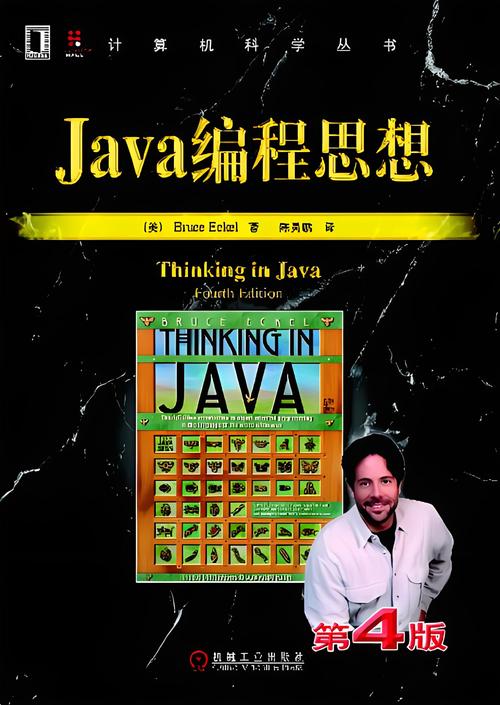
About the Book: The "Bible" of Java
"Thinking in Java" by Bruce Eckel is not just a tutorial; it's a deep dive into the philosophy and design principles behind the Java language. It's famous for its rigorous, in-depth approach and its focus on helping the reader think like a Java programmer, not just write code.
Key Characteristics:
- In-Depth and Comprehensive: It covers almost every aspect of Java, from the absolute basics to very advanced topics like multithreading, network programming, and generics.
- Conceptual Focus: It explains the "why" behind Java's design choices, not just the "how." This helps in writing better, more idiomatic, and more robust code.
- Excellent Examples: The book is filled with clear, well-commented code examples that illustrate each concept effectively.
- Free Availability: Bruce Eckel made the book freely available on his website in HTML format, which was revolutionary and cemented its status as a go-to resource for developers worldwide.
- Not for Absolute Beginners: Due to its depth and pace, it's often considered more suitable for programmers who already have some experience with another programming language (like C, C++, or Python) and want to master Java.
The Author: Bruce Eckel
Bruce Eckel is a highly respected programmer, author, and consultant. He is also the author of "Thinking in C++," which follows the same deep-dive philosophy. His "Thinking in..." series is known for its high-quality content and for making advanced computer science concepts accessible.
Editions: Which One to Get?
The book has gone through several major editions, corresponding to major Java releases. The most recent and recommended edition is the 4th Edition.
4th Edition (for Java SE 5, 6, and 7)
- Title: Thinking in Java (4th Edition)
- Target Java Version: Java 5, 6, and 7. This is the most current and complete version of the book.
- Why it's the best:
- Covers Modern Java: It includes all the major features introduced in Java 5, which fundamentally changed the language:
- Generics: Type-safe collections.
- Annotations (Metadata): A powerful way to add metadata to your code.
- Autoboxing/Unboxing: Seamless conversion between primitive types and their object wrappers.
- Enhanced For-Loop (for-each): Simplified iteration over collections and arrays.
- Static Imports: Import static members of a class.
- Mature Content: After multiple revisions, the 4th edition is incredibly polished, well-edited, and free of the typos and inconsistencies found in earlier editions.
- Covers Modern Java: It includes all the major features introduced in Java 5, which fundamentally changed the language:
- Where to find it: This is the edition you should aim for. It's available for purchase in print and as an eBook.
3rd Edition (for Java 1.2 / Java 2)
- Title: Thinking in Java (3rd Edition)
- Target Java Version: Java 1.2 / Java 2.
- Status: Outdated. While the core concepts of object-oriented programming are still valid, this edition is missing all the crucial features of modern Java (Generics, Annotations, etc.). It's of historical interest only and not recommended for learning current Java.
Where to Find the English Version
You have several options, ranging from free to paid.
Option 1: Free and Legal (The Original HTML Version)
Bruce Eckel generously offers the 4th Edition for free on his website. This is the original, unformatted HTML version.
- Link: Bruce Eckel's "Thinking in Java" Page
- Pros:
- Completely free.
- The full, complete content of the 4th edition.
- Cons:
- Format is just HTML, not ideal for reading on e-readers or for a polished PDF experience.
- May contain minor errors that were corrected in the final print version.
Option 2: Paid Versions (Highly Recommended for a Better Experience)
For a much better reading experience, it's worth purchasing a copy.
-
Print Edition (Paperback):
 (图片来源网络,侵删)
- Where to buy: Amazon, Barnes & Noble, or other major book retailers.
- Pros: Excellent for annotation, easier on the eyes, and a great reference to have on your shelf.
-
Digital Edition (eBook - PDF, ePub, Kindle):
- Where to buy: Amazon Kindle Store, Google Play Books, Apple Books, etc.
- Pros: Portable, searchable, and often cheaper than the print version. The PDF version is perfect for copying code examples.
Comparison with Other Popular Java Books
| Feature | Thinking in Java (4th Ed) | Head First Java | Core Java Volume I | Java: The Complete Reference |
|---|---|---|---|---|
| Author | Bruce Eckel | Kathy Sierra & Bert Bates | Cay S. Horstmann | Herbert Schildt |
| Style | Formal, dense, academic, in-depth. | Casual, visual, conversational, uses cognitive science. | Professional, clear, well-structured, modern. | Encyclopedic, reference-style, can be dry. |
| Best For | Programmers who want a deep, theoretical understanding of Java. | Absolute beginners or those who learn best with visuals and puzzles. | Serious developers and professionals who want a comprehensive, no-nonsense guide. | Quick reference and looking up specific language features. |
| Pace | Fast and challenging. | Slow and deliberate. | Steady and informative. | Can feel like a dictionary. |
| Recommendation | Top-tier for mastering the language. | The best first book for most new programmers. | An excellent alternative to TIJ, very practical. | Good as a reference, but not ideal for learning from scratch. |
Summary and Recommendation
- If you want to truly master Java and understand its core concepts inside and out, "Thinking in Java, 4th Edition" is one of the best books you can read. It's a challenging but incredibly rewarding investment in your skills.
- Start with the free HTML version from Bruce Eckel's website to see if you like the style.
- For the best learning experience, buy the 4th Edition in print or as an eBook. The cost is well worth the polished content and superior format.
- If you are a complete beginner, you might find "Head First Java" a more gentle and engaging starting point before tackling "Thinking in Java."