Of course! Java, PHP, and Python are three of the most influential and widely used programming languages in the world. While they can sometimes be used for similar tasks, they have very different philosophies, strengths, and historical contexts.
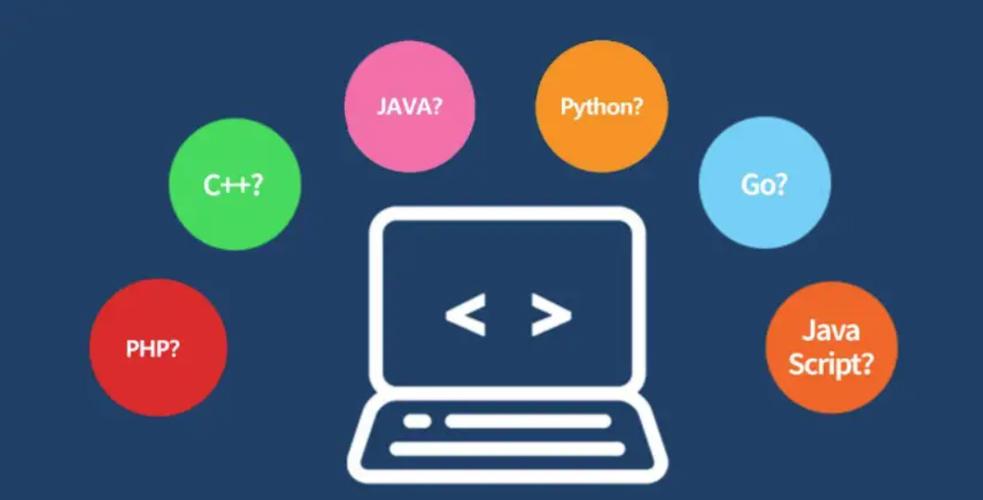
Here's a detailed comparison to help you understand the differences and choose the right one for your needs.
At a Glance: The Core Identity
| Feature | Java | PHP | Python |
|---|---|---|---|
| Core Philosophy | "Write Once, Run Anywhere" (WORA). Robust, scalable, and object-oriented. | "Web focused." Simple, fast for web development, and deeply integrated with servers. | "Readability counts." Simple, versatile, and great for rapid development and scripting. |
| Typing | Static & Strong | Dynamic & Weak | Dynamic & Strong |
| Primary Use Case | Enterprise applications, Android apps, large-scale web backends. | Web servers, dynamic web pages, content management systems (CMS). | Data science, machine learning, scripting, web backends, automation. |
| Performance | Very high (JIT compilation). Slower startup than native. | Fast for web tasks. Can be slower for CPU-intensive work. | Good for general use. Slower for CPU-intensive tasks, but great for I/O-bound tasks. |
| Learning Curve | Moderate to Steep (strict syntax, complex concepts like JVM) | Easy to start, harder to master (quirks, inconsistent functions) | Very Easy (clean, readable syntax) |
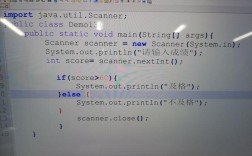
| Hello World | public class Main { public static void main(String[] args) { System.out.println("Hello, World!"); } } |
<?php echo "Hello, World!"; ?> |
print("Hello, World!") |
Detailed Breakdown
Let's dive deeper into each language.
Java
Java is a class-based, object-oriented language designed for platform independence. It's known for its stability, performance, and robust ecosystem.
Key Characteristics:
- Platform Independence (WORA): This is Java's biggest selling point. Java code is compiled into an intermediate format called "bytecode," which can run on any device with a Java Virtual Machine (JVM). You don't need to recompile for Windows, macOS, or Linux.
- Static Typing: You must declare the data type of a variable (e.g.,
String name = "Alice";). This catches many errors at compile time, making large, complex applications more reliable. - Object-Oriented (OOP): Everything in Java is an object (or a primitive type). It enforces OOP principles like encapsulation, inheritance, and polymorphism, which is great for structuring large codebases.
- Verbose: Java code can be more "wordy" or verbose than Python or PHP. It requires more boilerplate code for simple tasks.
Strengths:
- Performance: The Just-In-Time (JIT) compiler in the JVM makes Java incredibly fast, often comparable to C++ for many workloads.
- Scalability: Its robustness and static typing make it the go-to language for building large, enterprise-grade, and highly scalable systems (e.g., banking, e-commerce).
- Ecosystem: The Maven and Gradle build tools, along with the vast Maven Central repository, provide access to millions of libraries for any task imaginable.
- Strong Community & Support: Backed by Oracle (and previously Sun Microsystems), with a massive community, extensive documentation, and long-term support (LTS) versions.
Weaknesses:
- Verbosity: Can be slower to write and read for simple scripts.
- Memory Consumption: The JVM has a significant memory footprint, which can be an issue for small applications or microservices.
- Slower Startup: Starting the JVM takes time, making it less ideal for short-lived processes or serverless functions compared to Python or Node.js.
Best For:
- Android App Development: The official language for Android.
- Enterprise Backend Systems: Large, server-side applications (e.g., banking, stock trading).
- Big Data Technologies: Hadoop, Spark, and Kafka are primarily written in Java.
- High-Frequency Trading: Where performance and reliability are paramount.
PHP
PHP (originally "Personal Home Page") is a server-side scripting language designed specifically for web development. It powers a huge portion of the internet.
Key Characteristics:
- Web-Centric: PHP was built for the web. It integrates seamlessly with web servers like Apache and Nginx and can be embedded directly into HTML.
- Dynamic Typing: Variables are not declared with a type (e.g.,
$name = "Bob";). This offers flexibility but can lead to runtime errors if not careful. - Weakly Typed: PHP will automatically convert data types. For example, adding a number to a string will often result in the number being converted to a string and concatenated (
"5" + 10can result in"510"). This can be convenient but also a source of bugs. - Huge Ecosystem for Web: The package manager, Composer, and the content repository, Packagist, contain a massive number of libraries specifically for web tasks.
Strengths:
- Easy to Learn for Web Developers: Its syntax is straightforward, and it's incredibly easy to get a simple website running.
- Massive CMS Ecosystem: It is the backbone of the world's most popular Content Management Systems, including WordPress, Drupal, and Joomla. If you need to build a site on one of these, PHP is essential.
- Fast for Web Tasks: Modern PHP (versions 7+) is surprisingly fast, rivaling Java and Node.js in many web benchmarks.
- Ubiquity: It's supported by almost every web hosting provider in the world.
Weaknesses:
- Historical Reputation: Older versions of PHP (pre-5.4) were known for inconsistent function names and security issues. While modern PHP is excellent, this reputation lingers.
- Not Ideal for Non-Web Tasks: While you can use PHP for command-line scripts or desktop apps, it's not its strength. Python and Java are far better suited for these.
- Weak Typing: Can lead to unexpected behavior and bugs that are hard to track down.
Best For:
- Dynamic Websites: Any website that needs to interact with a database.
- Content Management Systems (CMS): Building sites on WordPress, Drupal, etc.
- E-commerce Platforms: Magento and PrestaShop are PHP-based.
- Quick Prototyping: Building a functional web application very quickly.
Python
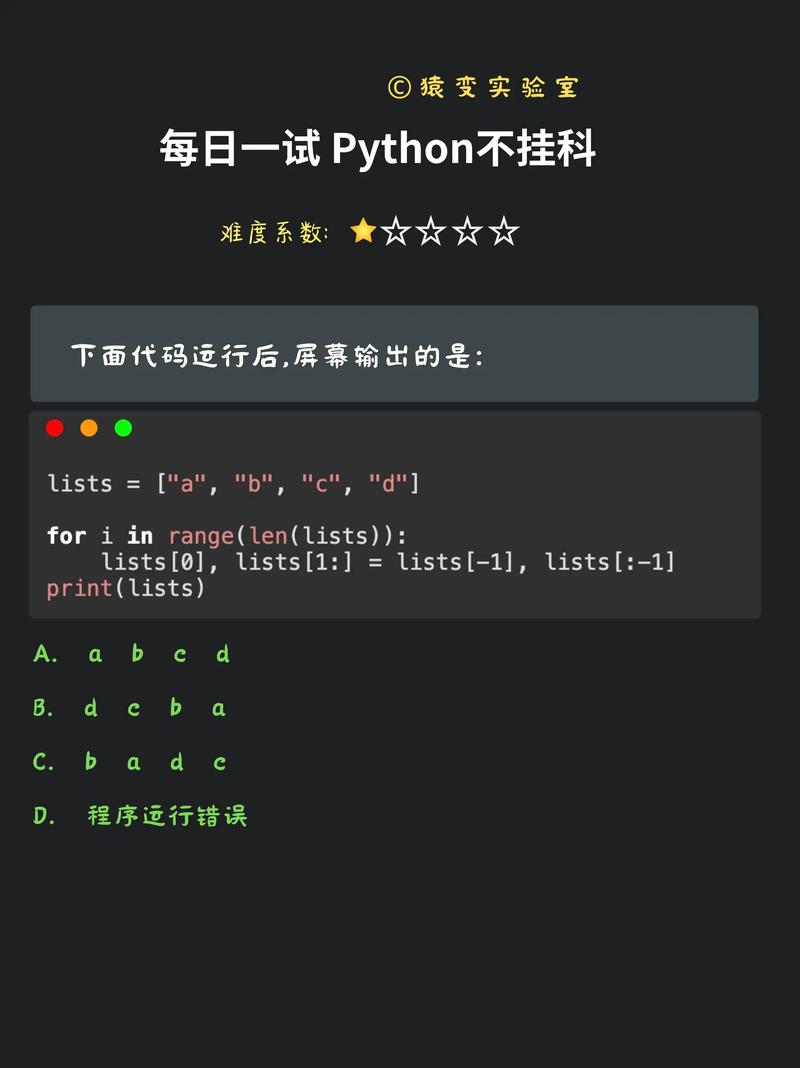
Python is a high-level, interpreted language celebrated for its simplicity and readability. It aims to be a highly readable language with its notable use of significant whitespace.
Key Characteristics:
- Readability: Python's syntax is clean, simple, and often resembles plain English. This makes it one of the easiest languages to learn and a favorite for beginners.
- Dynamic & Strong Typing: Like PHP, variables are not declared with a type. However, Python is strongly typed, meaning it won't automatically convert types for you. Trying to add a string and an integer (
"5" + 10) will raise aTypeError, preventing many bugs. - Interpreted: Code is executed line by line by an interpreter, which makes it great for interactive development and scripting but can be slower than compiled languages like Java.
- Batteries Included: Python comes with a rich standard library that includes modules for a wide variety of tasks, from web servers to data manipulation.
Strengths:
- Versatility: Python is a "Swiss Army knife" language. It's used for web development, data science, machine learning, AI, scientific computing, automation, and more.
- Massive Ecosystem: The Python Package Index (PyPI) hosts hundreds of thousands of packages. Libraries like Django and Flask for web, Pandas and NumPy for data, and TensorFlow and PyTorch for ML are world-class.
- Rapid Development: The combination of simple syntax and a rich library ecosystem allows developers to build and iterate on projects very quickly.
- Excellent Community: A very welcoming and active community, especially in the data science and machine learning spaces.
Weaknesses:
- Slower Performance: Being an interpreted language, Python is generally slower than Java or C++ for CPU-intensive tasks. This is often mitigated by using libraries written in C (like NumPy) or by using services like PyPy (a JIT compiler).
- High Memory Consumption: Python's dynamic nature and object overhead can lead to higher memory usage than in statically-typed languages.
- Global Interpreter Lock (GIL): In CPython (the standard implementation), the GIL is a mutex that allows only one thread to execute Python bytecode at a time. This prevents true parallel execution on multi-core processors for CPU-bound tasks, though it's not an issue for I/O-bound tasks.
Best For:
- Data Science & Machine Learning: The undisputed leader in this field.
- Web Backends: Excellent frameworks like Django (batteries-included) and Flask (lightweight and flexible).
- Scripting & Automation: Perfect for writing small scripts to automate tasks.
- Beginners: The best language to learn as your first programming language.
How to Choose: A Decision Guide
| Choose Java if... | Choose PHP if... | Choose Python if... |
|---|---|---|
| ✅ You are building a large, long-term enterprise application. | ✅ Your primary goal is to build a website or work with a CMS like WordPress. | ✅ You want to get into data science, machine learning, or AI. |
| ✅ You need to build a native Android app. | ✅ You need a quick and easy solution for a dynamic website. | ✅ You value code readability and developer productivity above all else. |
| ✅ Performance and scalability are your top priorities. | ✅ You need to find a web developer, as the talent pool is huge. | ✅ You are a beginner and want to learn your first programming language. |
| ✅ Your project will run on many different operating systems. | ✅ You are working with a legacy codebase that is already in PHP. | ✅ You need to automate tasks or write scripts. |
| ✅ You are building a microservice where startup time is not critical. | ✅ Your hosting provider has excellent PHP support. | ✅ You need to build a web backend but want to use it for other tasks (like data analysis) too. |