Of course! Here is a comprehensive guide to using GraphX in Python with PySpark.
Important Note: GraphX is a Scala API
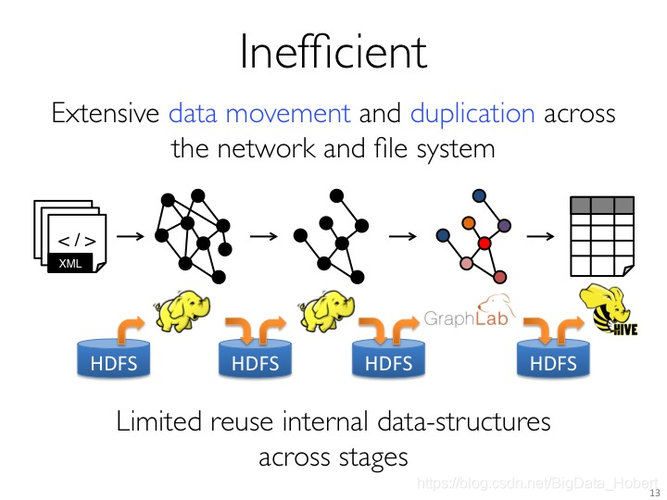
First, a crucial point: GraphX is not a native Python API. It is a core component of Apache Spark written in Scala. The primary way to use it in Python is through PySpark, which acts as a Python wrapper that translates your Python code into Scala operations that run on the Spark cluster.
This means you won't find a pyspark.graphx module. Instead, you'll use the standard pyspark library and construct the GraphX Graph object using PySpark's core DataFrames.
Core Concepts of GraphX
GraphX represents a graph as a pair of collections:
- Vertices (
RDD[VertexId, V]): A collection of vertices (or nodes). Each vertex has a uniqueVertexId(aLongtype) and an associated attribute of typeV(e.g., a string, integer, or a complex object). In PySpark, this is represented as an RDD of(vertex_id, attribute)tuples. - Edges (
RDD[Edge[T]]): A collection of edges (or connections) that link vertices. Each edge has asrcId(source vertex ID), adstId(destination vertex ID), and an attribute of typeT(e.g., a string like "follows" or a weight like 5). In PySpark, this is an RDD ofEdgeobjects.
The combination of these two RDDs forms a Graph[V, T] object.
Setting Up Your PySpark Environment
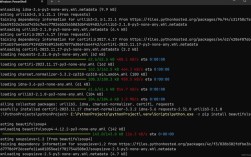
Before you start, make sure you have PySpark installed. If not, you can install it via pip:
pip install pyspark
You'll also need a SparkContext to work with. For local development, you can create one easily.
Creating a Graph in PySpark
Let's build a simple graph representing a social network. We'll create vertices for users and edges representing who follows whom.
Step 1: Initialize SparkSession
from pyspark import SparkContext
from pyspark.sql import SparkSession
# It's good practice to use a SparkSession
spark = SparkSession.builder \
    .appName("GraphXPythonExample") \
    .getOrCreate()
sc = spark.sparkContext
Step 2: Define Vertices
Vertices are an RDD of (id, attribute) pairs. The attribute can be anything. Let's use a dictionary to store user details.
# Define vertices: (vertex_id, attributes)
vertices_data = [
    (1, {"name": "Alice", "age": 34}),
    (2, {"name": "Bob", "age": 45}),
    (3, {"name": "Charlie", "age": 30}),
    (4, {"name": "David", "age": 25}),
    (5, {"name": "Eve", "age": 28})
]
# Create an RDD for vertices
vertices_rdd = sc.parallelize(vertices_data)
Step 3: Define Edges
Edges are an RDD of Edge objects. You need to import Edge from pyspark.graphx.
from pyspark.graphx import Edge
# Define edges: Edge(srcId, dstId, [attribute])
edges_data = [
    Edge(1, 2, "follows"),   # Alice follows Bob
    Edge(1, 3, "follows"),   # Alice follows Charlie
    Edge(2, 3, "follows"),   # Bob follows Charlie
    Edge(3, 4, "follows"),   # Charlie follows David
    Edge(4, 1, "follows"),   # David follows Alice
    Edge(5, 1, "follows"),   # Eve follows Alice
    Edge(5, 4, "follows")    # Eve follows David
]
# Create an RDD for edges
edges_rdd = sc.parallelize(edges_data)
Step 4: Create the Graph Object
Now, combine the vertices and edges RDDs to form a Graph object.
from pyspark.graphx import Graph
# Create the graph
social_graph = Graph(vertices_rdd, edges_rdd)
print("Graph created successfully!")
print(f"Number of vertices: {social_graph.vertices.count()}")
print(f"Number of edges: {social_graph.edges.count()}")
Basic Graph Operations
GraphX provides powerful operations for transforming and querying graphs.
a) vertices and edges
These properties give you direct access to the vertex and edge RDDs.
# Get vertex RDD
vertex_rdd = social_graph.vertices
print("\nVertex RDD (first 3):")
print(vertex_rdd.take(3))
# Get edge RDD
edge_rdd = social_graph.edges
print("\nEdge RDD (first 3):")
print(edge_rdd.take(3))
b) triplets
This is one of the most useful operations. It joins the vertex attributes with the edges, creating an RDD of EdgeTriplet objects. Each triplet contains the source vertex, destination vertex, and the edge itself.
# Get edge triplets
triplets_rdd = social_graph.triplets
print("\nEdge Triplets (first 2):")
for triplet in triplets_rdd.take(2):
    print(f"{triplet.srcAttr['name']} ({triplet.srcId}) --[{triplet.attr}]--> {triplet.dstAttr['name']} ({triplet.dstId})")
c) subgraph
You can filter the graph based on vertex and edge predicates. This is useful for cleaning or focusing on a specific part of the graph.
Let's create a subgraph containing only users older than 30 and the edges between them.
# Define the vertex predicate: keep vertices where age > 30
def vertex_filter(vertex):
    return vertex[1]["age"] > 30
# Define the edge predicate: keep edges whose source and destination are in the filtered vertex set
def edge_filter(edge):
    return True # We'll rely on the vertex filter to clean up the graph
subgraph = social_graph.subgraph(vertex_filter, edge_filter)
print("\nSubgraph (users older than 30):")
print(f"Number of vertices: {subgraph.vertices.count()}")
print(f"Number of edges: {subgraph.edges.count()}")
# The output will show vertices for Alice, Bob, Charlie and the edges between them.
d) collectNeighborIds and collectNeighbors
These operations aggregate information about a vertex's neighbors.
collectNeighborIds: Collects the IDs of neighbors.collectNeighbors: Collects the full(VertexId, V)tuples of neighbors.
# Collect neighbor IDs for each vertex
neighbor_ids = social_graph.collectNeighborIds(EdgeDirection.Out)
print("\nNeighbor IDs (Outgoing):")
print(neighbor_ids.collect())
# Collect full neighbor information
neighbors = social_graph.collectNeighbors(EdgeDirection.Out)
print("\nFull Neighbor Information:")
for vertex_id, neighbor_list in neighbors.collect():
    if neighbor_list: # Only print vertices that have outgoing edges
        print(f"Vertex {vertex_id}'s neighbors: {neighbor_list}")
Graph Algorithms
GraphX comes with several built-in graph algorithms. Let's look at PageRank and Connected Components.
a) PageRank
PageRank measures the importance of each vertex in the graph. Let's find the most "influential" users in our social network.
# Run PageRank
# The resetProb is the probability of jumping to a random vertex (usually 0.15)
pagerank_results = social_graph.pageRank(resetProb=0.15)
print("\nPageRank Results:")
# The vertices RDD of the result contains (vertex_id, rank)
for vertex_id, rank in pagerank_results.vertices.collect():
    user_name = social_graph.vertices.filter(lambda v: v[0] == vertex_id).first()[1]["name"]
    print(f"User: {user_name}, Rank: {rank:.4f}")
b) Connected Components
This algorithm finds sets of vertices that are connected to each other. Each component is assigned a unique component ID.
# Run Connected Components
# The maxIterations parameter controls how many iterations to run
connected_components = social_graph.connectedComponents(maxIterations=5)
print("\nConnected Components:")
# The vertices RDD of the result contains (vertex_id, component_id)
for vertex_id, component_id in connected_components.vertices.collect():
    user_name = social_graph.vertices.filter(lambda v: v[0] == vertex_id).first()[1]["name"]
    print(f"User: {user_name}, Component ID: {component_id}")
In our small example, all users are likely in one connected component.
Converting to/from DataFrames
While GraphX operations use RDDs, it's often convenient to work with DataFrames for integration with other Spark SQL features.
From Graph to DataFrames
# Convert vertices to DataFrame
vertices_df = social_graph.vertices.toDF(["id", "attributes"])
print("\nVertices DataFrame:")
vertices_df.show()
# Convert edges to DataFrame
# Note: Edge objects have src, dst, and attr fields
edges_df = social_graph.edges.toDF(["src", "dst", "relationship"])
print("\nEdges DataFrame:")
edges_df.show()
From DataFrames to Graph
You can also construct a graph from DataFrames.
# Assuming you have vertices_df and edges_df from above
# You need to convert them back to RDDs
vertices_rdd_from_df = vertices_df.rdd.map(lambda row: (row.id, row.attributes))
edges_rdd_from_df = edges_df.rdd.map(lambda row: Edge(row.src, row.dst, row.relationship))
# Create the new graph
graph_from_df = Graph(vertices_rdd_from_df, edges_rdd_from_df)
print("\nGraph created from DataFrames:")
print(f"Vertices: {graph_from_df.vertices.count()}, Edges: {graph_from_df.edges.count()}")
Cleaning Up
Always stop your SparkContext when you're done to free up resources.
sc.stop()
Summary and Best Practices
- Remember the Scala Origin: GraphX is a Scala API. PySpark is a wrapper. This means some advanced features might be less accessible in Python.
- Use
tripletsfor Rich Analysis: For any analysis that involves both vertex attributes and edge properties (e.g., "find all users Alice follows who are older than 30"),tripletsis your best friend. - Filter with
subgraph: Before running expensive algorithms, usesubgraphto reduce the size of your graph to only the relevant vertices and edges. - Leverage DataFrames: For ETL, data cleaning, and integration with Spark SQL, convert your graph components (vertices and edges) to and from DataFrames.
- PySpark is the Way: While you might find older examples using
pyspark.graphlib, the modern and correct approach is to construct theGraphobject directly from RDDs as shown in this guide.