Of course! Let's break down "Python SpiderMonkey" into its two main components and how they relate.
The short answer is: SpiderMonkey is a JavaScript engine, not a Python library. However, you can use Python to interact with and control SpiderMonkey. This is typically done through a Python wrapper around the official SpiderMonkey C API.
Here’s a detailed explanation.
What is SpiderMonkey?
- It's a JavaScript Engine: SpiderMonkey is the original JavaScript engine developed by Mozilla. It's written in C/C++ and is responsible for parsing, compiling, and executing JavaScript code.
- It's the Core of Firefox: SpiderMonkey is the engine that powers the JavaScript execution in the Mozilla Firefox web browser.
- It's a Standalone Program: You can download and run the
jscommand-line tool, which is a direct interface to the SpiderMonkey engine. You can use it to run JavaScript files, test code snippets, and inspect the engine's behavior.
Example of using the js command-line tool:
# 1. Install SpiderMonkey (e.g., on Ubuntu/Debian)
sudo apt-get install spidermonkey-bin
# 2. Run the interactive shell
$ js
> print("Hello from SpiderMonkey!");
Hello from SpiderMonkey!
> let x = 10;
> x + 5
15
> quit()
The Python Connection: Why Use Python with SpiderMonkey?
You might want to use Python to control SpiderMonkey for several reasons:

- Embedding JavaScript in a Python Application: You want to give your Python application the ability to run user-provided or dynamic JavaScript code. This is useful for scripting, plugins, or complex configuration files.
- Testing JavaScript Code: You can write Python test scripts that execute JavaScript functions and assert the results, integrating JavaScript testing into your Python-based CI/CD pipeline.
- Data Processing: Use JavaScript libraries (like Lodash for data manipulation) from within a Python script to process data without needing a Node.js environment.
- Legacy Systems: Interacting with older systems that expose a JavaScript-based scripting interface.
How to Use Python with SpiderMonkey
There isn't a single, universally accepted "Python SpiderMonkey" library. The most common and robust approach is to use a wrapper around the SpiderMonkey C API.
Here are the two most popular methods:
Method 1: The PyExecJS Library (Recommended for Beginners)
This is the easiest way to get started. PyExecJS is a library that provides a common interface for running JavaScript code in various engines on your system, including:
- Node.js
- V8 (via
nodeord8) - SpiderMonkey (via the
jscommand-line tool) - JavaScriptCore (from Safari/WebKit)
How it works: PyExecJS acts as a bridge. It calls the js command-line tool, pipes your JavaScript code to it, and captures the result.
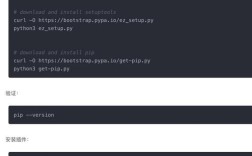
Installation:
pip install PyExecJS
Usage Example:
import PyExecJS
# PyExecJS will automatically try to find a JS engine.
# It's good practice to specify it to be sure.
context = PyExecJS.get('SpiderMonkey') # or just use the default
# 1. Run a simple script
js_code = """
function add(a, b) {
    return a + b;
}
"""
context.eval(js_code) # Define the function
# 2. Call the function and get the result
result = context.call("add", 5, 10)
print(f"The result is: {result}") # Output: The result is: 15
# 3. Pass Python data to JavaScript and get it back
python_data = {'name': 'Alice', 'age': 30}
js_code_to_convert = """
function convert(obj) {
    return 'Hello, ' + obj.name + '! You are ' + obj.age + ' years old.';
}
"""
context.eval(js_code_to_convert)
greeting = context.call("convert", python_data)
print(f"Greeting: {greeting}") # Output: Greeting: Hello, Alice! You are 30 years old.
Pros:
- Very easy to set up.
- No need to compile anything.
- Works on any platform where you can install the
jscommand-line tool.
Cons:
- Slower than direct C API integration because it involves process spawning and communication via pipes.
- Less control over the JavaScript environment.
Method 2: The PySpiderMonkey Library (Advanced, C Extension)
This is a more direct and performant approach. PySpiderMonkey is a Python C extension that embeds the SpiderMonkey engine directly into your Python interpreter. It doesn't use the js command-line tool.
How it works: It links your Python process directly against the SpiderMonkey C/C++ libraries, allowing for very fast, in-memory execution.
Installation:
This is more complex because you need to compile the C extension. It often requires development tools and the SpiderMonkey development libraries (libmozjs-dev or similar).
# On Ubuntu/Debian, you need the dev headers first
sudo apt-get install python3-dev libmozjs-115-dev # Use the version that matches your SpiderMonkey
# Then install the Python package (it will compile during install)
pip install PySpiderMonkey
Note: The version of libmozjs-dev must match the version PySpiderMonkey was built for. This can be a tricky part of the installation.
Usage Example:
import spidermonkey
# Create a new JavaScript runtime and context
rt = spidermonkey.Runtime()
cx = rt.new_context()
# 1. Execute a script to define a function
cx.eval_script("""
function add(a, b) {
    return a + b;
}
""")
# 2. Call the function
# The arguments and return value are automatically converted between Python and JS types.
result = cx.call_function("add", 5, 10)
print(f"The result is: {result}") # Output: The result is: 15
# 3. Work with JS objects in Python
js_obj_str = """
(function() {
    return { name: "Bob", age: 42 };
})();
"""
js_obj = cx.eval_script(js_obj_str)
print(f"JS Object: {js_obj}") # Output: JS Object: {'name': 'Bob', 'age': 42}
print(f"Name: {js_obj['name']}") # Output: Name: Bob
Pros:
- High Performance: Much faster than
PyExecJSas there's no process overhead. - Tight Integration: You get fine-grained control over the JavaScript context.
- Can pass complex Python objects and have them wrapped as JavaScript objects.
Cons:
- Complex Installation: Requires compiling C code and managing system dependencies.
- Can be harder to set up, especially on Windows.
Summary and Recommendation
| Feature | PyExecJS |
PySpiderMonkey (C Extension) |
|---|---|---|
| Ease of Use | Excellent | Fair (requires compilation) |
| Performance | Good (slower due to pipes) | Excellent (in-process) |
| Dependencies | Only Python & js CLI tool |
Python, C compiler, SpiderMonkey dev libs |
| Control | Low | High |
| Best For | Quick scripts, testing, general use | Performance-critical applications, embedding |
Recommendation:
- For most users and quick projects: Start with
PyExecJS. It's the simplest way to get JavaScript running inside Python and is sufficient for many use cases like testing and simple scripting. - For performance-critical applications or complex embedding: If you need the best possible performance and full control, invest the time to set up
PySpiderMonkey. It's the "proper" way to embed SpiderMonkey in Python.