Of course! The term "addreference" in Python most commonly refers to adding a reference to an external library or module. This is done so that you can use the code from that library in your own script.

The most frequent way to do this is with import statements. Let's break down the different ways to "add a reference" in Python, from the most basic to more advanced scenarios.
The Standard Way: The import Statement
This is the fundamental mechanism for using code from other files (modules) or packages (collections of modules).
a) Basic import
This imports the entire module. You then access its functions using the module_name.function_name syntax.
# Add a reference to the built-in 'math' module
import math
# Now you can use functions from the math module
result = math.sqrt(16)
print(f"The square root of 16 is: {result}")  # Output: The square root of 16 is: 4.0
pi_value = math.pi
print(f"The value of Pi is: {pi_value}")     # Output: The value of Pi is: 3.141592653589793
b) import ... as ... (Aliasing)
This is useful for modules with long names or to avoid naming conflicts. You give the module a shorter, more convenient nickname.

# Add a reference to the 'pandas' library, commonly aliased as 'pd'
import pandas as pd
# Now you can use 'pd' instead of 'pandas'
data = {'Name': ['Alice', 'Bob'], 'Age': [25, 30]}
df = pd.DataFrame(data)
print(df)
Output:
    Name  Age
0  Alice   25
1    Bob   30
c) from ... import ...
This imports specific functions, classes, or variables directly into your current namespace. You can then use them without the module prefix.
# Add a reference to specific functions from the 'math' module
from math import sqrt, pi
# Now you can use sqrt() and pi directly, without the 'math.' prefix
print(f"Square root of 144: {sqrt(144)}") # Output: Square root of 144: 12.0
print(f"Pi value: {pi}")                  # Output: Pi value: 3.141592653589793
Caution: Be careful with this method. If you import a name that already exists in your script (e.g.,
from my_module import my_functionand you already have amy_function), it will be overwritten.
d) from ... import * (Not Recommended)
This imports everything from the module into your current namespace. It's generally discouraged because it makes it unclear where functions are coming from and can easily lead to name collisions.

 # Avoid this in production code!
from math import *
print(sqrt(9)) # Works fine
The Crucial Prerequisite: Installing Libraries
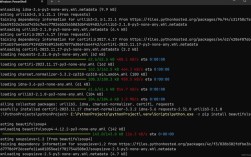
Before you can import a library that isn't part of Python's standard library (like pandas, numpy, requests), you must first install it. This is where pip comes in.
pip is Python's package installer. You use it from your command line (terminal or command prompt).
Syntax:
pip install library_name
Examples:
-
Install a single library:
pip install requests
-
Install a specific version:
pip install numpy==1.21.0
-
Install from a
requirements.txtfile (best practice for projects): First, create a file namedrequirements.txtand list your libraries:requests==2.25.1 pandas==1.3.0Then, install all of them at once:
pip install -r requirements.txt
Note: If you have both Python 2 and Python 3 installed, you might need to use
pip3instead ofpipto ensure you're installing the package for the correct Python version.
Advanced Scenario: Adding a Local Folder as a Reference
Sometimes you have your own modules or packages in a local folder and you want to import them into your script. There are a few ways to handle this.
a) By Adding the Folder to sys.path
Python looks for modules in the directories listed in sys.path. You can temporarily add your local folder to this list.
Project Structure:
/my_project
|-- my_module.py
|-- main_script.py
my_module.py
def greet(name):
    print(f"Hello, {name}! Welcome from my_module.")
main_script.py
import sys
import os
# Get the absolute path of the directory containing this script
# This makes the script more portable
script_dir = os.path.dirname(os.path.abspath(__file__))
# Add the parent directory (my_project) to sys.path
# This allows us to find 'my_module'
sys.path.append(script_dir)
# Now we can import 'my_module' as if it were an installed library
import my_module
my_module.greet("Alice")
b) Using the PYTHONPATH Environment Variable (More Permanent)
You can set an environment variable called PYTHONPATH that tells Python where to look for modules in addition to the standard locations.
- On Linux/macOS:
export PYTHONPATH="/path/to/your/project:$PYTHONPATH"
- On Windows (Command Prompt):
set PYTHONPATH="C:\path\to\your\project;%PYTHONPATH%"
- On Windows (PowerShell):
$env:PYTHONPATH="C:\path\to\your\project;$env:PYTHONPATH"
After setting this, you can run main_script.py from anywhere, and it will find my_module without needing to modify sys.path.
Summary: Which Method to Use?
| Scenario | Solution | Example |
|---|---|---|
Use a built-in module (e.g., math, os) |
Use import |
import math |
Use a 3rd-party library (e.g., pandas) |
pip install pandas 2. import pandas as pd in your code. |
pip install pandas then import pandas |
| Use your own local file | Add the parent folder to sys.path. 2. Or set PYTHONPATH. |
sys.path.append('.') then import my_file |
| Use a function from a module repeatedly | Use from module import function |
from os import path |