Of course! "Beautiful Soup" is a fantastic Python library for web scraping. It's designed to make parsing HTML and XML documents easy, even if they aren't perfectly formatted.

Here’s a complete guide to get you started, from installation to practical examples.
What is Beautiful Soup?
Beautiful Soup is a Python library that parses HTML and XML documents. It creates a data structure (a "soup" object) that represents the document as a nested data structure, which you can easily navigate and search.
Key Features:
- Handles "broken" HTML: It's very forgiving and can parse messy or malformed HTML that would cause other parsers to fail.
- Simple API: It provides a simple, intuitive interface for searching and navigating the parse tree.
- Integration: It works perfectly with other libraries like
requeststo fetch web pages andlxmlorhtml5libas powerful back-end parsers.
Step 1: Installation
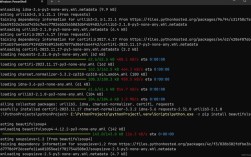
First, you need to install the library. It's best practice to install it inside a virtual environment.

# Create and activate a virtual environment (optional but recommended)
# python -m venv my-scraping-env
# source my-scraping-env/bin/activate  # On Windows: my-scraping-env\Scripts\activate
# Install Beautiful Soup
pip install beautifulsoup4
# You'll also need a parser. lxml is a great choice.
pip install lxml
# You'll also need a library to make HTTP requests
pip install requests
Step 2: The Core Concepts
Let's break down the process.
- Fetch the HTML: Use the
requestslibrary to get the HTML content of a webpage. - Create a Soup Object: Pass the HTML content to Beautiful Soup, along with a parser.
- Parse the Soup: Use Beautiful Soup's methods to find elements and extract the data you need.
Step 3: A Practical Example
Let's scrape the titles and links of the headlines from a simple, practice-friendly website like http://books.toscrape.com/, which is designed for scraping.
The Code
import requests
from bs4 import BeautifulSoup
# 1. Fetch the HTML content of the page
url = 'http://books.toscrape.com/'
try:
    response = requests.get(url)
    # Raise an exception for bad status codes (4xx or 5xx)
    response.raise_for_status()
except requests.exceptions.RequestException as e:
    print(f"Error fetching URL: {e}")
    exit()
# 2. Create a BeautifulSoup object
# 'lxml' is the parser we installed. It's fast and robust.
html_content = response.text
soup = BeautifulSoup(html_content, 'lxml')
# 3. Parse the soup and find the data we need
# The structure of books.toscrape.com is:
# <article class="product_pod"> for each book
#   <h3> inside that contains an <a> tag with the title
#   <a> tag has the 'href' attribute for the link
# Find all the book containers
book_containers = soup.find_all('article', class_='product_pod')
print(f"Found {len(book_containers)} books on the page.\n")
# Loop through each book container and extract the title and link
for book in book_containers:
    # Find the <h3> tag within the book containertag = book.h3
    # The actual title is in the 'title' attribute of the <a> tag inside <h3>= title_tag.a['title']
    # The link is in the 'href' attribute of the <a> tag
    link = title_tag.a['href']
    # The href is relative, so we join it with the base URL to get the full link
    full_link = requests.compat.urljoin(url, link)
    print(f"Title: {title}")
    print(f"Link:  {full_link}\n")
Explanation of Key Methods
soup.find_all('tag_name', attrs={'attribute': 'value'}): This is the workhorse method. It finds all occurrences of a tag that match the given attributes. It returns a list of all matchingTagobjects.soup.find_all('article', class_='product_pod')finds all<article>tags that have the classproduct_pod.
tag.name: Gets the name of the tag (e.g.,h3,a,p).tag['attribute_name']: Gets the value of an attribute of a tag (e.g.,tag['href'],tag['class']).tag.get_text(strip=True): Gets all the text inside a tag and its children.strip=Trueremoves leading/trailing whitespace.requests.compat.urljoin(base_url, relative_path): A very useful function for combining a base URL with a relative path to create a full, absolute URL.
Step 4: Common Tasks and Methods
Here are the most common things you'll do with Beautiful Soup.
Navigating the Tree
You can navigate the parse tree using dot notation or methods.
# Let's get the first book's title tag again
first_book = soup.find('article', class_='product_pod')tag = first_book.h3
# .parent gets the direct parent element
print(f"The parent of <h3> is: {title_tag.name}\n") # Output: The parent of <h3> is: article
# .find_next_sibling() finds the next element at the same level
# This is useful for finding the next <article> tag
Searching with CSS Selectors
Beautiful Soup supports a subset of CSS selectors, which many web developers find very intuitive. You use the .select() method.
# Find all book titles using a CSS selector
# .product_pod h3 a selects any <a> tag inside an <h3> tag inside an element with class "product_pod"tags = soup.select('.product_pod h3 a')
for tag in title_tags:
    print(f"CSS Selector Title: {tag['title']}")
# Find all prices using a CSS selector
# .price_color selects any element with class "price_color"
price_tags = soup.select('.price_color')
for tag in price_tags:
    print(f"Price: {tag.get_text()}")
Searching by Text Content
You can search for tags that contain specific text.
# Find a link that contains the text "A Light in the Attic"
link_tag = soup.find('a', string=lambda text: 'A Light in the Attic' in text)
if link_tag:
    print(f"\nFound the link for 'A Light in the Attic': {link_tag['href']}")
Step 5: Handling Different Parsers
Beautiful Soup supports several parsers. The choice can affect speed and how it handles broken HTML.
| Parser | How to Use It | Pros | Cons |
|---|---|---|---|
lxml |
BeautifulSoup(html, 'lxml') |
Very fast, feature-rich. | Requires external C library installation. |
html.parser |
BeautifulSoup(html, 'html.parser') |
Built-in into Python, no extra dependencies. | Slower than lxml. |
html5lib |
BeautifulSoup(html, 'html5lib') |
Most forgiving, parses invalid HTML like a browser. | Very slow, requires external library. |
Recommendation: Use lxml if you can install it. It's the best combination of speed and features. Use html.parser if you can't install external libraries.
Important Ethical and Legal Considerations
Before you scrape any website, be a good internet citizen:
- Check
robots.txt: Most websites have a file atwww.example.com/robots.txtthat outlines which parts of the site they don't want bots to access. Always respect this file. - Read the Terms of Service: Some websites explicitly forbid scraping in their Terms of Service. Violating this can get you into legal trouble.
- Don't Overload the Server: Send requests at a reasonable rate. Add delays between your requests using
time.sleep()to avoid overwhelming the website's server. - Identify Yourself: Set a
User-Agentin your request headers to identify your script. This is more polite than using the defaultrequestsuser agent.headers = {'User-Agent': 'My Web Scraper 1.0 (my-email@example.com)'} response = requests.get(url, headers=headers)