Of course! When you say "Python patterns URL," you're likely asking about one of two things, which are closely related:
- Pattern Matching for URLs: Using Python's modern pattern matching (
match...case) to parse and handle different URL structures. - URL Patterns in Web Frameworks: Defining how URLs map to specific functions or views in a web application (like Flask or Django).
I'll cover both, starting with the modern Python feature, as it's a powerful tool for any kind of string or data parsing, including URLs.
Pattern Matching for URLs (Python 3.10+)
Python 3.10 introduced the match...case statement, which is excellent for parsing structured data like URLs. It's often more readable and robust than a chain of if/elif/else statements with str.startswith() or regular expressions.
Let's say you have a URL and you want to extract information from it based on its structure.
Example: Parsing a Blog Post URL
Imagine you have a URL like https://example.com/blog/2025/10/15/my-awesome-post.
Goal: Extract the year, month, day, and slug from the path.
The "Old Way" (if/elif/else)
This approach is verbose and can be hard to read.
url = "https://example.com/blog/2025/10/15/my-awesome-post"
if url.startswith("https://example.com/blog/"):
    parts = url.split("/blog/")[1].split("/")
    if len(parts) == 4:
        year, month, day, slug = parts
        print(f"Year: {year}, Month: {month}, Day: {day}, Slug: {slug}")
    else:
        print("Invalid blog post URL format.")
elif url.startswith("https://example.com/about/"):
    print("This is the about page.")
else:
    print("Unknown URL type.")
The "Modern Way" (match...case)
This is much cleaner and more declarative. You are literally "matching" the structure of the string.
url = "https://example.com/blog/2025/10/15/my-awesome-post"
match url:
    case "https://example.com/about/":
        print("This is the about page.")
    # Match the blog post pattern using wildcards _
    # We use _ for parts we don't care about (like the domain)
    case f"https://example.com/blog/{year}/{month}/{day}/{slug}":
        print(f"--- Blog Post Found ---")
        print(f"Year: {year}")
        print(f"Month: {month}")
        print(f"Day: {day}")
        print(f"Slug: {slug}")
    # A catch-all for any other URL
    case _:
        print("Unknown URL type.")
# --- Output ---
# --- Blog Post Found ---
# Year: 2025
# Month: 10
# Day: 15
# Slug: my-awesome-post
Why this is powerful:
- Readability: The code looks like the pattern you're trying to match.
- Extraction: Variables (
year,month, etc.) are automatically extracted from the string if the pattern matches. - Structure: It's easy to add new patterns without complex nested logic.
URL Patterns in Web Frameworks
This is the most common meaning of "URL patterns" in a web development context. It's the mechanism that connects a requested URL to a specific piece of code (a "view" or "route handler") that generates a response.
This is fundamental to how all web frameworks work.
A. Flask: Simple and Pythonic
Flask uses a decorator-based approach. The @app.route() decorator defines the URL pattern.
# app.py
from flask import Flask
app = Flask(__name__)
# 1. A simple static URL
@app.route('/')
def home():
    return "Hello, World! This is the home page."
# 2. A URL with a dynamic part (an integer ID)
# <int:product_id> captures an integer from the URL and passes it as an argument.
@app.route('/product/<int:product_id>')
def show_product(product_id):
    return f"Displaying product with ID: {product_id}"
# 3. A URL with a string part (a slug)
# <slug> captures any string without slashes.
@app.route('/blog/<slug>')
def show_blog_post(slug):
    return f"Displaying blog post with slug: {slug}"
if __name__ == '__main__':
    app.run(debug=True)
How it works:
- matches the root URL.
/product/123matches the second pattern. Flask callsshow_product(123)./blog/my-first-postmatches the third pattern. Flask callsshow_blog_post("my-first-post").
B. Django: Powerful and Comprehensive
Django uses a central urls.py file to define all URL patterns for an application or project. This is often considered more organized for large applications.
The patterns are defined as a list of path() or re_path() (for regular expressions) tuples.
# myproject/urls.py
from django.contrib import admin
from django.urls import path, include
from myapp import views  # Import your view functions
urlpatterns = [
    path('admin/', admin.site.urls),
    path('', views.home, name='home'), # The empty string '' matches the root
    path('product/<int:product_id>/', views.show_product, name='product-detail'),
    path('blog/<slug>/', views.show_blog_post, name='blog-post'),
]
# myapp/views.py
from django.http import HttpResponse
def home(request):
    return HttpResponse("Hello, World! This is the Django home page.")
def show_product(request, product_id):
    return HttpResponse(f"Displaying Django product with ID: {product_id}")
def show_blog_post(request, slug):
    return HttpResponse(f"Displaying Django blog post with slug: {slug}")
How it works:
path('', views.home, name='home'): The pattern matches the root URL and calls thehomeview.path('product/<int:product_id>/', ...): The<int:product_id>converter captures an integer and passes it toshow_product.- The
nameargument is crucial for creating reverse URLs in templates and other parts of your code.
Regular Expressions for URLs (The Underlying Power)
Both Flask and Django use regular expressions "under the hood" to match URL patterns. Understanding them is useful for complex matching.
- Flask's converters (
<int:id>,<slug>) are shortcuts for common regex patterns. - Django's
re_path()allows you to write your own regex.
Common Regex Patterns for URLs
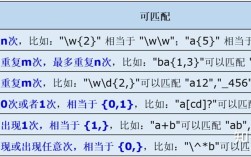
| Pattern | Description | Example |
|---|---|---|
^ |
Asserts position at start of the string. | ^/api/ |
| Asserts position at end of the string. | /api/$ |
|
\d |
Matches any digit (0-9). | \d+ (one or more digits) |
[a-z0-9-]+ |
Matches one or more lowercase letters, numbers, or hyphens (a common slug pattern). | [a-z0-9-]+ |
| Matches any character (except for line terminators) zero or more times. | (be careful with this, it's too greedy) | |
| Matches any character one or more times. |
Example: Complex Regex in Django
Let's say you want to match URLs like /articles/2025/10/15/ but only if the year is after 2000.
# myproject/urls.py
from django.urls import re_path
from myapp import views
urlpatterns = [
    # ... other patterns
    re_path(r'^articles/20(0[1-9]|1[0-9]|2[0-9])/([0-9]{2})/([0-9]{2})/$', views.article_archive, name='article-archive'),
]
# myapp/views.py
def article_archive(request, year, month, day):
    # The regex groups are passed as arguments in order
    return HttpResponse(f"Archive for {year}-{month}-{day}")
Regex Breakdown:
^articles/: Starts with "articles/".20(0[1-9]|1[0-9]|2[0-9]): Matches "20" followed by:0[1-9]: A year from 2001-2009.- OR
1[0-9]: A year from 2010-2025.- OR
2[0-9]: A year from 2025-2029.
([0-9]{2}): Captures a two-digit month (group 2).- A literal slash.
([0-9]{2}): Captures a two-digit day (group 3).- Ends with a slash.
Summary: Which "Pattern" Should You Use?
| Context | Best Tool | Why? |
|---|---|---|
| Parsing a URL string in a script or utility. | Python match...case |
Clean, readable, and excellent for extracting data from structured strings. |
| Building a web application (Flask, FastAPI, etc.). | Framework URL Decorators (@app.route) |
The idiomatic, simple way to define routes in most micro-frameworks. |
| Building a large web application (Django). | Framework urls.py file (path, re_path) |
Centralized, organized, and scalable for managing many URL patterns. |
| You need extremely complex URL matching not supported by framework converters. | Regular Expressions (re_path in Django) |
The most powerful and flexible tool, but can be complex and hard to read. |