Of course. Let's break down what the Python socket error 10053 means, why it happens, and how to troubleshoot it.

What is Socket Error 10053?
In Python, when you use the socket module, errors are often represented by numbers defined in the errno module. The error code 10053 corresponds to WSAECONNABORTED on Windows systems.
Official Meaning: Software caused connection abort
This is a crucial clue. It means the connection was terminated locally by your machine's operating system, not by the remote server. Your Python script didn't explicitly close the socket; instead, the OS stepped in and killed the connection.
Think of it like this: You're on a phone call, and suddenly your phone's software crashes, ending the call. That's a 10053. The person on the other line just hears a busy signal or a disconnect; they don't know why it happened from their end.

Why Does 10053 Happen? (The Common Causes)
The OS doesn't just kill connections for fun. It usually does so because something went wrong with the data transmission. Here are the most frequent reasons:
The Most Common Cause: Network Unreliability (Especially Wi-Fi)
This is the #1 culprit, especially for applications running on laptops.
- Wi-Fi Disconnect: Your laptop briefly loses its Wi-Fi connection. The OS sees that the network interface is down and aborts all active sockets.
- Network Fluctuation: The network becomes temporarily unstable, causing packets to be lost. The OS's internal TCP/IP stack might time out and decide the connection is "dead," so it aborts it.
- Router/Modem Issues: A temporary glitch in your home router or a network switch can cause the connection to be dropped.
The Local Application or Service Crashed
The error message says "Software caused...". This "software" could be another program on your machine, not just your Python script.
- Antivirus/Firewall: An overzealous security program might see suspicious network activity (e.g., a sudden burst of data) and decide to block or terminate the connection to protect your PC.
- Other Network Software: Another application on your computer might be using the same network resources and causing a conflict.
- Your Python Script Itself: If your Python script is buggy and crashes unexpectedly, it won't get a chance to gracefully close the socket. The OS will then clean up the process, leaving the socket in a broken state, which can manifest as a
10053in subsequent runs or for other parts of your application.
The Remote Server Closed the Connection Abruptly
While the error is "local," it's often a reaction to something the remote server did.

- Server-Side Crash: The application on the server might have crashed. When it crashed, it didn't send a proper "FIN" (finish) packet to gracefully close the TCP connection. Your OS, after trying to send data and getting no response, eventually times out and aborts the local connection endpoint.
- Server Firewall/Proxy: A firewall or proxy between you and the server might be configured to drop connections after a certain period of inactivity or if it detects something it doesn't like.
Local Firewall Blocking the Connection
Your Windows Defender Firewall or a third-party firewall could be blocking the connection. When it blocks a connection attempt, it can sometimes report it back as an aborted connection.
How to Troubleshoot 10053 in Python
Here’s a step-by-step guide to diagnose and fix the problem.
Step 1: Rule Out Simple Network Issues
This is the easiest thing to check first.
- Ping the Server: Open a command prompt and
pingthe server's hostname or IP address.ping example.com
If you get "Request timed out" or "Destination host unreachable," you have a fundamental network problem. Check your internet, Wi-Fi, and DNS settings.
- Test with
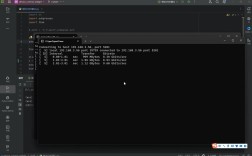
telnetornc: Use a simple tool liketelnetto see if you can establish a raw connection to the port your Python script is trying to use. This helps isolate the problem to your Python code.# Syntax: telnet <hostname> <port> telnet example.com 80
If
telnetconnects and then immediately drops, the issue is likely with the server or the path to it, not your Python code. Iftelnetfails, the network is the problem.
Step 2: Add Robust Error Handling and Timeouts to Your Python Code
Your code should be resilient to network hiccups. Don't assume the connection will last forever.
Use Timeouts: This is the most important fix. Set a timeout on your socket so that operations like connect(), recv(), and send() don't hang forever and will raise a timeout exception, which you can handle gracefully.
import socket
import sys
HOST = 'example.com'
PORT = 80
try:
    # 1. Create a socket
    with socket.socket(socket.AF_INET, socket.SOCK_STREAM) as s:
        # 2. Set a timeout for all blocking operations
        s.settimeout(10.0)  # 10 seconds timeout
        print("Connecting...")
        # 3. Connect to the server
        s.connect((HOST, PORT))
        print("Connected. Sending data...")
        # 4. Send some data
        s.sendall(b'GET / HTTP/1.1\r\nHost: example.com\r\n\r\n')
        print("Data sent. Receiving response...")
        # 5. Receive data
        data = s.recv(1024)
        print(f'Received: {data.decode("utf-8")}')
except socket.timeout:
    print("Error: The connection timed out.")
except ConnectionAbortedError as e:
    # This is the specific exception for error 10053
    print(f"Error: Connection was aborted locally (Error 10053). Details: {e}")
except socket.error as e:
    # Catch other socket errors
    print(f"A socket error occurred: {e}")
except Exception as e:
    # Catch any other unexpected errors
    print(f"An unexpected error occurred: {e}")
Step 3: Check for Local Software Conflicts
- Temporarily Disable Firewall/Antivirus: As a test, disable your Windows Defender Firewall or any third-party antivirus software and run your script again. Remember to re-enable it afterward! If the error goes away, you've found the culprit. You'll need to add an exception or rule for your Python script in the firewall settings.
- Check Other Applications: Close other programs that might be using the network, especially other instances of your own script or other server-like applications.
Step 4: Examine the Server-Side Logs
If you control the server, its logs are your best friend. Look for any crash reports, error messages, or evidence of the server closing the connection unexpectedly. The problem might be on the server side, and your local machine is just reacting to it.
Summary
| Symptom / Cause | Likely Solution |
|---|---|
| Error happens intermittently, especially on Wi-Fi. | Network instability. Make your code robust with timeouts and handle ConnectionAbortedError. |
| Error happens consistently after a few seconds. | Server or firewall issue. Test with telnet. Check server logs. Check your local firewall. |
| Error started after installing new software. | Software conflict. Check new antivirus/firewall software. Disable it temporarily to confirm. |
| My code is crashing. | Bug in your script. Fix the bug so your script can close sockets gracefully instead of crashing. |
By following these steps, you can systematically identify whether the problem is with your network, your local machine's software, your Python code, or the remote server.