Of course! This is a classic and very important topic in software development. Let's break down the concepts of "web service" and the roles of PHP and Java in building them.
Part 1: What is a Web Service?
At its core, a web service is a method of communication between two electronic devices over a network (like the internet). It's a software system designed to support interoperable machine-to-machine interaction over a network.
Think of it as a menu in a restaurant. You (the client) don't need to know how the kitchen (the server) works. You just need to know what dishes (functions/data) are available, how to order them (the API), and what format they'll be served in (the data format).
Key Characteristics:
- Interoperability: It allows different applications, written in different languages (like PHP and Java), to communicate with each other.
- XML/JSON: Data is exchanged in a standard, platform-independent format like XML (historically) or JSON (more common today).
- Standard Protocols: Communication happens over standard web protocols, primarily HTTP/HTTPS.
Part 2: The Architectural Styles (How They Work)
There are two main architectural styles for web services. This is the most crucial distinction.
SOAP (Simple Object Access Protocol)
SOAP is a protocol. It's a strict set of rules for structuring messages. It's very robust, secure, and standardized, making it a favorite in large enterprises, especially in the financial and telecom sectors.
- Protocol: It's a strict protocol with its own standards (WS-Security, WS-Addressing, etc.).
- Format: Traditionally uses XML for the message format. The XML envelope defines the message, its sender, receiver, and security details.
- Transport: Can be transported over various protocols (HTTP, SMTP, TCP), but HTTP is the most common.
- Complexity: More complex and verbose. It requires more bandwidth.
- Tooling: Excellent tooling (WSDL - Web Services Description Language) that allows you to generate client/server stubs automatically. You can give a WSDL file to a Java developer, and they can generate a complete Java client without writing a single line of network code.
SOAP Message Example (XML):
<soap:Envelope xmlns:soap="http://www.w3.org/2003/05/soap-envelope">
  <soap:Header/>
  <soap:Body>
    <m:GetStockPrice xmlns:m="http://www.example.org/stock">
      <m:StockName>GOOGL</m:StockName>
    </m:GetStockPrice>
  </soap:Body>
</soap:Envelope>
REST (Representational State Transfer)
REST is not a protocol; it's an architectural style. It's simpler, more flexible, and has become the de facto standard for public APIs (like those from Twitter, Google, Facebook).
- Style: It's a set of constraints for creating web services that are scalable, stateless, and cacheable.
- Format: Typically uses JSON, but can also use XML, HTML, or plain text. JSON is preferred for its lightweight nature.
- Transport: Almost exclusively uses HTTP.
- Key Concepts:
- Resources: Everything is a resource (e.g.,
/users,/products/123). - HTTP Verbs: Use standard HTTP methods to perform actions on resources:
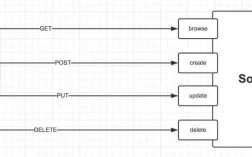
GET: Retrieve a resource.POST: Create a new resource.PUTorPATCH: Update an existing resource.DELETE: Remove a resource.
- Stateless: Each request from a client must contain all the information needed to understand and process it. The server does not store any client session state.
- Uniform Interface: A consistent way to interact with the resources.
- Resources: Everything is a resource (e.g.,
REST API Request Example (using curl):
# Get user with ID 123
curl -X GET https://api.example.com/users/123
# Create a new user
curl -X POST https://api.example.com/users \
-H "Content-Type: application/json" \
-d '{"name": "John Doe", "email": "john.doe@example.com"}'
Part 3: PHP vs. Java for Web Services
Now let's see how each language implements these styles.
PHP for Web Services
PHP is often used for rapid development and is very common in the web world, especially for building the "backend" or "API" for web applications.
Strengths of PHP:
- Simplicity: It's very easy to get a REST API up and running quickly.
- Ubiquity: Almost every web host supports PHP.
- Ecosystem: Massive ecosystem of libraries (via Composer) for everything.
How PHP Implements REST: This is the most common approach for PHP. You don't need a special library. You just use PHP's built-in capabilities.
Example: A simple REST API in PHP (using a routing library like Bramus/Router)
// index.php
require 'vendor/autoload.php';
$router = new Bramus\Router\Router();
// Define routes
$router->get('/api/users', function() {
    // Logic to fetch all users from a database
    $users = ['id' => 1, 'name' => 'Alice'];
    header('Content-Type: application/json');
    echo json_encode($users);
});
$router->get('/api/users/(\d+)', function($id) {
    // Logic to fetch a single user by ID
    header('Content-Type: application/json');
    echo json_encode(['id' => $id, 'name' => 'Alice']);
});
$router->run();
How PHP Implements SOAP:
Less common, but possible using extensions like SoapServer and SoapClient.
// server.php
$server = new SoapServer("stock.wsdl");
$server->setClass("StockQuote");
$server->handle();
// client.php
$client = new SoapClient("stock.wsdl");
$price = $client->GetStockPrice("GOOGL");
echo "The price is: " . $price;
Java for Web Services
Java is known for its robustness, scalability, and enterprise-grade features. It's the go-to language for large, complex, and mission-critical applications.
Strengths of Java:
- Robustness & Scalability: Excellent for high-traffic systems.
- Strong Typing: The static typing of Java helps catch errors at compile time.
- Enterprise Frameworks: Mature, powerful frameworks that handle a lot of boilerplate code.
- Tooling: Unmatched tooling for development, testing, and deployment (e.g., Maven, Gradle, Spring Boot).
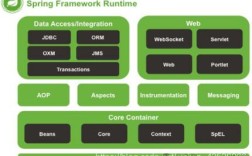
How Java Implements REST: This is the dominant approach for modern Java web services. The Spring Framework (specifically Spring Boot) is the industry standard.
Example: A REST API in Java with Spring Boot
You just need to add the spring-boot-starter-web dependency. Spring Boot automatically configures everything.
// src/main/java/com/example/demo/StockController.java
import org.springframework.web.bind.annotation.GetMapping;
import org.springframework.web.bind.annotation.PathVariable;
import org.springframework.web.bind.annotation.RestController;
@RestController // This annotation marks the class as a REST controller
public class StockController {
    @GetMapping("/api/users") // Maps GET requests to /api/users
    public String[] getAllUsers() {
        return new String[]{"id: 1, name: Alice"};
    }
    @GetMapping("/api/users/{id}") // Maps GET requests to /api/users/{id}
    public String getUserById(@PathVariable int id) {
        return "User with ID: " + id + " (name: Alice)";
    }
}
How Java Implements SOAP: Java has excellent, built-in support for SOAP via the JAX-WS (Java API for XML Web Services) API. It's a standard part of the Java EE (now Jakarta EE) platform.
Example: A simple SOAP web service in Java (JAX-WS)
-
Create the Service Endpoint Interface (SEI):
import javax.jws.WebService; import javax.jws.WebMethod; @WebService public interface StockQuote { @WebMethod public double getStockPrice(String stockSymbol); } -
Create the Service Implementation:
import javax.jws.WebService; @WebService(endpointInterface = "com.example.demo.StockQuote") public class StockQuoteImpl implements StockQuote { @Override public double getStockPrice(String stockSymbol) { // Some logic to get the price return 150.25; } } -
Publish the service (e.g., in a main method):
import javax.xml.ws.Endpoint;
public class StockPublisher {
    public static void main(String[] args) {
        Endpoint.publish("http://localhost:8080/stock", new StockQuoteImpl());
        System.out.println("SOAP Service is running at http://localhost:808