Of course! Working with string data in Python's Pandas DataFrames is a fundamental task. Pandas provides a powerful and efficient set of tools for this, primarily through the .str accessor.

Here’s a comprehensive guide covering everything from basic operations to more advanced techniques.
The Foundation: The .str Accessor
When you have a Pandas DataFrame or Series with string data, you can access a collection of string methods using the .str accessor. This allows you to perform vectorized string operations, which are much faster than iterating through the data with a standard Python loop.
Key Concept: You don't call methods like .upper() directly on the Series. You call them on the .str accessor: series.str.upper().
Setup: Let's create a sample DataFrame

import pandas as pd
import numpy as np # For NaN values
data = {
    'first_name': ['John', 'Jane', 'Peter', 'Emily', np.nan],
    'last_name': ['Doe', 'Smith', 'Jones', 'Brown', 'Davis'],
    'email': ['john.doe@example.com', 'jane.smith@work.com', 'peter.jones@blog.net', 'EMILY@BROWN.ORG', None]
}
df = pd.DataFrame(data)
print("Original DataFrame:")
print(df)
Output:
Original DataFrame:
  first_name last_name             email
0       John       Doe  john.doe@example.com
1       Jane     Smith  jane.smith@work.com
2      Peter     Jones   peter.jones@blog.net
3      Emily     Brown      EMILY@BROWN.ORG
4        NaN     Davis                  None
Common String Operations
Here are the most frequently used string methods.
A. Case Conversion
These methods are used to standardize the case of your strings.
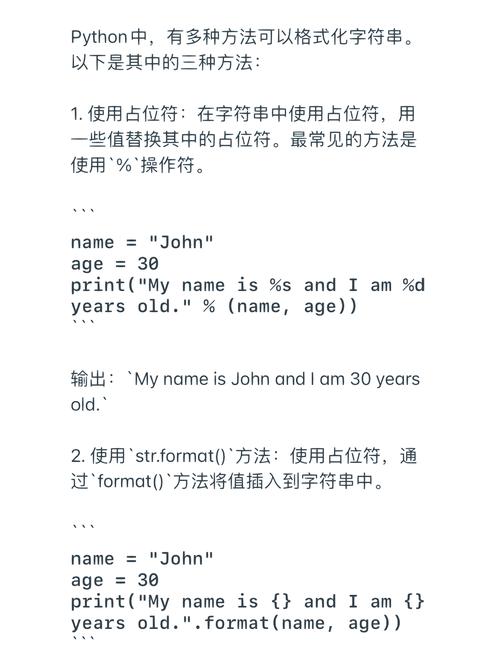
.str.lower(): Converts all characters to lowercase..str.upper(): Converts all characters to uppercase..str.title(): Converts the first character of each word to uppercase and the rest to lowercase..str.capitalize(): Converts the first character of the string to uppercase and the rest to lowercase..str.swapcase(): Swaps the case of each character.
# Create a new column with lowercase emails
df['email_lower'] = df['email'].str.lower()
# Standardize first names to title case
df['first_name_standard'] = df['first_name'].str.title()
print("\nDataFrame with Case Conversion:")
print(df[['email', 'email_lower', 'first_name', 'first_name_standard']])
Output:
DataFrame with Case Conversion:
             email           email_lower first_name first_name_standard
0  john.doe@example.com  john.doe@example.com       John               John
1  jane.smith@work.com  jane.smith@work.com       Jane               Jane
2  peter.jones@blog.net  peter.jones@blog.net      Peter               Peter
3      EMILY@BROWN.ORG      emily@brown.org      Emily               Emily
4                  None                  None        NaN                NaN
B. Splitting Strings
The .str.split() method is incredibly useful for parsing strings.
.str.split(sep): Splits a string around a given separator. It returns a Series of lists..str.split(sep, expand=True): Splits the string and expands it into multiple columns. This is extremely powerful.
# Split the email into username and domain
split_emails = df['email'].str.split('@', expand=True)
# Add new columns to the DataFrame
df['username'] = split_emails[0]
df['domain'] = split_emails[1]
print("\nDataFrame after Splitting:")
print(df[['email', 'username', 'domain']])
Output:
DataFrame after Splitting:
             email        username       domain
0  john.doe@example.com    john.doe  example.com
1  jane.smith@work.com   jane.smith   work.com
2  peter.jones@blog.net  peter.jones    blog.net
3      EMILY@BROWN.ORG      EMILY    BROWN.ORG
4                  None          None        None
C. Concatenating Strings
You can combine strings from different columns.
.str.cat(others=None, sep=None, na_rep=None): Concatenates strings.
# Combine first and last names into a full name
df['full_name'] = df['first_name'].str.cat(df['last_name'], sep=' ')
# Handle NaN values by replacing them with a placeholder like 'Unknown'
df['full_name_no_nan'] = df['first_name'].str.cat(df['last_name'], sep=' ', na_rep='Unknown')
print("\nDataFrame after Concatenation:")
print(df[['first_name', 'last_name', 'full_name', 'full_name_no_nan']])
Output:
DataFrame after Concatenation:
  first_name last_name   full_name full_name_no_nan
0       John       Doe     John Doe         John Doe
1       Jane     Smith   Jane Smith       Jane Smith
2      Peter     Jones  Peter Jones      Peter Jones
3      Emily     Brown  Emily Brown      Emily Brown
4        NaN     Davis         NaN     Unknown Davis
D. Replacing and Removing Substrings
.str.replace(pat, repl, regex=False): Replaces a pattern (pat) with another string (repl)..str.strip(),.str.lstrip(),.str.rstrip(): Remove leading/trailing whitespace (or other characters).
# Remove 'example.com' from the email and replace with 'placeholder.com'
df['email_cleaned'] = df['email'].str.replace('example.com', 'placeholder.com')
# Clean up extra spaces from first names
df['first_name_clean'] = df['first_name'].str.strip()
print("\nDataFrame after Replacing and Stripping:")
print(df[['email', 'email_cleaned', 'first_name', 'first_name_clean']])
Output:
DataFrame after Replacing and Stripping:
             email       email_cleaned first_name first_name_clean
0  john.doe@example.com  john.doe@placeholder.com       John             John
1  jane.smith@work.com  jane.smith@work.com       Jane             Jane
2  peter.jones@blog.net  peter.jones@blog.net      Peter             Peter
3      EMILY@BROWN.ORG      EMILY@BROWN.ORG      Emily             Emily
4                  None                  None        NaN             NaN
Extracting Information with Regular Expressions (Regex)
This is one of the most powerful features of the .str accessor. You can use regex to find and extract complex patterns.
.str.extract(pat, flags=0, expand=True): Extracts capture groups from the strings in the Series. Ifexpand=True, it returns a DataFrame. Ifexpand=False, it returns a Series.
# Extract the top-level domain (e.g., com, net, org)
# The regex r'@([a-zA-Z]+)\.' captures the group of letters after the @ and before the .
df['tld'] = df['email'].str.extract(r'@([a-zA-Z]+)\.', expand=False)
# Extract numbers from a string column
data_with_numbers = {'id': ['ID-123', 'ID-456', 'ID-789', 'ID-ABC']}
df_numbers = pd.DataFrame(data_with_numbers)
df_numbers['number'] = df_numbers['id'].str.extract(r'(\d+)', expand=False)
print("\nDataFrame with Regex Extraction:")
print(df[['email', 'tld']])
print("\nDataFrame with Number Extraction:")
print(df_numbers)
Output:
DataFrame with Regex Extraction:
             email   tld
0  john.doe@example.com   com
1  jane.smith@work.com   com
2  peter.jones@blog.net   net
3      EMILY@BROWN.ORG   ORG
4                  None  None
DataFrame with Number Extraction:
         id number
0    ID-123    123
1    ID-456    456
2    ID-789    789
3    ID-ABC    None
Checking String Conditions (Boolean Masking)
You can create boolean masks (True/False Series) to filter your DataFrame based on string properties.
.str.contains(pat, case=True, flags=0, na=False): Checks if a pattern is contained in each string..str.startswith(prefix): Checks if a string starts with a specific prefix..str.endswith(suffix): Checks if a string ends with a specific suffix..str.match(pat): Checks if the beginning of the string matches a pattern (similar tore.match).
# Find all emails from a specific domain
is_gmail_user = df['email'].str.contains('@gmail.com')
df_gmail_users = df[is_gmail_user]
# Find all last names that start with 'D'
starts_with_d = df['last_name'].str.startswith('D')
df_d