Of course! Let's break down what "Java TM Platform" means, covering the "Java" part, the "TM" part, and the "Platform" part.
What is Java?
At its core, Java is a high-level, class-based, object-oriented programming language. It was designed by Sun Microsystems (now owned by Oracle) in the mid-1990s with a key philosophy: "Write Once, Run Anywhere" (WORA).
This means that a Java program is compiled into a special, intermediate format called bytecode, which can then be run on any device that has a Java Virtual Machine (JVM), regardless of the underlying hardware or operating system (like Windows, macOS, Linux, etc.).
What does "TM" Stand For?
The "TM" symbol stands for Trademark.
It's a legal designation indicating that "Java" is a brand name owned by Oracle Corporation. You'll see this on official logos, documentation, and software from Oracle to signify that they are the source and that the name is a protected brand.
Think of it like the ® symbol, but TM is used for trademarks that are registered or in the process of being registered. It's a common practice for major software brands.
What is the "Java Platform"?
This is the most important part of the term. The "Java Platform" is not just the Java language itself. It's the entire ecosystem that makes Java programs work. It consists of two main components:
A. The Java Virtual Machine (JVM)
The JVM is the heart of the Java Platform. It's a virtual machine that provides a runtime environment to execute Java bytecode.
Here's how it enables the "Write Once, Run Anywhere" promise:
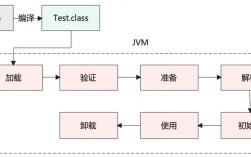
- Compilation: You write your Java code (
.javafiles) and compile it using the Java compiler (javac). This compiler doesn't create native machine code (like code for an Intel or AMD processor). Instead, it creates Java bytecode (.classfiles). - Execution: This bytecode is not executed directly by your operating system. Instead, it's loaded into the JVM.
- Just-In-Time (JIT) Compilation: The JVM takes your bytecode and, at runtime, compiles it into native machine code that the specific operating system and hardware can understand. This compilation happens on-the-fly as the program runs, which is why it's called "Just-In-Time."
Analogy: Think of the JVM as a universal electrical adapter. You can plug a device (your Java bytecode) into it, and it will convert the power (the bytecode) into the correct form for the wall socket (your specific OS and hardware). You don't need a different adapter for every country you visit.
B. The Java Application Programming Interface (API)
The Java API is a massive, pre-built library of classes and methods that programmers can use to perform common tasks without having to "reinvent the wheel." It covers a vast range of functionalities, including:
- Core Language Features: Basic data types, strings, exceptions, threading.
- Networking: Handling HTTP requests, creating sockets.
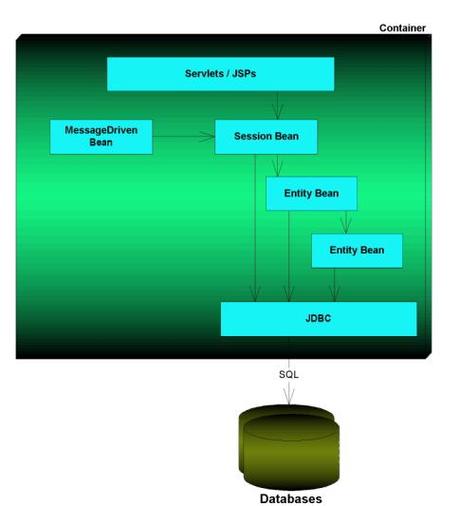
- Database Connectivity: JDBC (Java Database Connectivity) for interacting with databases like MySQL or Oracle.
- Graphical User Interfaces (GUIs): Building desktop windows and buttons (e.g., Swing, JavaFX).
- Collections: Powerful data structures like lists, maps, and sets.
- Security: Cryptography, authentication, and access control.
This rich API is a huge reason for Java's popularity, as it allows developers to build complex, robust applications much faster.
Putting It All Together: The "Java TM Platform"
When you refer to the "Java Platform," you are talking about the combination of:
- The Java Language: The syntax and rules for writing code.
- The Java Virtual Machine (JVM): The runtime environment that executes the compiled code.
- The Java API: The extensive library of pre-built tools and functionalities.
This combination is what makes Java a powerful and portable platform for developing all kinds of software, from web and enterprise applications to mobile apps (Android) and embedded systems.
Key Features of the Java Platform
- Portability: The WORA principle is the most famous feature.
- Object-Oriented: Encourages modular, reusable, and maintainable code.
- Secure: The JVM has a built-in security manager that can restrict what a program can do, making it safer to run untrusted code (like in an applet, though this is less common today).
- Robust: Features like automatic garbage collection (memory management) and strong type checking help prevent common programming errors.
- Multithreaded: Built-in support for handling multiple tasks simultaneously, which is crucial for high-performance applications.
Modern Evolutions: Java SE, EE, and Jakarta EE
The Java Platform has evolved into different editions tailored for different needs:
- Java SE (Standard Edition): The foundation. Contains the JVM, core language, and the fundamental API. Used for general-purpose desktop and command-line applications.
- Java EE (Enterprise Edition) / Jakarta EE: Built on top of Java SE. It's a platform for developing large-scale, multi-tier, web-based, and enterprise applications. It includes additional APIs for services like web servers, transaction management, and messaging.
- Java ME (Micro Edition): A simplified version for resource-constrained devices like embedded systems and mobile phones (though Android largely superseded it on smartphones).
In summary, the "Java TM Platform" is the complete, trademarked environment of the Java language, the JVM, and the Java API, designed to be a robust, secure, and portable foundation for software development.