
Of course. Here is a comprehensive guide to using NumPy with Python 3.4, including installation, basic usage, and important considerations.
Important Note: Python 3.4 is End-of-Life
First, it's crucial to understand that Python 3.4 reached its official end-of-life in March 2025. This means it no longer receives security updates, bug fixes, or improvements. Using it in a production environment is strongly discouraged.
However, for educational purposes, legacy project maintenance, or running very old scripts, you may need to make it work. This guide will help you do that.
Installation of NumPy for Python 3.4
The easiest and most reliable way to install packages for a specific Python version is using pip. Since Python 3.4 includes pip3 by default, you can use the following command.
Step 1: Open your Terminal or Command Prompt
- Windows: Open Command Prompt or PowerShell.
- macOS/Linux: Open your Terminal.
Step 2: Install NumPy
Run the following command. It tells pip3 to install the numpy package.
pip3 install numpy
If you have multiple Python versions on your system and want to be absolutely sure you're installing for Python 3.4, you can use:
python3.4 -m pip install numpy
This command explicitly uses the pip module associated with your python3.4 executable.
Potential Issues and Solutions
pipis not recognized: If you get an error like'pip3' is not recognized..., you may need to add Python'sScriptsdirectory to your system's PATH environment variable. For Python 3.4 on Windows, this is typicallyC:\Python34\Scripts.- Outdated
pip: If yourpipis very old, it might fail. You can try to upgrade it first:python3.4 -m pip install --upgrade pip
- Building from Source: NumPy has underlying C and Fortran code. On some Linux distributions, you might need to install build tools and development libraries before installing NumPy.
- On Debian/Ubuntu:
sudo apt-get update
sudo apt-get install python3.4-dev python3-numpy
(Note: The
python3-numpypackage from the repository might be an older version, but it's often the easiest way to get all dependencies). - On Fedora/CentOS:
sudo yum install python3-devel python3-numpy
- On Debian/Ubuntu:
Verifying the Installation
After the installation is complete, you should verify that NumPy is correctly installed and accessible by Python 3.4.
-
Open your Python 3.4 interpreter:
python3.4
-
Run the following commands:
import numpy as np
print("NumPy version:", np.__version__)
If this prints the NumPy version number (e.g., 16.6 or 17.0, which were common for Python 3.4), your installation was successful.
Basic NumPy Usage in Python 3.4
Here are some fundamental NumPy operations that will work in Python 3.4.
a. Creating Arrays
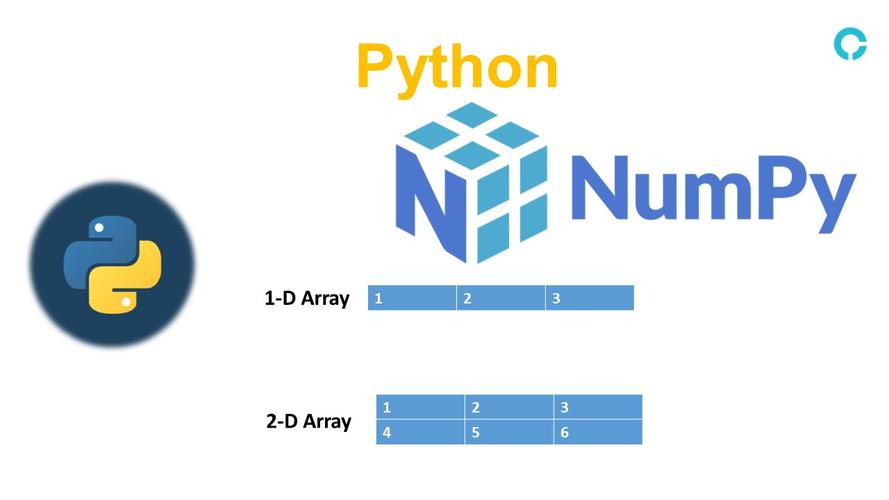
The core of NumPy is the ndarray object.
import numpy as np
# Create a simple array from a Python list
a = np.array([1, 2, 3, 4, 5])
print("Array a:", a)
print("Type of a:", type(a))
# Create a 2D array (matrix)
b = np.array([[1.0, 2.0, 3.0], [4.0, 5.0, 6.0]])
print("\n2D Array b:\n", b)
# Create arrays of zeros and ones
zeros_array = np.zeros((3, 4))
print("\nZeros array:\n", zeros_array)
ones_array = np.ones((2, 2))
print("\nOnes array:\n", ones_array)
# Create a range of numbers
range_array = np.arange(10)  # Similar to Python's range(10)
print("\nArange array:", range_array)
b. Array Properties
Arrays have useful attributes that describe their structure.
print("Array b:\n", b)
print("Shape:", b.shape)      # Dimensions of the array (rows, columns)
print("Dimensions:", b.ndim)   # Number of dimensions
print("Size:", b.size)        # Total number of elements
print("Data type:", b.dtype)  # Type of the elements (e.g., float64, int32)
c. Basic Operations
NumPy operations are performed element-wise, which is much faster than using Python loops.
x = np.array([1, 2, 3, 4])
y = np.array([10, 20, 30, 40])
# Element-wise addition
print("x + y:", x + y)
# Element-wise subtraction
print("x - y:", x - y)
# Element-wise multiplication
print("x * y:", x * y)
# Element-wise division
print("x / y:", x / y)
# Scalar operations
print("x * 2:", x * 2)
print("x > 2:", x > 2) # Returns a boolean array
d. Slicing and Indexing
This works similarly to Python lists but is extended to multiple dimensions.
# 1D Array Slicing
arr_1d = np.arange(10)
print("1D Array:", arr_1d)
print("Elements from index 2 to 5:", arr_1d[2:5])
# 2D Array Slicing
arr_2d = np.array([[1, 2, 3, 4], [5, 6, 7, 8], [9, 10, 11, 12]])
print("\n2D Array:\n", arr_2d)
# Get the first row
print("First row:", arr_2d[0, :])
# Get the second column
print("Second column:", arr_2d[:, 1])
# Get a sub-matrix (rows 0-1, columns 1-3)
print("Sub-matrix:\n", arr_2d[0:2, 1:3])
Important Considerations and Limitations
- NumPy Version: The NumPy version you install will be an older one (e.g.,
16.xor17.x). You will not have access to features introduced in newer versions of NumPy (e.g., versions22+and later). - Performance: While NumPy is still vastly faster than pure Python for numerical operations, the underlying BLAS/LAPACK libraries it uses might be older and not as optimized as the ones in modern environments.
- Security: As mentioned, Python 3.4 has known security vulnerabilities. Any code running on it is potentially at risk.
- Dependency Management: If your project requires other scientific Python packages like
pandas,scikit-learn, ormatplotlib, you must check their documentation for the oldest supported Python version. Many modern versions of these libraries have dropped support for Python 3.4 entirely.
Recommendation: Upgrade Your Python Environment
The best course of action is to migrate your project to a modern version of Python (3.8 or newer). Modern Python versions are faster, more secure, and have access to the latest versions of all scientific computing libraries, which often include significant performance improvements and new features.
If you are starting a new project, do not use Python 3.4. If you are maintaining an old one, create a plan to upgrade it as soon as possible.


