Of course. Here is a comprehensive overview of Java 6 updates, covering its history, key features, lifecycle, and why it's no longer a viable option for modern development.
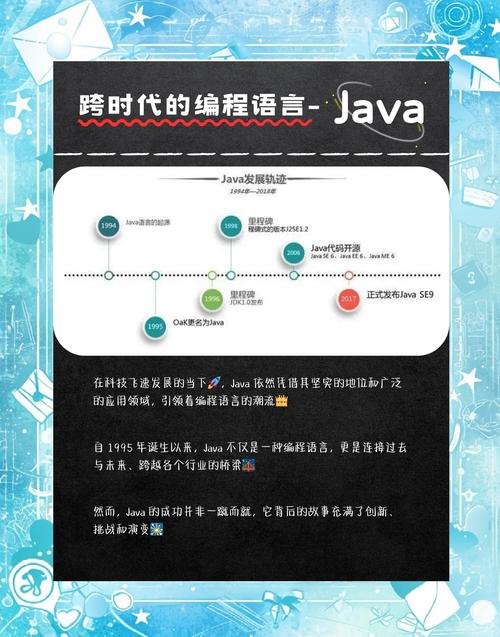
Summary: The End of an Era
Java 6, officially known as Java Platform, Standard Edition 6 (Java SE 6), was a major release in 2006. It was incredibly popular and stable, but it has been end-of-life (EOL) since February 2025. This means it no longer receives any security updates, bug fixes, or technical support.
Crucial Security Warning: Using Java 6 today is extremely dangerous. It contains numerous known and unknown security vulnerabilities that leave systems open to malware, ransomware, and data theft.
What Was Java 6?
Java 6 was a landmark release that solidified Java's dominance in enterprise and desktop applications. It introduced significant performance improvements, new APIs, and streamlined the development process.
Key Features and Major Updates:
- Performance Gains: The Java HotSpot Virtual Machine (JVM) was heavily optimized, resulting in faster application startup times and improved overall performance.
- Scripting Language Support (JSR-223): Introduced a standard API for integrating scripting languages (like JavaScript, Groovy, and JRuby) directly into Java applications.
- Pluggable Annotations (JSR-269): Allowed for the creation of tools that could read and process annotations at compile time, paving the way for modern frameworks like Hibernate and Spring.
- JDBC 4.0: Simplified database connectivity with features like automatic driver discovery and support for XML as a column data type.
- Java Compiler API (JSR 199): Enabled developers to invoke the Java compiler programmatically from within their own applications.
- Enhanced Web Services (JAX-WS 2.1 & JAXB 2.1): Improved support for creating and consuming web services with better performance and ease of use.
- A Look Ahead: Java 6 also included early, "preview" versions of features that would become central to Java 7, such as try-with-resources (called
try-with-resourcesin the final version) and diamond operators (for generics).
The Update Cycle: From Update 1 to Update 65
Java 6 was not a static product. Sun Microsystems (and later Oracle) released a series of "updates" to fix bugs, add minor features, and, most importantly, patch critical security vulnerabilities.
- Naming Convention: Updates were named sequentially, like
Java 6 Update 10,Java 6 Update 45, and the final one,Java 6 Update 65. - Purpose: Each update bundle contained all previous fixes. For example, Update 45 included all the patches from Updates 1 through 44.
- End of Life: The final public update was Java 6 Update 65, released in April 2025. After this, Oracle stopped all public updates.
Why You Should NOT Use Java 6 Today
This is the most important section. Continuing to use Java 6 is strongly discouraged for any new or existing project that handles sensitive data or operates on a network.
| Reason | Explanation |
|---|---|
| No Security Updates | This is the single biggest risk. Since 2025, over 100 critical security vulnerabilities have been discovered in Java 6. These vulnerabilities are publicly known and are actively exploited by attackers. |
| Lack of Modern Features | You miss out on over a decade of innovation: lambdas, streams, a modern date/time API, modules (Project Jigsaw), and vastly improved concurrency tools. |
| Incompatibility | Modern libraries, frameworks (like Spring Boot, Quarkus), and tools (like Gradle, Maven with recent plugins) will not run on Java 6. They require at least Java 8 or newer. |
| Compliance Issues | Many industries (finance, healthcare, government) have strict compliance policies (like PCI-DSS, HIPAA) that prohibit the use of unsupported software. Using Java 6 would violate these policies. |
| Lack of Community Support | You cannot get help on forums like Stack Overflow for Java 6-specific issues, as the community has long since moved on. |
What to Do If You Are "Stuck" on Java 6
If you are maintaining a legacy application that still requires Java 6, you have several options, but all involve a path forward.
Option 1: Migrate to a Modern Java Version (Highly Recommended)
This is the best long-term solution. Migrating allows you to secure your application and take advantage of modern productivity and performance features.
- The Path: The most common migration path is Java 6 → Java 8 → Java 11 (LTS) or Java 17 (LTS).
- Java 8 is a massive step up, introducing lambdas, streams, and the
java.timepackage. It's a very stable and widely used LTS (Long-Term Support) version. - Java 11 and Java 17 are the current LTS versions and are supported by Oracle with free public updates. They offer the best performance, security, and features.
- Java 8 is a massive step up, introducing lambdas, streams, and the
Option 2: Use a Temurin Build (For Legacy Systems Only)
If you absolutely cannot migrate and must keep the application running, you can use a build from a community-supported OpenJDK distribution like Eclipse Temurin.
- What it is: Temurin provides builds of OpenJDK, which is the open-source reference implementation of Java.
- Why consider it? Temurin backported some critical security patches from newer Java versions into their Java 8, 11, and 17 builds. However, they did not do this for Java 6.
- Important Caveat: There is no secure, community-supported version of Java 6. Any build claiming to be a "Java 6 update" from a third party is not official, not guaranteed to be secure, and not recommended. The only "safe" way to run Java 6 today is in a completely isolated, air-gapped environment with no network access, which defeats the purpose of most applications.
Option 3: Containerization with a Very Old Base Image
You could run your legacy application in a Docker container using an ancient, unsupported OS image (like centos:6) that has Java 6 pre-installed. This is a form of "containment," not "security." It isolates the application from the host OS but does nothing to fix the underlying vulnerabilities in the Java runtime itself. This is a temporary measure at best.
How to Check Your Java Version
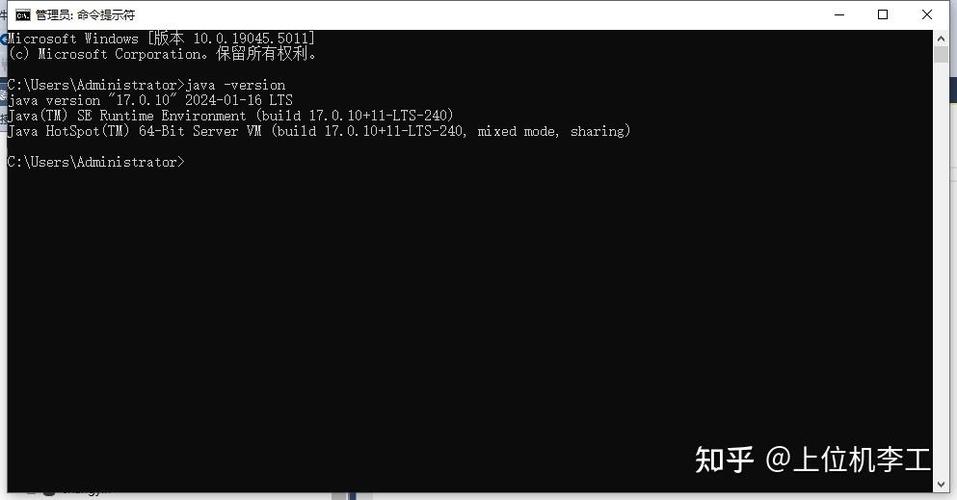
To see which version of Java you are currently running, open a terminal or command prompt and type:
java -version
Output for Java 6 Update 65 would look like this:
java version "1.6.0_65"
Java(TM) SE Runtime Environment (build 1.6.0_65-b14)
Java HotSpot(TM) 64-Bit Server VM (build 20.65-b04, mixed mode)
Conclusion
Java 6 is a historical artifact. While it was a fantastic platform in its time, its lack of security updates and modern features make it unsuitable for any purpose today. The only responsible course of action is to plan and execute a migration to a modern, supported Java version like Java 11 or Java 17.