
Of course! In Python, the term "precondition" is most commonly associated with Design by Contract (DbC), a software development methodology where the code's designer defines formal, precise specifications for its components.
A precondition is a condition or predicate that must be true before a function or method is called. It's essentially a promise that the caller of the function makes to the function itself.
If the precondition is not met when the function is called, it signifies a bug in the caller's code, not the function's code. The function is not obligated to handle the invalid state gracefully; it can raise an exception to signal the error.
The Core Concept: Precondition, Postcondition, and Invariant
To understand preconditions, it's helpful to know the other two parts of Design by Contract:
-
Precondition: A condition that must be true before a method is executed. It defines the valid state of the inputs.
 (图片来源网络,侵删)
- Responsibility: The caller is responsible for ensuring the precondition is met.
- Violation: The function can assume the precondition is true and does not need to check it. If it's false, it's a bug in the caller.
-
Postcondition: A condition that must be true after a method has executed successfully. It defines the expected state of the outputs and the object's state.
- Responsibility: The function itself is responsible for ensuring the postcondition is met.
- Violation: This indicates a bug in the function's implementation.
-
Class Invariant: A condition that must be true before and after any public method call of a class. It represents the consistent, valid state of the object.
- Responsibility: The class itself is responsible for maintaining its invariants.
How to Implement Preconditions in Python
Python doesn't have built-in language support for Design by Contract (like require or ensure in Eiffel or D). However, there are several common and effective ways to implement them.
Method 1: Using assert Statements (The Simplest Way)
The assert statement is the most straightforward way to document and check a precondition. It's a built-in Python feature.
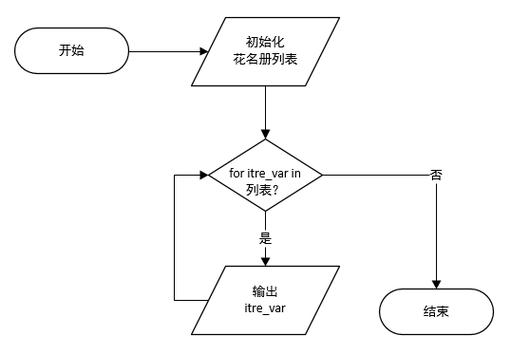
How it works: assert condition, "Error message"
If condition is False, Python raises an AssertionError.
Important Note: assert statements can be disabled in optimized Python runs (e.g., with the -O flag). Therefore, they should never be used for validating data from external sources (like user input or API calls). They are best for internal sanity checks and developer documentation.
Example:
def withdraw(account_balance: float, amount: float) -> float:
    """
    Withdraws a specified amount from an account.
    Preconditions:
    1. account_balance must be non-negative.
    2. amount must be positive.
    3. amount cannot be greater than account_balance.
    """
    # --- Precondition Checks ---
    assert account_balance >= 0, "Account balance cannot be negative."
    assert amount > 0, "Withdrawal amount must be positive."
    assert amount <= account_balance, "Insufficient funds for this withdrawal."
    # --- Function Logic ---
    new_balance = account_balance - amount
    # --- Postcondition Check (optional but good practice) ---
    assert new_balance >= 0, "Postcondition failed: New balance is negative."
    return new_balance
# --- Test Cases ---
# 1. Successful call (preconditions are met)
print(f"Withdrawing 100 from 500: {withdraw(500, 100)}") # Output: 400.0
# 2. Caller violates precondition 1 (negative balance)
try:
    withdraw(-50, 25)
except AssertionError as e:
    print(f"Caught expected error: {e}") # Output: Caught expected error: Account balance cannot be negative.
# 3. Caller violates precondition 2 (non-positive amount)
try:
    withdraw(500, 0)
except AssertionError as e:
    print(f"Caught expected error: {e}") # Output: Caught expected error: Withdrawal amount must be positive.
# 4. Caller violates precondition 3 (insufficient funds)
try:
    withdraw(100, 150)
except AssertionError as e:
    print(f"Caught expected error: {e}") # Output: Caught expected error: Insufficient funds for this withdrawal.
Method 2: Raising Custom Exceptions (The Production-Ready Way)
For library code or applications where assert might be disabled, it's better to raise specific, descriptive exceptions. This makes the API clearer and the errors more actionable for the caller.
Example:
class InvalidWithdrawalError(ValueError):
    """Base class for errors related to invalid withdrawal operations."""
    pass
class NegativeBalanceError(InvalidWithdrawalError):
    """Raised when the account balance is negative."""
    pass
class NonPositiveAmountError(InvalidWithdrawalError):
    """Raised when the withdrawal amount is not positive."""
    pass
class InsufficientFundsError(InvalidWithdrawalError):
    """Raised when there are not enough funds for the withdrawal."""
    pass
def withdraw_robust(account_balance: float, amount: float) -> float:
    """
    Withdraws a specified amount from an account.
    Raises:
        NegativeBalanceError: If the account balance is negative.
        NonPositiveAmountError: If the withdrawal amount is not positive.
        InsufficientFundsError: If the withdrawal amount exceeds the balance.
    """
    # --- Precondition Checks using custom exceptions ---
    if account_balance < 0:
        raise NegativeBalanceError("Account balance cannot be negative.")
    if amount <= 0:
        raise NonPositiveAmountError("Withdrawal amount must be positive.")
    if amount > account_balance:
        raise InsufficientFundsError("Insufficient funds for this withdrawal.")
    # --- Function Logic ---
    new_balance = account_balance - amount
    return new_balance
# --- Test Cases ---
try:
    withdraw_robust(100, 150)
except InvalidWithdrawalError as e:
    print(f"Withdrawal failed: {e}") # Output: Withdrawal failed: Insufficient funds for this withdrawal.
Method 3: Using a Library (The Powerful Way)
For more complex projects, using a dedicated library is the best approach. Libraries like icontract provide powerful, annotation-based contract checking.
First, you need to install it:
pip install icontract
Example with icontract:
import icontract
@icontract.require(lambda account_balance: account_balance >= 0, "Balance must be non-negative.")
@icontract.require(lambda amount: amount > 0, "Amount must be positive.")
@icontract.require(lambda account_balance, amount: amount <= account_balance, "Insufficient funds.")
@icontract.ensure(lambda result: result >= 0, "New balance must be non-negative.")
def withdraw_with_contract(account_balance: float, amount: float) -> float:
    """Withdraws a specified amount from an account using icontract."""
    return account_balance - amount
# --- Test Cases ---
try:
    withdraw_with_contract(-50, 25)
except icontract.ViolationError as e:
    print(f"icontract violation: {e}") # Output: icontract violation: Balance must be non-negative. ...
try:
    withdraw_with_contract(100, 150)
except icontract.ViolationError as e:
    print(f"icontract violation: {e}") # Output: icontract violation: Insufficient funds. ...
The icontract library is highly configurable, can check invariants, and can be turned off in production for performance, making it a very robust solution.
Best Practices and Summary
| Method | Pros | Cons | Best For |
|---|---|---|---|
assert |
Simple, built-in, good for documentation. | Can be disabled with -O flag. Not for public APIs. |
Internal sanity checks, unit tests, quick scripts, developer communication. |
| Custom Exceptions | Explicit, professional, not disabled, caller-friendly. | Requires more boilerplate code. | Public APIs, libraries, production applications where robustness is key. |
Libraries (icontract) |
Powerful, declarative (uses decorators), supports invariants. | Adds an external dependency. | Large, complex projects where design by contract is a core philosophy. |
Key Takeaways:
- Define Preconditions Clearly: Document them in your function's docstring so callers know what is expected of them.
- Let the Caller Fail: A function should not have to "fix" a precondition violation. It should loudly and clearly signal that the caller made a mistake.
- Choose the Right Tool:
- Use
assertfor internal checks and developer hints. - Use custom exceptions for robust, public-facing APIs.
- Use a library like
icontractfor a full-featured Design by Contract implementation.
- Use


