Of course! This is an excellent and fundamental question in Java. Let's break down the relationship between byte, char, and Unicode.
The short answer is: A byte in Java does not directly store a Unicode character. A byte is an 8-bit number, while a Unicode character in Java is represented by a char, which is a 16-bit number.
The relationship comes into play when you need to encode and decode characters to and from a sequence of bytes, usually for storage or transmission.
The Core Data Types: byte vs. char
byte
- Size: 8 bits (1 byte).
- Range: -128 to 127.
- Purpose: It's a primitive data type used for efficient storage of raw binary data. It's the smallest integer type in Java.
- Analogy: Think of a
byteas a single, small container that can hold one of 256 possible values (from -128 to 127).
char
- Size: 16 bits (2 bytes).
- Range:
\u0000(0) to\uffff(65,535). - Purpose: It's a primitive data type used to represent a single character from the Unicode character set.
- Analogy: Think of a
charas a container specifically designed to hold one character from a massive global alphabet (Unicode), which has over 140,000 characters. It needs more space (16 bits) than abyte(8 bits) to hold all these possibilities.
Conclusion: You cannot directly cast a char to a byte because you would lose 8 bits of information, leading to data corruption.
// This will COMPILE, but it's WRONG and will lose data!
char myChar = 'A'; // Unicode value for 'A' is 65
byte myByte = (byte) myChar; // myByte will be 65. This works for this simple case.
char myEmoji = '😊'; // Unicode value is 128522
byte myByte2 = (byte) myEmoji; // myByte2 will be -46. The data is completely lost!
The Bridge: Character Encodings (Charset)
To move between the world of chars (16-bit Unicode) and the world of bytes (8-bit raw data), you need a character encoding. An encoding is essentially a set of rules that maps characters to byte sequences and vice-versa.

The most important encodings to know are:
-
UTF-8 (Unicode Transformation Format - 8-bit):
- The Standard: This is the dominant encoding on the web and in modern systems. It's the recommended default.
- How it works: It's a variable-width encoding. It uses 1, 2, 3, or 4 bytes to represent a single Unicode character.
- ASCII characters (like 'A', 'B', '1') are represented by a single byte.
- Most other characters (like 'é', 'ñ', '€') use two or three bytes.
- Characters outside the Basic Multilingual Plane (like emojis '😊' or Chinese characters '𠮷') use four bytes.
- Key Advantage: It's backward-compatible with ASCII and very space-efficient for text that is mostly in English.
-
ISO-8859-1 (Latin-1):
- A Legacy Encoding: A fixed-width encoding that uses exactly one byte per character.
- How it works: It maps the first 256 code points of Unicode (from
\u0000to\u00FF) directly to byte values 0-255. This means it can only represent a small subset of the full Unicode character set (basically Western European languages). - Key Disadvantage: It cannot represent emojis, Cyrillic, Arabic, or most East Asian characters.
Practical Examples in Java
Here’s how you perform the conversion using Java's built-in classes.
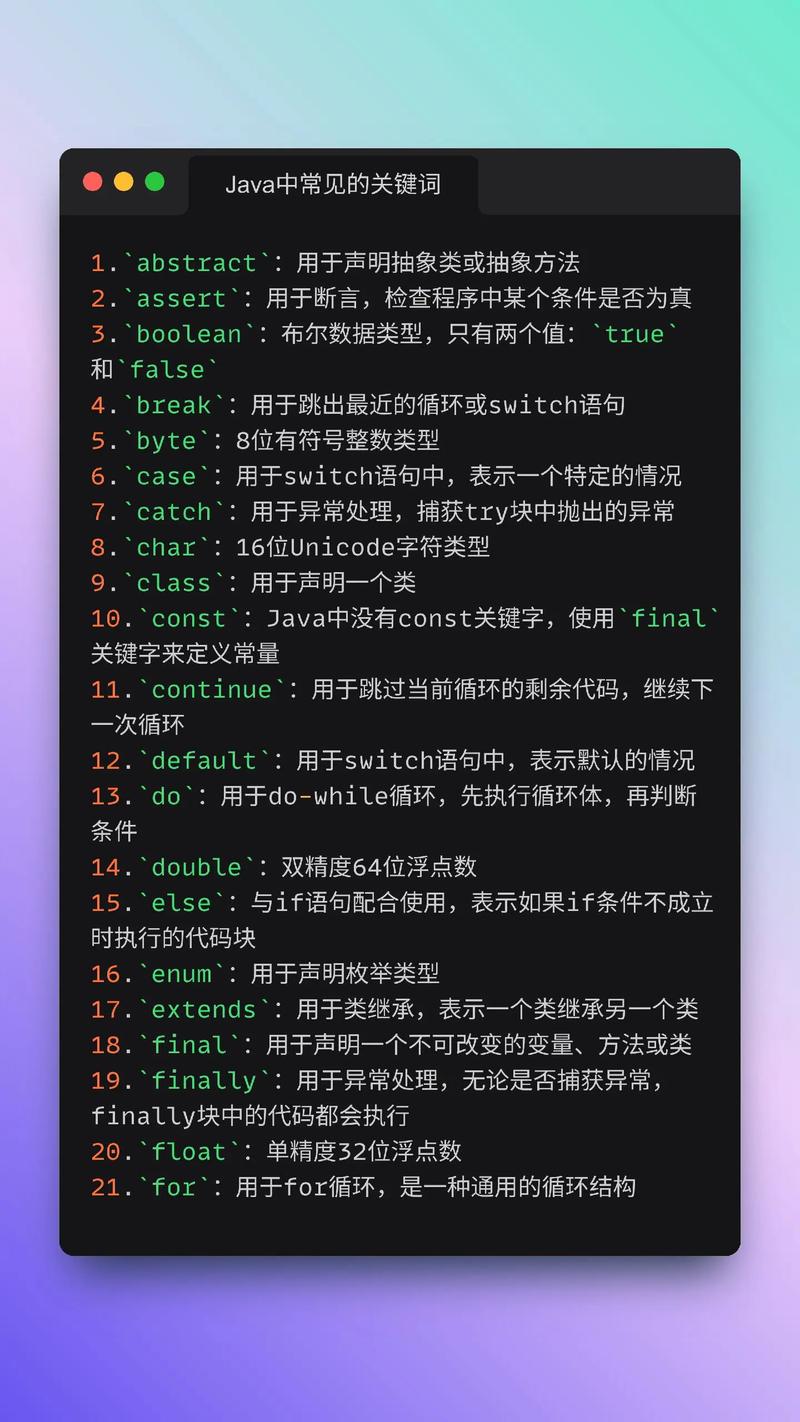
Example 1: Encoding String (which is made of chars) to byte[]
We use the String.getBytes() method. Crucially, you should always specify the encoding! If you don't, it uses the platform's default charset, which can lead to bugs when your code runs on different machines (e.g., Windows vs. macOS).
import java.nio.charset.StandardCharsets;
public class StringToBytes {
    public static void main(String[] args) {
        String text = "Aé😊"; // 'A' (1 byte in UTF-8), 'é' (2 bytes), '😊' (4 bytes)
        // --- BEST PRACTICE: Specify the encoding explicitly ---
        byte[] utf8Bytes = text.getBytes(StandardCharsets.UTF_8);
        System.out.println("String: " + text);
        System.out.println("UTF-8 Bytes length: " + utf8Bytes.length); // Output: 7 (1 + 2 + 4)
        // Print the byte values
        for (byte b : utf8Bytes) {
            System.out.printf("%02X ", b); // Output: 41 C3 A9 F0 9F 98 8A
        }
        System.out.println("\n");
        // --- LEGACY / PLATFORM-DEPENDENT (AVOID THIS!) ---
        // This uses the system's default charset. Can be different on every machine.
        byte[] defaultBytes = text.getBytes();
        System.out.println("Default Charset Bytes length: " + defaultBytes.length);
        // On a typical Western Windows machine, this might also be 7.
        // On an older system, it might fail to encode '😊' or 'é'.
    }
}
Example 2: Decoding byte[] to String
To go back, we use the String constructor that takes a byte[] and a Charset.
import java.nio.charset.StandardCharsets;
public class BytesToString {
public static void main(String[] args) {
byte[] utf8Bytes = {(byte) 0x41, (byte) 0xC3, (byte) 0xA9, (byte) 0xF0, (byte) 0x9F, (byte) 0x98, (byte) 0x8A};
// --- BEST PRACTICE: Specify the encoding explicitly ---
String decodedString = new String(utf8Bytes, StandardCharsets.UTF_8);
System.out.println("Decoded String: " + decodedString); // Output: Aé😊
// --- EXAMPLE: What happens if you use the WRONG encoding? ---
// Let's try to decode UTF-8 bytes using the Latin-1 (ISO-8859-1) charset.
// Latin-1 will interpret each byte as a standalone character.
String wrongDecodedString = new String(utf8Bytes, StandardCharsets.ISO_8859_1);
System.out.println("Wrongly Decoded String (as Latin-1): " + wrongDecodedString);
// Output: Aéð
// 'A' -> 'A' (OK)
// 0xC3 -> Ã, 0xA9 -> © (The two bytes for 'é' are treated as two separate characters)
// 0xF0 -> ð, 0x9F -> , 0x98 -> , 0x8A -> (The four bytes for '😊' are treated as four separate characters)
}
}
Summary Table
| Concept | byte |
char |
String |
|---|---|---|---|
| Purpose | Raw binary data, numbers. | A single Unicode character. | A sequence of Unicode characters. |
| Size | 8 bits (1 byte) | 16 bits (2 bytes) | Variable (2 bytes per char in memory) |
| Range | -128 to 127 | \u0000 to \uffff |
N/A |
| Direct Conversion? | No. A char cannot be losslessly cast to a byte. |
No. A char cannot be losslessly cast to a byte. |
No. String must be encoded to become byte[]. |
| Java Conversion | byte b = (byte) someInt; |
char c = 'A'; |
byte[] bytes = myString.getBytes(StandardCharsets.UTF_8); |
| Java Conversion | N/A | N/A | String s = new String(byteArray, StandardCharsets.UTF_8); |