Of course! In Java, getting the length of a string is a fundamental operation. Here’s a complete guide covering the basics, best practices, and common pitfalls.

The Short Answer: The .length() Method
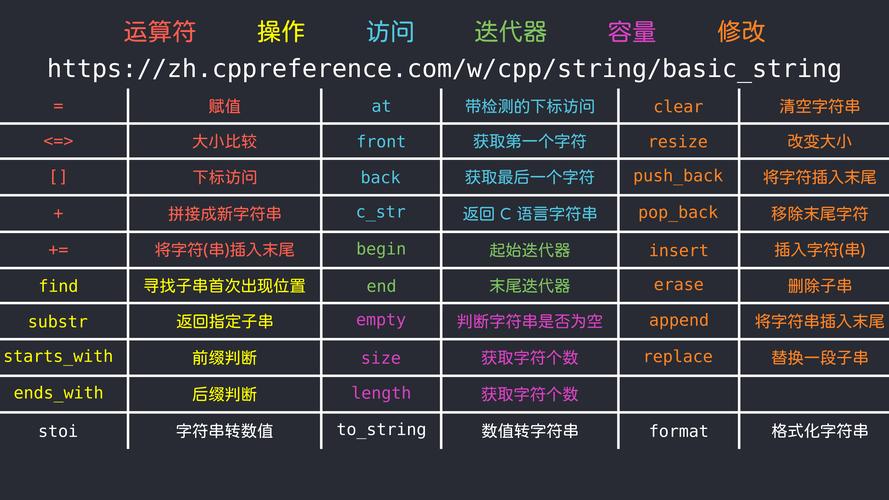
To get the length of a string in Java, you use the .length() method on the String object.
Syntax:
int length = yourString.length();
Important Note: The method is length() (with parentheses), while the property for arrays is length (without parentheses). This is a common point of confusion for beginners.
Complete Example
Here is a simple, runnable Java program that demonstrates how to use the length() method.

public class StringLengthExample {
    public static void main(String[] args) {
        // 1. Define a few strings
        String emptyString = "";
        String shortString = "Hello";
        String longString = "This is a much longer string.";
        // 2. Get the length of each string
        int emptyLength = emptyString.length();
        int shortLength = shortString.length();
        int longLength = longString.length();
        // 3. Print the results
        System.out.println("The string is: \"" + emptyString + "\"");
        System.out.println("Its length is: " + emptyLength); // Output: 0
        System.out.println("\nThe string is: \"" + shortString + "\"");
        System.out.println("Its length is: " + shortLength); // Output: 5
        System.out.println("\nThe string is: \"" + longString + "\"");
        System.out.println("Its length is: " + longLength); // Output: 30
    }
}
Output:
The string is: ""
Its length is: 0
The string is: "Hello"
Its length is: 5
The string is: "This is a much longer string."
Its length is: 30
Key Details and Best Practices
The Length is the Number of Characters
The length() method returns the number of Unicode code units in the string. For most common characters (like those in the English alphabet, numbers, and symbols), one character equals one code unit.
String name = "Alice";
System.out.println(name.length()); // Output: 5
Handling null Strings (A Common Pitfall)
If you try to call .length() on a string variable that is null, your program will crash with a NullPointerException.
String myString = null;
// The following line will throw a NullPointerException
// int length = myString.length();
How to Safely Handle null:
Option A: Use an if statement (Recommended)
This is the clearest and most readable approach.
String myString = null;
int length = 0; // Default value
if (myString != null) {
    length = myString.length();
}
System.out.println("The length is: " + length); // Output: The length is: 0
Option B: Use the Null-Object Pattern
Assign an empty string () to the variable if it might be null. This is useful if you want to treat a null string as an empty one.
String myString = null;
String safeString = myString != null ? myString : "";
System.out.println(safeString.length()); // Output: 0
Length of Strings with Special Characters (Unicode)
Java strings are based on UTF-16 encoding. Most characters, including emojis, are represented as a single "code unit". However, some characters, like certain emojis or symbols from other languages, can be represented by a pair of code units (a "surrogate pair"). The length() method correctly counts these as a single character.
// An emoji is often a single character
String emojiString = "😊";
System.out.println(emojiString.length()); // Output: 1
// A string with a surrogate pair character (e.g., some musical symbols)
String specialChar = "\uD834\uDD1E"; // This is the 𝄞 (Musical Symbol G Clef)
System.out.println(specialChar.length()); // Output: 1 (not 2)
This is because String.length() counts the number of char values, and modern Java handles these complex characters correctly.
When to Check for Length?
You often need to check a string's length for validation or conditional logic.
Example 1: Password Validation
public class PasswordValidator {
    public static void main(String[] args) {
        String password = "short";
        if (password.length() < 8) {
            System.out.println("Error: Password must be at least 8 characters long.");
        } else {
            System.out.println("Password is valid.");
        }
        // Output: Error: Password must be at least 8 characters long.
    }
}
Example 2: Checking for Empty or Blank Strings
It's very common to check if a string is empty (length == 0) or blank (empty or contains only whitespace).
String input = "   ";
// Check if the string is empty (length is 0)
if (input.length() == 0) {
    System.out.println("The string is empty.");
}
// A more robust way to check for blank strings (ignoring whitespace)
if (input.trim().length() == 0) {
    System.out.println("The string is blank (empty or whitespace only).");
}
// Output: The string is blank (empty or whitespace only).
Summary Table
| Method/Concept | Description | Example |
|---|---|---|
string.length() |
The primary method to get the number of characters in a string. | int len = "test".length(); // len is 4 |
string.isEmpty() |
Returns true if the length is 0. A more readable way to check for an empty string. |
boolean empty = "".isEmpty(); // empty is true |
Handling null |
Calling .length() on null causes a NullPointerException. Always check for null first. |
if (s != null) { ... } |
| Unicode | Correctly counts characters, including complex ones like emojis. | "😊".length() is 1. |