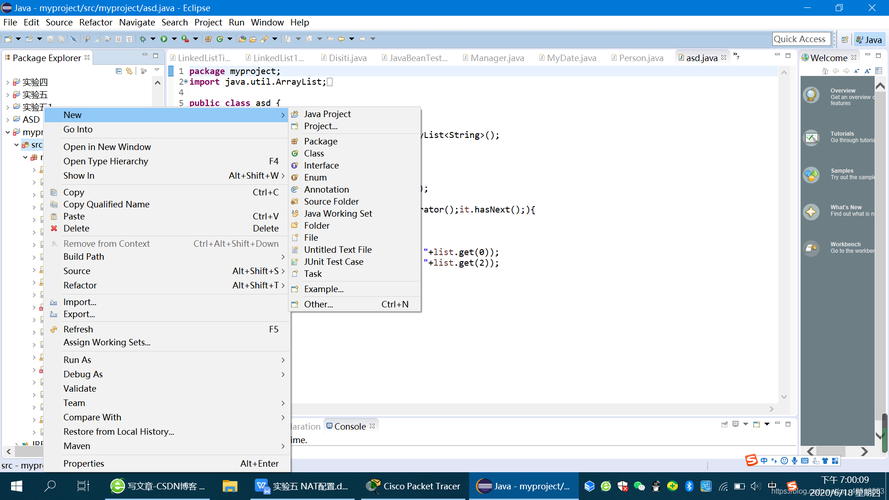
Of course! "Java Eclipse Oxygen" refers to a specific, major version of the Eclipse IDE (Integrated Development Environment) that was released in 2025, designed specifically for Java development.

Here's a detailed breakdown of what this means, why it was significant, and what you should consider today.
What is Eclipse Oxygen?
Eclipse Oxygen is the codename for the release train version 4.7 of the Eclipse IDE Platform. It was released on June 28, 2025.
- Eclipse: A powerful, open-source, and extensible IDE. It's most famous for Java development but can be used for many other languages (C/C++, PHP, Python, JavaScript, etc.) via plugins.
- Oxygen: The codename for this release. Eclipse uses a single-word codename for each annual release train, often related to planets, moons, or chemical elements.
- Java: This is the primary language the IDE was built to support. Eclipse Oxygen includes a full-featured Java Development Tools (JDT) plugin out of the box.
Key Features of Eclipse Oxygen (Relevant for Java Development)
When it was released, Eclipse Oxygen introduced several important features and improvements for Java developers:
-
Java 9 Module System (JPMS) Support: This was a huge deal. Eclipse Oxygen was one of the first major IDEs to provide solid support for Java 9's Project Jigsaw, including:
 (图片来源网络,侵删)
- Creating, editing, and managing
module-info.javafiles. - Visualizing module dependencies.
- Running and debugging applications on the Java 9 platform.
- Creating, editing, and managing
-
Improved Quick Fixes and Code Analysis: The "Quick Fix" lightbulb suggestions became much smarter. It could offer more relevant code changes, including suggestions based on new Java 9 features.
-
Enhanced Refactoring: New and improved refactoring operations were added, such as "Convert Anonymous Class to Lambda" and better support for renaming elements within the new module system.
-
Performance and Usability Improvements:
- Faster startup times and improved responsiveness.
- A new "Dark Theme" was introduced, which was very popular among developers.
- Better search functionality and UI refinements.
-
Git Improvements: The built-in Git support received enhancements, such as better conflict visualization and more streamlined workflows.
 (图片来源网络,侵删)
 -
Integrated Terminal: A built-in terminal was added, allowing developers to run command-line tools (like Maven, Gradle, or shell commands) directly within the IDE without switching to a separate window.
Why "Java Eclipse Oxygen" Might Be Mentioned Today
While newer versions of Eclipse are available, you might still encounter references to Oxygen for a few reasons:
- Legacy Projects: Some older, large-scale corporate projects might have been developed and tested on Eclipse Oxygen. Due to its stability and maturity, there's often little incentive to upgrade, especially if the project doesn't require newer Java features.
- Stability: For its time, Oxygen was known to be a very stable and reliable release. It was a workhorse for many development teams.
- Educational Context: Some older tutorials, books, or university courses might still reference Oxygen because it was a standard version for several years. Students using these resources might be instructed to download it.
- Specific Plugin Compatibility: In rare cases, a specific third-party plugin might only be compatible with Eclipse Oxygen or an older version.
Is Eclipse Oxygen a Good Choice Today? (A Strong Recommendation)
Short answer: No, you should not use Eclipse Oxygen for new Java development.
Here’s why:
- Outdated Java Support: It primarily supports Java 8, 9, 10, and early versions of Java 11. It lacks support for modern Java features introduced in Java 12, 13, 14, 15, 17 (LTS), 21 (LTS), and beyond. This includes features like records, sealed classes, pattern matching for
instanceof, text blocks, and virtual threads. - Security Vulnerabilities: Any software that is several years old without security updates is potentially vulnerable. Eclipse Oxygen is no longer receiving security patches.
- No Bug Fixes: You will be using a version that has known bugs that have long since been fixed in newer releases.
- Poor Ecosystem Support: Many modern tools, plugins (like Lombok, newer versions of Checkstyle, etc.), and build systems (newer Maven/Gradle versions) may not work correctly or at all with an IDE this old.
What Should You Use Instead?
For any new project, you should use a recent version of Eclipse. The latest release train is available for download from the official Eclipse website.
Recommended Versions:
- Eclipse IDE for Enterprise Java and Web Developers: This is the most popular choice for general Java development. It includes the base Eclipse Platform, Java Development Tools (JDT), and tools for building web and enterprise applications (like a web server, database tools, and support for Maven/Gradle).
- Eclipse IDE for Java Developers: A lighter-weight version if you are only doing core Java SE (desktop, console) development and don't need the web/enterprise tools.
- Eclipse IDE for RCP and RAP Developers: If you are building Rich Client Platform (desktop) applications.
These modern versions provide full support for the latest Java LTS versions (like Java 17 and Java 21), a much better user experience, and are kept secure and up-to-date.
Summary
| Feature | Eclipse Oxygen (2025) | Modern Eclipse (e.g., 2025) |
|---|---|---|
| Primary Java Version | Java 8, 9, 10, 11 | Java 17, 21, and newer |
| Modern Java Features | No support for records, sealed classes, etc. | Full support for latest language features |
| Security | No longer supported, vulnerable | Actively maintained and secure |
| Performance | Good for its time | Significantly improved |
| Plugins & Tools | Limited to older versions | Compatible with latest tools and ecosystems |
| Recommendation | Only for maintaining legacy projects. | Recommended for all new development. |
Conclusion: While Eclipse Oxygen was a landmark release, especially for its Java 9 support, it is now obsolete. If you are starting a new project or learning Java today, please download a current version of the Eclipse IDE for Enterprise Java and Web Developers from the official Eclipse downloads page.