Of course! The term "Dispatcher" in Java refers to a design pattern, not a single built-in class. The core idea is to have a central component that receives a request and routes it to the appropriate handler or service. It acts like a traffic controller or a mailroom clerk, ensuring each request gets to the right place.

This pattern is fundamental in many Java frameworks, especially in web development.
Let's break it down into:
- The Core Concept
- Classic Java Example (Using Servlets)
- Modern Web Framework Example (Spring MVC)
- Other Variations (Event-Driven, GUI)
- When to Use It
The Core Concept: The Dispatcher Pattern
A dispatcher is typically part of an Architecture Pattern like Model-View-Controller (MVC) or Model-View-Presenter (MVP).
Key Responsibilities:
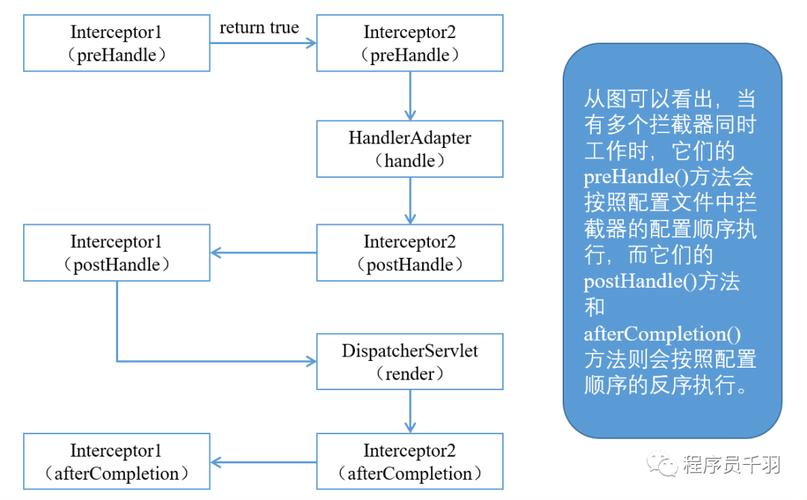
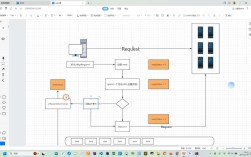
- Receive Input: It's the entry point for all incoming requests (e.g., a user clicking a link, an API call).
- Identify the Handler: It analyzes the request (e.g., URL, HTTP method, parameters) to determine which part of the application should handle it.
- Delegate Processing: It passes the request to the appropriate handler (e.g., a Controller method).
- Return a Response: It takes the result from the handler and sends a response back to the client (e.g., rendering an HTML page, returning JSON data).
Analogy: Think of a large office building's receptionist.
- You (the client) walk in and say you need to see the accounting department.
- The receptionist (the Dispatcher) doesn't do your accounting. They look up the right person in accounting (the Handler/Controller) and direct you to their office.
- You get your work done in accounting and leave the building with the result (the Response).
Classic Java Example: The Front Controller Pattern with Servlets
Before modern frameworks, this was the standard way to handle web requests in Java using the Front Controller pattern. A single Servlet acts as the dispatcher.
How it works:
- All requests are mapped to one main
DispatcherServlet. - This servlet doesn't handle the logic itself. It inspects the request URL.
- Based on the URL, it calls a specific Java class (a "Controller") to do the work.
- The Controller processes the request and returns data or a view name.
- The DispatcherServlet then forwards the request to a JSP or another template to render the final view.
Example Code:

web.xml (Deployment Descriptor)
This file maps all incoming requests () to our DispatcherServlet.
<web-app>
    <servlet>
        <servlet-name>dispatcher</servlet-name>
        <servlet-class>com.example.DispatcherServlet</servlet-class>
    </servlet>
    <servlet-mapping>
        <servlet-name>dispatcher</servlet-name>
        <url-pattern>/app/*</url-pattern> <!-- All requests starting with /app go here -->
    </servlet-mapping>
</web-app>
DispatcherServlet.java (The Dispatcher)
This is a simplified version of a dispatcher. In a real app, you'd use a framework.
import javax.servlet.*;
import javax.servlet.http.*;
import java.io.IOException;
public class DispatcherServlet extends HttpServlet {
    // A simple map to hold our controllers
    private java.util.Map<String, Controller> controllerMap = new java.util.HashMap<>();
    @Override
    public void init() throws ServletException {
        // Register controllers based on a URL pattern
        controllerMap.put("/user/list", new ListUsersController());
        controllerMap.put("/user/profile", new UserProfileController());
    }
    @Override
    protected void service(HttpServletRequest req, HttpServletResponse resp) throws ServletException, IOException {
        String requestURI = req.getRequestURI();
        System.out.println("Dispatcher received request for: " + requestURI);
        // Find the appropriate controller
        Controller controller = controllerMap.get(requestURI);
        if (controller != null) {
            // Delegate the request to the controller
            ModelAndView mav = controller.handleRequest(req, resp);
            // Render the view returned by the controller
            mav.getView().render(mav.getModel(), req, resp);
        } else {
            resp.sendError(HttpServletResponse.SC_NOT_FOUND, "Controller not found for URI: " + requestURI);
        }
    }
}
// --- Helper classes/interfaces ---
interface Controller {
    ModelAndView handleRequest(HttpServletRequest request, HttpServletResponse response);
}
class ModelAndView {
    private String viewName;
    private java.util.Map<String, Object> model = new java.util.HashMap<>();
    // Getters and Setters
    public String getViewName() { return viewName; }
    public void setViewName(String viewName) { this.viewName = viewName; }
    public java.util.Map<String, Object> getModel() { return model; }
}
// --- Example Controllers ---
class ListUsersController implements Controller {
    @Override
    public ModelAndView handleRequest(HttpServletRequest req, HttpServletResponse resp) {
        ModelAndView mav = new ModelAndView();
        mav.setViewName("/users/list.jsp"); // The JSP to render
        mav.getModel().put("users", java.util.Arrays.asList("Alice", "Bob", "Charlie"));
        return mav;
    }
}
class UserProfileController implements Controller {
    @Override
    public ModelAndView handleRequest(HttpServletRequest req, HttpServletResponse resp) {
        ModelAndView mav = new ModelAndView();
        mav.setViewName("/users/profile.jsp");
        String userId = req.getParameter("id");
        mav.getModel().put("user", "User with ID: " + userId);
        return mav;
    }
}
Modern Web Framework Example: Spring MVC's DispatcherServlet
This is the most common and powerful implementation of the dispatcher pattern in the Java world. Spring's DispatcherServlet is the central piece.
How it works:
- You configure a
DispatcherServletin yourweb.xmlor via a Java configuration class. - This servlet is the front controller for your entire Spring web application.
- It uses Handler Mappings to figure out which controller method should handle a request. The most common is
RequestMappingHandlerMapping, which looks for@RequestMappingannotations on your controller methods. - It uses View Resolvers to figure out how to render the response (e.g., which JSP file to use, or how to convert an object to JSON).
Example Code:
UserController.java (The Handlers)
Notice how clean this is. The annotations define the routing.
import org.springframework.stereotype.Controller;
import org.springframework.web.bind.annotation.GetMapping;
import org.springframework.web.bind.annotation.PathVariable;
import org.springframework.web.servlet.ModelAndView;
@Controller
public class UserController {
    // Handles GET requests for /app/users
    @GetMapping("/app/users")
    public ModelAndView listUsers() {
        ModelAndView mav = new ModelAndView("users/list"); // View name
        mav.addObject("users", java.util.Arrays.asList("Alice", "Bob", "Charlie"));
        return mav;
    }
    // Handles GET requests for /app/users/123
    @GetMapping("/app/users/{id}")
    public ModelAndView userProfile(@PathVariable("id") String userId) {
        ModelAndView mav = new ModelAndView("users/profile");
        mav.addObject("user", "User with ID: " + userId);
        return mav;
    }
}
In this Spring example, the DispatcherServlet is doing all the heavy lifting of inspecting the incoming /app/users URL, finding the listUsers() method because it's mapped to that path, and executing it. The framework abstracts away all the manual routing logic we had in the classic example.
Other Variations of the Dispatcher Pattern
The dispatcher pattern isn't limited to web requests.
A. Event-Driven Dispatching (JavaFX / GUI)
In a GUI application, an "event dispatcher" (or the "Event Dispatch Thread" in Swing/JavaFX) is responsible for receiving user events (mouse clicks, key presses) and dispatching them to the appropriate event handlers.
- Who is the Dispatcher? The underlying GUI framework's event queue.
- Who are the Handlers? Methods you've registered to listen for specific events (e.g., a button's
onActionhandler).
B. Command Dispatcher (for a CLI or internal process)
You could build a simple command-line dispatcher that routes string commands to different methods.
import java.util.HashMap;
import java.util.Map;
import java.util.Scanner;
public class CommandDispatcher {
    private Map<String, Runnable> commandMap = new HashMap<>();
    public CommandDispatcher() {
        commandMap.put("greet", this::handleGreet);
        commandMap.put("exit", this::handleExit);
    }
    public void dispatch(String command) {
        Runnable action = commandMap.get(command.toLowerCase());
        if (action != null) {
            action.run();
        } else {
            System.out.println("Unknown command: " + command);
        }
    }
    private void handleGreet() {
        System.out.println("Hello, World!");
    }
    private void handleExit() {
        System.out.println("Exiting...");
        System.exit(0);
    }
    public static void main(String[] args) {
        CommandDispatcher dispatcher = new CommandDispatcher();
        Scanner scanner = new Scanner(System.in);
        System.out.println("Enter a command (greet, exit):");
        while (true) {
            String input = scanner.nextLine();
            dispatcher.dispatch(input);
        }
    }
}
When to Use the Dispatcher Pattern
You should strongly consider using a dispatcher-based architecture (like Spring MVC) when:
- You are building a web application. It's the standard and most scalable approach.
- You need a centralized point of control. You can add cross-cutting concerns like security (authentication/authorization), logging, or transaction management in one place (the dispatcher or its interceptors) for all requests.
- You want to decouple the request reception from the request handling. This makes your code more modular, testable, and maintainable.
- You want to provide a consistent URL structure. The dispatcher maps clean, user-friendly URLs to the backend logic.
In summary, the Dispatcher is a cornerstone of modern Java application architecture, providing a clean, scalable, and maintainable way to manage the flow of control. While you can implement it manually, it's almost always better to use a mature framework like Spring that provides a highly optimized and feature-rich implementation.