Of course! "Python Java Web" is a great topic because it touches on two of the most popular programming languages and how they are used in the world of web development.
Let's break it down into three parts:
- Python for Web Development
- Java for Web Development
- A Head-to-Head Comparison: Python vs. Java for Web
Python for Web Development
Python is renowned for its simplicity, readability, and vast ecosystem of libraries. It's often the first choice for startups, data-driven applications, and rapid prototyping.
Key Concepts in Python Web Development:
-
Web Frameworks: These are libraries that provide the structure and tools to build web applications quickly.
- Django: A high-level, "batteries-included" framework. It encourages a clean, pragmatic design and handles a lot of the boilerplate for you (e.g., an admin panel, ORM, authentication). It's great for building complex, database-driven websites like social networks or content management systems.
- Flask: A micro-framework. It's lightweight and gives you the core tools you need without imposing a specific structure. This makes it incredibly flexible and perfect for smaller applications, APIs, and microservices.
- FastAPI: A modern, high-performance framework for building APIs. It's extremely fast, easy to learn, and has automatic interactive API documentation (using Swagger UI). It's gaining huge popularity for building backends for web and mobile apps.
-
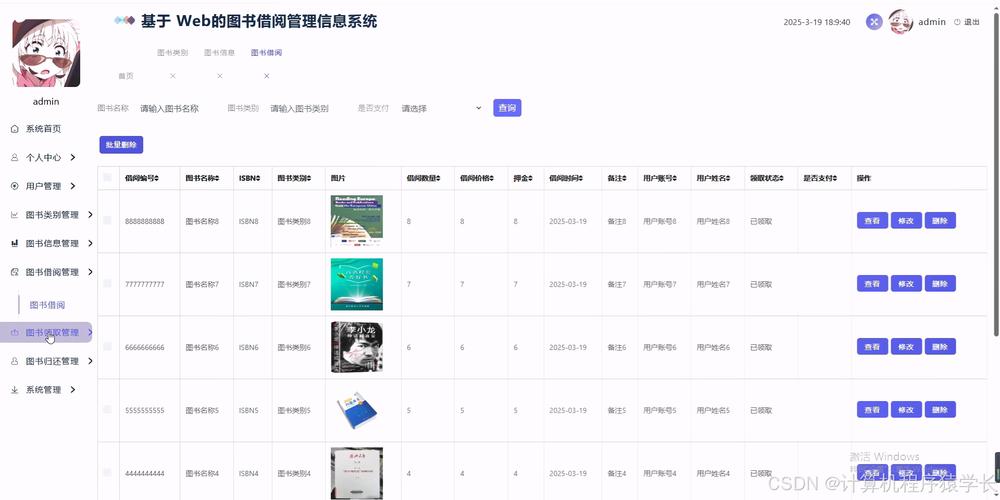
Web Servers: The application that runs your Python code and listens for requests from web browsers.
 (图片来源网络,侵删)
- Development Servers: Simple servers like Flask's or Django's built-in ones, used only for development.
- Production Servers: Robust servers like Gunicorn or uWSGI that manage multiple worker processes to handle real-world traffic. They are then placed behind a reverse proxy like Nginx, which handles tasks like serving static files and load balancing.
-
Templating Engines: These allow you to write HTML with placeholders for your dynamic data. The Python code fills in these placeholders to generate the final HTML page sent to the user. (e.g., Jinja2, used by Django).
Example: A Simple Flask API
# app.py
from flask import Flask, jsonify
app = Flask(__name__)
@app.route('/api/users', methods=['GET'])
def get_users():
    # In a real app, you'd fetch this from a database
    users = [
        {"id": 1, "name": "Alice"},
        {"id": 2, "name": "Bob"}
    ]
    return jsonify(users)
if __name__ == '__main__':
    app.run(debug=True)
Java for Web Development
Java is a statically-typed, object-oriented language known for its performance, scalability, and robustness. It's the backbone of many large-scale enterprise systems and is a dominant force in the corporate world.
Key Concepts in Java Web Development:
-
Enterprise Frameworks: These are comprehensive, feature-rich frameworks designed for building large, complex, and secure applications.
- Spring Framework: The de facto standard for modern Java development. It's a massive ecosystem that simplifies building enterprise-grade applications. Its core module, Spring Core (with IoC), manages components, and its web module (Spring MVC) provides a powerful model-view-controller architecture. Spring Boot is a game-changer that makes it incredibly easy to create stand-alone, production-ready Spring applications with minimal configuration.
- Jakarta EE (formerly Java EE): A set of specifications and standards for building enterprise applications. It includes APIs for web services, messaging, persistence (JPA), and more. While powerful, it can be more complex to set up than Spring Boot.
-
Web Servers & Application Servers:
 (图片来源网络,侵删)
- Web Servers (like Apache Tomcat, Jetty): Primarily serve static content (HTML, CSS, JS) and can also execute Java servlets (the core of Java web apps). Tomcat is the most popular choice.
- Application Servers (like WildFly, WebLogic): A superset of web servers that also includes support for Enterprise JavaBeans (EJBs) and other advanced Jakarta EE features. They are heavier and used for very large, transactional systems.
-
Build Tools & Dependency Management:
- Maven and Gradle are essential for managing project dependencies, building the application, and automating tasks. They are the "pip" or "npm" of the Java world.
Example: A Simple Spring Boot REST Controller
// src/main/java/com/example/demo/HelloController.java
package com.example.demo;
import org.springframework.web.bind.annotation.GetMapping;
import org.springframework.web.bind.annotation.RestController;
import java.util.Arrays;
import java.util.List;
@RestController
public class HelloController {
    @GetMapping("/api/users")
    public List<User> getUsers() {
        // In a real app, you'd fetch this from a database
        return Arrays.asList(
            new User(1L, "Alice"),
            new User(2L, "Bob")
        );
    }
}
// A simple POJO (Plain Old Java Object)
class User {
    private Long id;
    private String name;
    // Constructor, Getters, and Setters...
    public User(Long id, String name) {
        this.id = id;
        this.name = name;
    }
    // Getters and Setters are needed for JSON conversion
    public Long getId() { return id; }
    public String getName() { return name; }
}
Head-to-Head Comparison: Python vs. Java for Web
This is where the choice becomes project-dependent. Here’s a breakdown to help you decide.
| Feature | Python | Java |
|---|---|---|
| Syntax & Readability | Winner. Extremely simple and readable. Great for beginners and fast development. | More verbose and strict due to static typing. Can be more complex to write and read initially. |
| Performance | Slower for CPU-intensive tasks due to its interpreted nature. (But often fast enough). | Winner. Faster performance, especially for high-throughput applications, due to its compiled (JIT) nature. |
| Scalability | Very scalable with tools like Gunicorn, uWSGI, and async frameworks (FastAPI, Starlette). | Winner. Built for massive scale. Its strong typing and robust multithreading capabilities make it ideal for large, distributed systems. |
| Ecosystem & Libraries | Huge ecosystem, especially for Data Science, AI, and Machine Learning (NumPy, Pandas, TensorFlow, PyTorch). | Massive, mature, and enterprise-focused. Excellent for large systems, banking, and complex business logic. |
| Development Speed | Winner. Rapid prototyping and development due to concise syntax and dynamic typing. | Slower initial development due to more boilerplate code and strict compilation checks. |
| Typing | Dynamic Typing. Flexible but can lead to runtime errors. | Static Typing. Catches errors at compile time, leading to more robust and maintainable code in large teams. |
| Community & Jobs | Huge and very active community, especially in startups and data fields. | Extremely large, mature community, dominant in large corporations and enterprise environments. More traditional, high-paying job market. |
Which One Should You Choose?
-
Choose Python if:
- You are a beginner or prioritize fast development and prototyping.
- Your application is heavily focused on data, AI, machine learning, or scientific computing.
- You are building a small-to-medium-sized web application, a REST API, or a startup's Minimum Viable Product (MVP).
- You value developer productivity and concise code.
-
Choose Java if:
- You are building a large-scale, long-running enterprise application.
- Performance and high throughput are critical.
- You need strong type safety and maintainability for a large team of developers.
- Your project requires complex transactional integrity and integration with other enterprise systems.
- You are working in a corporate environment where Java is the standard.
The Modern Reality: They Often Work Together
It's not always an "either/or" decision. Many modern architectures use both languages.
- Python for AI/ML Backend: A Java-based e-commerce site might use a Python microservice to handle product recommendations powered by a machine learning model.
- Java for Core Business Logic: A Python-based analytics dashboard might pull data from a core Java application that handles all the financial transactions.
Ultimately, the best choice depends entirely on the specific requirements of your project, your team's expertise, and your long-term goals.