Of course! This is a fantastic question because it gets to the very heart of how Java handles one of its most important objects.
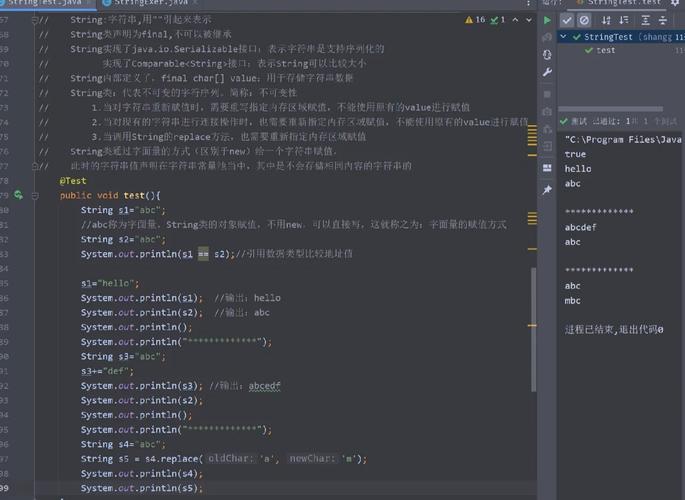
The statement java string = string isn't valid Java syntax on its own, but it represents the core concept of string assignment and reference.
Let's break it down into two key scenarios:
- Assigning a new string literal:
String s2 = "hello"; - Assigning an existing string variable:
String s2 = s1;
Scenario 1: Assigning a New String Literal
When you write code like this:
String message = "Hello, World!";
What is happening behind the scenes?
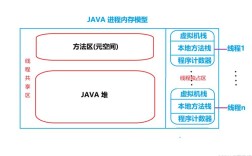
- String Literal Pool: Java has a special memory area called the "String Literal Pool" or "String Pool." This is an optimization to avoid creating duplicate strings.
- Check the Pool: Before creating a new string, Java checks the pool to see if the exact sequence of characters (
"Hello, World!") already exists. - Create or Reuse:
- If it exists, Java simply creates a new reference (a pointer) that points to the same existing object in the pool.
- If it doesn't exist, Java creates a new
Stringobject in the pool, and the referencemessagepoints to it.
In short: String s = "text"; puts a string in the pool and makes s point to it.
Scenario 2: Assigning an Existing String Variable
This is the most direct interpretation of string = string. Let's say you have two variables:
String s1 = "Java";
String s2 = s1; // This is the key line!
What does this line do?
It does NOT create a new copy of the string "Java".

Instead, it creates a second reference (s2) that points to the exact same String object that s1 is already pointing to.
Think of it like this: You have a house (the String object). s1 is the address to that house. The line s2 = s1; simply gives you a second piece of paper with the exact same address on it. Both s1 and s2 now refer to the one and only house.
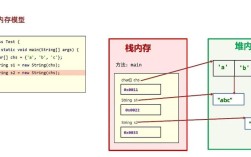
Visual Representation
      +-------------------+
      |  String Pool      |
      +-------------------+
      | "Java" (Object)   |  <-- The actual string object in memory
      +-------------------+
            ^
            |
+-----------+-----------+
|                       |
v                       v
+-----------+     +-----------+
|  s1       |     |  s2       |
| (ref)     |-----| (ref)     |
+-----------+     +-----------+
The Crucial Difference: vs .equals()
Because of this reference behavior, it's critical to understand how to compare strings in Java.
The Operator
The operator checks if two references point to the exact same object in memory.
String s1 = "hello";
String s2 = "hello";
String s3 = new String("hello"); // Creates a new object, NOT from the pool
System.out.println(s1 == s2);      // true (both point to the same object in the pool)
System.out.println(s1 == s3);      // false (s1 points to the pool, s3 points to a new object)
The .equals() Method
The .equals() method checks if the content of two string objects is the same, regardless of whether they are the same object.
String s1 = "hello";
String s2 = "hello";
String s3 = new String("hello");
System.out.println(s1.equals(s2)); // true (the content "hello" is the same)
System.out.println(s1.equals(s3)); // true (the content "hello" is the same)
Golden Rule for String Comparison in Java:
Always use
.equals()to compare the content of two strings. Only use when you specifically want to check if two references are pointing to the identical object (which is rare for business logic).
What About Immutability?
A final, critical concept: String objects are immutable in Java.
This means that once a String object is created, its contents cannot be changed.
When you do this:
String text = "original";
text = "modified";
You are not changing the "original" object. Instead, you are:
- Creating a new string "modified" in the pool.
- Reassigning the reference
textto point to this new object.
The "original" string object still exists in memory, but the text variable no longer refers to it. This immutability is why it's safe for multiple references to point to the same string object.
Summary
| Action | What Happens | Memory Impact |
|---|---|---|
String s = "text"; |
Puts "text" in the string pool (if not already there) and s points to it. |
Creates one new object. |
String s2 = s1; |
Creates a new reference s2 that points to the same object as s1. |
No new object is created. |
s1.equals(s2) |
Checks if the content is the same. (The correct way to compare strings). | Compares character data. |
s1 == s2 |
Checks if they are the same object in memory. (Use with caution). | Compares memory addresses. |