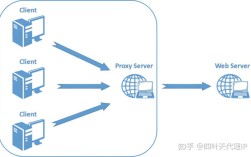
Of course! This is a very common topic in enterprise software development. Let's break down the relationship between .NET, Java, and Web Services.
The Core Idea: A Common Language for Communication
At its heart, a Web Service is a piece of software that makes itself available over the internet and uses a standardized XML messaging system. It's designed to allow different applications to talk to each other, regardless of the programming language, operating system, or platform they are built on.
Think of it like a universal translator for software. A Java application can send a request to a .NET application, and they can understand each other perfectly.
The Web Service Standards
Before diving into .NET and Java, it's crucial to understand the "language" they both speak to communicate. The two most prominent standards are:
| Standard | Acronym | Full Name | Description | Key Technologies |
|---|---|---|---|---|
| SOAP | Simple Object Access Protocol | A protocol for exchanging structured information in web services. It's very robust, secure, and standardized, making it a favorite in enterprise environments. | - Uses XML for its message format. - Defines strict rules (a WSDL contract). - Can operate over various protocols (HTTP, SMTP, TCP). |
WS-* (WS-Security, WS-Addressing), WSDL, XSD |
| REST | REpresentational State Transfer | An architectural style for designing networked applications. It's simpler and more flexible than SOAP, dominating modern web and mobile APIs. | - Uses standard HTTP methods (GET, POST, PUT, DELETE). - Typically uses JSON for data transfer (lighter than XML). - No strict contract, but OpenAPI/Swagger is often used for documentation. |
JSON, XML, HTTP, OpenAPI/Swagger |
Analogy:
- SOAP is like a formal, legally-binding contract. It's very specific, secure, and tells you exactly what you can send back and forth. If you deviate from the contract, the other party will reject your request.
- REST is like a conversation. You ask for something (GET), you give them something to create (POST), you update something (PUT), or you tell them to delete something (DELETE). It's more flexible and less rigid.
.NET and Web Services
.NET (and its predecessor, the .NET Framework) has had robust support for web services since its early days. The approach has evolved over time.
A. Creating SOAP Web Services (The Classic Way)
The primary technology for this in the .NET Framework was ASMX (ASP.NET Web Services).
-
How it works: You create a public class with public methods. You decorate the class with the
[WebService]attribute and the methods with[WebMethod]. The .NET runtime automatically exposes this as a SOAP web service. -
Key Feature: The .NET Framework automatically generates a WSDL (Web Services Description Language) file. This file is like a blueprint or a contract that tells any other application (Java, Python, etc.) exactly how to call your web service—what methods are available, what parameters they take, and what data types they return.
 (图片来源网络,侵删)
 -
Example:
using System.Web.Services; [WebService(Namespace = "http://tempuri.org/")] [WebServiceBinding(ConformsTo = WsiProfiles.BasicProfile1_1)] public class MyService : System.Web.Services.WebService { [WebMethod] public string HelloWorld(string name) { return $"Hello, {name}!"; } } -
Modern Status: ASMX is considered legacy for new projects. While it still works, it's not the recommended approach for new development due to its age and limitations.
B. Creating SOAP Web Services (The Modern Way)
For modern .NET (Core and 5+), the recommended approach is WCF (Windows Communication Foundation), which can also be used in .NET Framework.
- How it works: WCF is a much more powerful and flexible framework than ASMX. It can create not just SOAP services, but also RESTful services, and even services that use other protocols like TCP or MSMQ. It's highly configurable.
- Example: Creating a SOAP service with WCF involves configuring endpoints, bindings, and contracts in a
web.configorapp.configfile. - Modern Status: WCF is still a very strong and relevant technology, especially in large enterprises where its robustness, security, and reliability are paramount.
C. Creating RESTful Web Services (The Modern Way)
For modern REST APIs, .NET uses ASP.NET Core Web API.
-
How it works: You create a controller class that inherits from
ApiController. You define methods that map directly to HTTP verbs (e.g., a method decorated with[HttpGet]handles GET requests). You can return data directly, and ASP.NET Core will automatically serialize it to JSON. -
Key Feature: It's lightweight, highly performant, and integrates seamlessly with the rest of the ASP.NET Core ecosystem (dependency injection, middleware, etc.).
-
Example:
using Microsoft.AspNetCore.Mvc; [ApiController] [Route("api/[controller]")] public class GreetingController : ControllerBase { [HttpGet("{name}")] public IActionResult Get(string name) { return Ok(new { message = $"Hello, {name}!" }); } } -
Modern Status: This is the default and recommended choice for any new web service or API in .NET.
Java and Web Services
Java has a rich and mature ecosystem for building web services, with two main competing standards: JAX-WS and JAX-RS.
A. Creating SOAP Web Services (The Classic Way)
The standard for SOAP in Java is JAX-WS (Java API for XML Web Services).
-
How it works: You define a service endpoint interface (SEI) that declares the methods your web service will expose. You then use an annotation (
@WebService) on a class that implements this interface. The Java runtime (or a server like Tomcat/JBoss) generates the WSDL and handles the SOAP message processing. -
Key Feature: It's a standard, portable, and robust way to create SOAP services. It's deeply integrated into Java EE (now Jakarta EE).
-
Example:
import javax.jws.WebService;
@WebService
public interface Greeting {
    String sayHello(String name);
}
And an implementation class:
import javax.jws.WebService; @WebService(endpointInterface = "com.example.Greeting") public class GreetingImpl implements Greeting { @Override public String sayHello(String name) { return "Hello, " + name + "!"; } } -
Modern Status: Still widely used in enterprise Java applications, especially where a SOAP/WSDL contract is required.
B. Creating RESTful Web Services (The Modern Way)
The standard for REST in Java is JAX-RS (Java API for RESTful Web Services).
-
How it works: You use annotations to map Java classes and methods to HTTP requests and URIs.
@Pathdefines the URL path,@GET,@POST, etc., define the HTTP method, and@Producesand@Consumesdefine the media types (like JSON or XML) that the method can handle. -
Key Feature: It's the standard way to build REST APIs in Java. The most popular implementation is Jersey (from Oracle), but RESTEasy (from JBoss/WildFly) is also extremely common.
-
Example:
import javax.ws.rs.GET; import javax.ws.rs.Path; import javax.ws.rs.PathParam; import javax.ws.rs.Produces; import javax.ws.rs.core.MediaType; @Path("/greeting") public class GreetingResource { @GET @Path("/{name}") @Produces(MediaType.APPLICATION_JSON) public String getGreeting(@PathParam("name") String name) { return String.format("{\"message\": \"Hello, %s!\"}", name); } } -
Modern Status: This is the dominant and recommended choice for building new RESTful APIs in Java.
.NET and Java Talking to Each Other
This is where the magic happens. Because both platforms adhere to open standards (SOAP and REST), they can communicate seamlessly.
Scenario 1: .NET Client Consuming a Java SOAP Service
- The Java service publishes its WSDL file (e.g., at
http://java-service.com/Greeting?wsdl). - In Visual Studio, you can "Add a Service Reference" and point it to that WSDL URL.
- Visual Studio will read the WSDL and automatically generate a .NET proxy class. This class has the same methods as the Java service.
- You can now instantiate and use this proxy class in your C# code as if it were a local