Of course! This is an excellent question that touches on the history of game development in Java.
Let's break down the topic of "Cocos2d for Java" thoroughly.
The Short Answer
There is no official, maintained version of Cocos2d specifically for Java.
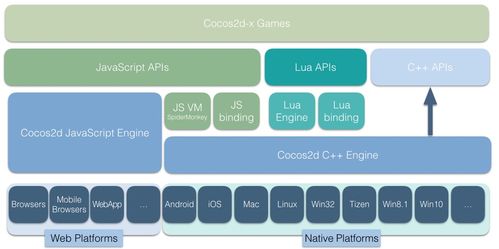
The Cocos2d family (Cocos2d-x, Cocos2d-ObjC, Cocos2d-JS) has primarily focused on C++, Objective-C, and JavaScript. The official Cocos2d-JS project, which used the Java language for its server-side components, has been deprecated and is no longer supported.
The Detailed Explanation: History and Alternatives
To understand why this is the case, it's helpful to look at the history of Cocos2d and the Java ecosystem.

The "Cocos2d-JS" Project (The Closest You'll Get)
The project that comes closest to what you're looking for is Cocos2d-JS. However, it's important to understand its architecture:
- Client-Side (Browser/Mobile): The game logic and rendering ran in the browser or on a mobile device using JavaScript. The rendering engine was a wrapper over Cocos2d-x (a C++ engine).
- Server-Side (Node.js/Java): For multiplayer games, you needed a server. Cocos2d-JS had a framework where you could write the server logic in Java. This Java server would communicate with the JavaScript client via a custom protocol.
Key Points about Cocos2d-JS:
- Status: Deprecated and Archived. The official GitHub repository is archived, and it has not received updates in many years.
- Language: The game development itself was in JavaScript, not Java. Java was only for the server backend.
- Relevance: While you could technically find and run this old code today, it's not a viable option for any new project due to lack of support, security vulnerabilities, and outdated technology.
Why Isn't There an Official Cocos2d for Java?
The main reasons are historical and practical:
- Platform Dominance: When Cocos2d was gaining popularity (early 2000s), the primary platforms for 2D games were iOS (using Objective-C) and later, the web (using JavaScript). Java's main platform, the desktop (via Swing/JavaFX), was not a primary target for most indie or mobile developers.
- Performance: While modern Java is very fast, game engines are often written in lower-level languages like C++ for maximum performance and fine-grained control over memory. Cocos2d-x is a C++ engine, and it's much easier to bind it to languages like Lua or JavaScript than to re-implement the entire engine in Java from scratch.
- The Rise of LibGDX: The Java game development community already had a very strong, dominant alternative: LibGDX. Because LibGDX filled the need so well, there was little commercial or community pressure for the Cocos2d team to create a Java version.
The Modern Solution: How to Use Cocos2d with Java Today
Since you can't use "Cocos2d for Java," here are the best ways to achieve your goal, depending on what you want to do.
Option 1: Use Cocos2d-x (C++) with Java via JNI (Advanced)
This is the most powerful but also the most complex option.
- What it is: You use Cocos2d-x (the C++ engine) to build your game's core logic and rendering. Then, you use the Java Native Interface (JNI) to allow your Java application (e.g., a desktop app or an Android app) to call functions in your C++ code and vice-versa.
- Use Case: Building a desktop Java application that embeds a high-performance C++ game engine, or integrating Cocos2d-x into an Android app (though Cocos2d-x has its own better Android integration).
- Pros: Ultimate performance, full access to the C++ Cocos2d-x API.
- Cons: Extremely complex, difficult to debug, introduces platform-specific build issues, and generally overkill for most projects.
Option 2: Use LibGDX (The Recommended Java Path)
If your goal is to make 2D games in Java, LibGDX is the de-facto standard and the best choice by far.
- What it is: LibGDX is a Java-based game development framework. You write your entire game in Java. Under the hood, it uses OpenGL (via LWJGL) to render. For desktop and web, it runs Java bytecode directly. For Android, it uses a high-performance JNI layer to render to a GL surface.
- Architecture: You write your code once in Java and deploy it to multiple platforms (Windows, macOS, Linux, Android, HTML5, iOS).
- Pros:
- True Java Development: Write everything in Java.
- Excellent IDE Integration: Works perfectly with IntelliJ IDEA and Eclipse.
- Huge Community & Ecosystem: Tons of tutorials, assets, and active forums (like the LibGDX Discord).
- Powerful & Mature: Includes a full scene graph, physics engine (Box2D integration), UI tools, asset manager, and more.
- Free and Open Source.
- Cons: It's a different API from Cocos2d, so there's a learning curve if you're coming from that ecosystem.
Option 3: Use Cocos Creator (JavaScript/TypeScript) for the Game, Java for the Server
This is the most common modern architecture for multiplayer games.
- What it is: Use Cocos Creator (the successor to Cocos2d-JS) to build your game client. Cocos Creator uses JavaScript or TypeScript for scripting and is an incredibly powerful and modern engine. For the server backend, use a standard Java framework like Spring Boot or Quarkus.
- How it Works: The Cocos Creator client (running on a player's device or browser) communicates with your Java server over a network (using WebSockets, REST APIs, or gRPC).
- Pros:
- Uses a modern, actively developed engine (Cocos Creator).
- Leverages the immense power and maturity of the Java ecosystem for the backend.
- Excellent separation of concerns (client vs. server).
- Cons: Involves learning two different technology stacks (JS/TS for client, Java for server).
Summary Table
| Method | Core Language | Best For | Pros | Cons |
|---|---|---|---|---|
| Cocos2d-JS (Deprecated) | JavaScript (Client), Java (Server) | Old projects, understanding history. | Was a unified solution for its time. | Deprecated, insecure, outdated tech. |
| Cocos2d-x + JNI | C++ (Engine), Java (Wrapper) | Advanced desktop embedding. | Ultimate performance. | Extremely complex, hard to debug. |
| LibGDX (Recommended) | Java | Making 2D games in Java for any platform. | True Java, huge community, mature, cross-platform. | Different API from Cocos2d. |
| Cocos Creator + Java Server | JS/TS (Client), Java (Server) | Modern multiplayer games. | Modern client, powerful Java backend. | Requires learning two stacks. |
Final Recommendation
- If you want to build a 2D game using the Java language, your best and most straightforward path is LibGDX.
- If you want to build a multiplayer game and are comfortable with a client-server architecture, use Cocos Creator for the client and Java (Spring Boot) for the server.
- Avoid trying to use the old, deprecated Cocos2d-JS.