Of course! Let's break down final static in Java, which is a combination of two very important keywords. It's one of the most common and fundamental concepts in the language.

We'll look at each keyword individually and then see what happens when they are combined.
The static Keyword
The static keyword means that a member (variable or method) belongs to the class itself, not to any specific instance (object) of the class.
-
Static Variable (Class Variable):
- There is only one copy of this variable, regardless of how many objects of the class are created.
- It is shared by all instances of the class.
- It is initialized when the class is loaded by the JVM.
Analogy: Think of a
staticvariable as a property of the "blueprint" (the class), not of a specific "house" (the object). All houses built from that blueprint share the same property.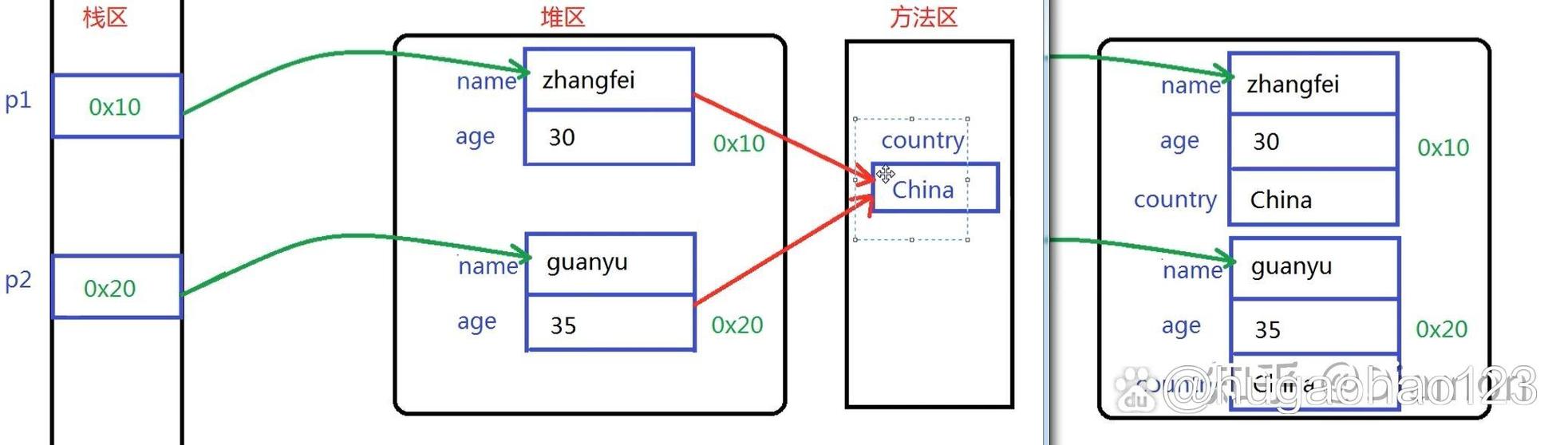 (图片来源网络,侵删)
public class Car { // This is a class variable. All Car objects share this one variable. public static int numberOfCars = 0; public Car() { numberOfCars++; // Increment the shared counter every time a new car is made. } } -
Static Method (Class Method):
- Can be called directly on the class, without needing to create an object.
- It can only access other
staticmembers of the class. It cannot access instance variables or methods directly.
public class MathUtils {
    // This is a class method. You don't need a MathUtils object to use it.
    public static int add(int a, int b) {
        return a + b;
    }
}
// Usage:
int sum = MathUtils.add(5, 10); // No object creation needed!
The final Keyword
The final keyword means that something cannot be changed once it has been initialized.
-
Final Variable (Constant):
- Once assigned a value, the value of a
finalvariable cannot be modified. - If it's a primitive type (like
int), its value is fixed. - If it's a reference type (like a
String), the reference itself cannot be changed (i.e., it cannot point to a different object), but the object's internal state can still be modified (unless that object is also immutable, likeString).
Analogy: A
finalvariable is like a written contract. The terms are set and cannot be altered. (图片来源网络,侵删)
public class Configuration { public final int MAX_USERS = 100; // The value is set and cannot be changed. public final String APP_NAME = "MyApp"; public void changeName() { // APP_NAME = "NewApp"; // COMPILE ERROR! Cannot assign a value to a final variable. } } - Once assigned a value, the value of a
-
Final Method:
- A
finalmethod cannot be overridden by a subclass. This is used to prevent a subclass from changing the core behavior of a method.
public class Animal { public final void makeSound() { System.out.println("Some generic animal sound"); } } public class Dog extends Animal { // public void makeSound() { ... } // COMPILE ERROR! Cannot override a final method. } - A
-
Final Class:
- A
finalclass cannot be extended (you cannot create a subclass of it). This is often used for security or to ensure that the class's implementation is not altered.
public final class ImmutableClass { // ... class code } // public class MySubClass extends ImmutableClass { ... } // COMPILE ERROR! - A
The final static Combination (The Power Duo)
When you combine final and static, you get a class constant. This is a variable that:
static: Belongs to the class. There is only one copy, shared by all instances.final: Its value is constant and cannot be changed after initialization.
This is the standard, idiomatic way to define constants in Java.
Key Characteristics of final static Variables:
- Memory Efficient: Because there's only one copy in memory, regardless of how many objects you create.
- Accessible: Can be accessed directly from the class name, making code cleaner and more readable.
- Immutable: Its value is guaranteed to be constant throughout the program's execution.
Naming Convention
By convention, final static variables are written in ALL_CAPS, with words separated by underscores (_). This makes them instantly recognizable as constants.
Examples
Example 1: A Simple Constant
public class MathConstants {
    // A class constant for the value of Pi.
    // It's static (shared by all) and final (cannot be changed).
    public static final double PI = 3.14159;
    // A class constant for the maximum number of retries.
    public static final int MAX_RETRIES = 3;
}
// Usage in another class:
public class GeometryCalculator {
    public double calculateCircleArea(double radius) {
        // Access the constant directly using the class name.
        return MathConstants.PI * radius * radius;
    }
    public void attemptOperation() {
        for (int i = 0; i < MathConstants.MAX_RETRIES; i++) {
            System.out.println("Attempt " + (i + 1));
        }
    }
}
Example 2: static Block for Initialization
Sometimes, initializing a constant requires more logic than a simple assignment. You can use a static block for this. This block is executed only once when the class is first loaded.
public class DatabaseConfig {
    // A complex constant that needs to be loaded from a file or calculated.
    public static final String DB_CONNECTION_STRING;
    // A static block for initialization.
    static {
        // Simulate loading from a configuration file.
        String tempConnectionString = "jdbc:mysql://localhost:3306/mydb";
        System.out.println("Initializing DatabaseConfig...");
        DB_CONNECTION_STRING = tempConnectionString;
    }
}
// Usage:
public class Main {
    public static void main(String[] args) {
        System.out.println(DatabaseConfig.DB_CONNECTION_STRING);
        // Output:
        // Initializing DatabaseConfig...
        // jdbc:mysql://localhost:3306/mydb
    }
}
Summary Table
| Keyword(s) | Belongs To | Can it be Changed? | Common Use Case |
|---|---|---|---|
static |
The Class | Yes, its value can be changed. | Shared counters, utility methods (MathUtils.add()), class-level state. |
final |
An Instance | No, its value is fixed after initialization. | Constants within an object, methods that shouldn't be overridden, classes that shouldn't be extended. |
final static |
The Class | No, its value is fixed and shared. | Global constants for the application (e.g., Math.PI, MAX_RETRIES). |
Important Note: final vs. Immutable
It's crucial to understand that final does not mean the object is immutable. final only means the reference cannot be reassigned.
public class Example {
    // The list reference is final, but the list itself is NOT immutable.
    public static final List<String> NAMES = new ArrayList<>();
    static {
        NAMES.add("Alice");
        NAMES.add("Bob");
    }
}
public class Main {
    public static void main(String[] args) {
        // This is allowed. We are not reassigning the NAMES reference.
        // We are modifying the state of the object it points to.
        Example.NAMES.add("Charlie"); // This works perfectly fine.
        // This would cause a compile error because we are trying to change the reference.
        // Example.NAMES = new ArrayList<>(); // COMPILE ERROR!
    }
}
If you want to create a truly immutable static final object, you should use an immutable class like String or create an immutable collection (e.g., using List.of() in Java 9+).