Of course. The combination of Java, Linux, and Oracle is a powerhouse trio, forming the backbone of countless enterprise applications, large-scale data processing systems, and critical business infrastructure. Understanding how they work together is key for any developer or system administrator in the Java ecosystem.
Let's break down each component and then explore how they integrate.
The Three Pillars
a) Java
Java is a high-level, class-based, object-oriented programming language designed for portability. Its key features are:
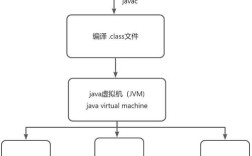
- "Write Once, Run Anywhere" (WORA): This is achieved through the Java Virtual Machine (JVM). Java code is compiled into an intermediate format called bytecode, which can then be run on any device with a compatible JVM.
- Robust and Secure: Features like automatic memory management (garbage collection) and strong typing make Java applications stable and secure.
- Rich Ecosystem: A vast collection of libraries (e.g., Spring, Hibernate, Apache Commons) and tools (e.g., Maven, Gradle) for almost any task imaginable.
- Multi-threading: Built-in support for concurrent programming is essential for building scalable, high-performance applications.
b) Linux
Linux is a family of open-source, Unix-like operating systems. It's the dominant OS for servers, cloud environments, and big data clusters.
- Stability and Performance: Linux kernels are renowned for their stability, security, and high performance under heavy loads.
- Command-Line Power: The shell (like Bash) provides unparalleled power and flexibility for automation, administration, and development.
- Open Source and Customizable: Being open source allows for deep customization to suit specific needs.
- Ideal for Server Environments: It's the de facto standard for running web servers, application servers, and database backends due to its reliability and low resource overhead.
c) Oracle
Oracle refers to two main things in this context: Oracle Database and Oracle Corporation (the company).
- Oracle Database: A powerful, multi-model, relational database management system (RDBMS). It's known for its:
- Scalability: Can handle massive amounts of data and high concurrency.
- Reliability and ACID Compliance: Guarantees data integrity, which is critical for transactional systems.
- Advanced Features: Includes sophisticated features like partitioning, in-memory processing, and advanced security.
- Oracle Corporation: The company that develops and supports the Oracle Database, the Java platform (since acquiring Sun Microsystems), and a vast suite of other enterprise software (e.g., Fusion Middleware, PeopleSoft).
How They Work Together: Key Integration Points
The synergy between these three technologies happens at several levels.
a) Java Applications Connecting to an Oracle Database
This is the most common integration. A Java application (running on Linux) needs to read and write data to an Oracle Database.
The Technology: JDBC (Java Database Connectivity)
JDBC is the standard Java API for connecting to a database. The process looks like this:
- Driver: You need an Oracle JDBC Driver (e.g.,
ojdbc8.jarorojdbc11.jar). This driver acts as a bridge, translating JDBC calls into the Oracle-specific protocol that the database understands. - Connection String: In your Java code, you provide a connection string with the database host, port, service name/SID, and credentials.
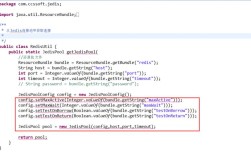
- Connection Pooling: For high-performance applications, you don't create a new database connection for every request. Instead, you use a connection pool (like HikariCP, which is the default in modern Spring Boot apps). The pool maintains a cache of open connections that can be reused, dramatically improving performance.
- Execute Queries: The Java application uses JDBC to execute SQL queries, retrieve results (as
ResultSetobjects), and update data.
Example Code Snippet (using JDBC):
import java.sql.Connection;
import java.sql.DriverManager;
import java.sql.ResultSet;
import java.sql.Statement;
public class OracleDBExample {
    public static void main(String[] args) {
        // Connection details
        String dbURL = "jdbc:oracle:thin:@//your-linux-server-host:1521/ORCLPDB1";
        String user = "your_username";
        String password = "your_password";
        // JDBC Driver (usually managed by a build tool like Maven)
        // String driverClass = "oracle.jdbc.OracleDriver";
        try (Connection conn = DriverManager.getConnection(dbURL, user, password);
             Statement stmt = conn.createStatement();
             ResultSet rs = stmt.executeQuery("SELECT 'Hello from Oracle!' AS message FROM DUAL")) {
            if (rs.next()) {
                System.out.println("Database message: " + rs.getString("message"));
            }
            System.out.println("Successfully connected to Oracle DB on Linux!");
        } catch (Exception e) {
            e.printStackTrace();
        }
    }
}
b) Java on the Oracle Linux Operating System
Oracle offers its own enterprise-grade Linux distribution, Oracle Linux. It's 100% application binary compatible with Red Hat Enterprise Linux (RHEL) and CentOS.
- Why use it?
- Unbreakable Enterprise Kernel (UEK): A custom kernel optimized for performance, especially on Oracle's own hardware (Exadata, SPARC).
- Ksplice: Allows for kernel updates without requiring a system reboot, which is a massive benefit for 24/7 uptime.
- Free and Supported: It's free to use and optionally comes with commercial support from Oracle, making it a cost-effective alternative to RHEL.
You would run your Java application server (like Tomcat or WebLogic) on an Oracle Linux VM or bare metal server, which then connects to a separate Oracle Database server.
c) Oracle WebLogic Server
This is Oracle's flagship Java EE application server. It's a full-fledged platform for building, deploying, and running large-scale, distributed Java applications.
- Role: WebLogic provides the runtime environment for Java applications. It handles transaction management, security, resource pooling (including database connections), clustering for high availability, and load balancing.
- The Stack: A classic enterprise stack is:
- Hardware: Server running Linux.
- OS: Oracle Linux.
- Application Server: Oracle WebLogic Server (running on Java).
- Database: Oracle Database.
WebLogic is pre-configured to work seamlessly with the Oracle Database, providing optimized connection pools and transaction support.
Common Architectural Patterns
Here are a few typical ways these technologies are deployed:
| Pattern | Description |
|---|---|
| Classic 3-Tier Web App | Linux Web Server (Nginx/Apache) -> Linux App Server (WebLogic/Tomcat with Java App) -> Linux Database Server (Oracle DB). The most common pattern. |
| Big Data / Analytics | A cluster of Linux nodes running Java-based frameworks like Apache Spark or Hadoop. They all connect to a central Oracle Database (or Data Warehouse) to process massive datasets. |
| Microservices on Kubernetes | Modern approach where containerized Java microservices (built with Spring Boot) are orchestrated by Kubernetes on a Linux cluster. Each service connects to an Oracle database. |
| Java in the Database (Oracle JVM) | You can actually run Java code inside the Oracle database itself. This is used for complex business logic, stored procedures, and user-defined functions that run directly on the database server. |
Key Challenges and Considerations
- Licensing Costs: This is the biggest one. While Java (OpenJDK) and Linux are free, the Oracle Database and Oracle WebLogic Server require expensive commercial licenses, especially in production environments.
- Complexity: Managing this stack is complex. You need expertise in Linux system administration, Java development, and Oracle database administration (DBA).
- JDK Versioning: Oracle JDK (the "commercial" version) requires a paid subscription for use in production (as of JDK 11). Most developers and companies now use OpenJDK, a free and open-source implementation, which is functionally equivalent.
- Performance Tuning: Getting the best performance requires tuning at every level: the JVM's heap settings and garbage collector, the Linux kernel's I/O and memory settings, and the Oracle database's SQL queries and memory allocation.
Summary
| Technology | Role in the Stack | Key Integration Point(s) |
|---|---|---|
| Java | The application logic and runtime platform. | JDBC for DB access, runs on the JVM inside WebLogic/Tomcat. |
| Linux | The stable, high-performance operating system. | The foundation on which Java apps and the DB run. |
| Oracle | The powerful, scalable database (and the company). | JDBC Driver, WebLogic Server, and the database itself. |
Together, Java, Linux, and Oracle form a robust, scalable, and feature-rich platform that powers the world's most critical business applications.