Of course! The Java language is one of the most influential and widely-used programming languages in the world. Here is a comprehensive overview, covering its history, core features, how it works, and its modern role.
What is Java?
At its core, Java is a high-level, class-based, object-oriented programming language designed to have as few implementation dependencies as possible.
Its most famous slogan, "Write Once, Run Anywhere" (WORA), perfectly captures its key innovation: platform independence. This is achieved through the Java Virtual Machine (JVM).
Think of it like this:
- You write your Java code (
.javafile). - A special tool called the Java Compiler translates your human-readable code into a special, intermediate format called Java bytecode (
.classfile). - This bytecode is not machine-specific. It's instructions for the Java Virtual Machine (JVM).
- The JVM acts as a translator that runs on any operating system (Windows, macOS, Linux, etc.). It takes the bytecode and converts it into native instructions that the computer's hardware can understand.
This separation between your code and the underlying hardware is what makes Java so portable and powerful.
A Brief History
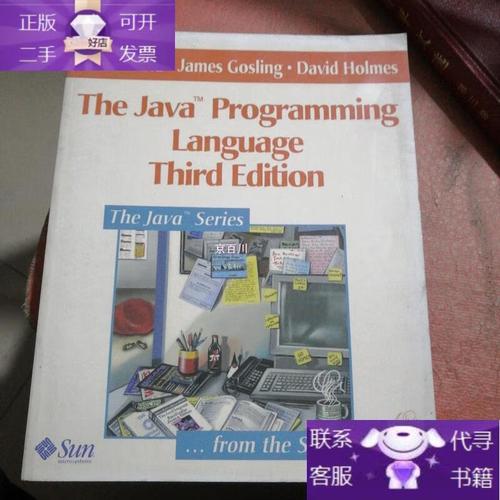
- 1991: Originally conceived by James Gosling at Sun Microsystems as a project called "Oak," intended for interactive television.
- 1995: Renamed "Java" and officially released as a core component of Sun's Java platform. It gained immediate popularity for its web applets, security, and portability.
- 2010: Oracle Corporation acquired Sun Microsystems, becoming the steward of Java.
- 2025: Java was made open-source under the GPLv2 license, further solidifying its place in the developer community.
- Modern Era: Java now follows a six-month release cycle, with new versions arriving every March and September. This brings frequent improvements in performance, security, and features.
Core Features and Philosophy
Java's design is guided by several key principles:
a) Simple and Familiar
Java's syntax is heavily influenced by C++, but it removes complex features like explicit pointers, operator overloading, and multiple inheritance, making it easier to learn and use safely.
b) Object-Oriented (OOP)
Everything in Java (except for primitive types) is an object. It enforces strong OOP principles:
- Encapsulation: Bundling data (fields) and methods that operate on the data into a single unit (a class) and restricting direct access to some of an object's components.
- Inheritance: A class can inherit properties and methods from another class, promoting code reusability.
- Polymorphism: A single interface can be used to represent different underlying forms (data types). This is often achieved through method overriding.
c) Platform Independent (WORA)
As explained above, this is Java's killer feature. The JVM is the key to this "write once, run anywhere" capability.
d) Robust and Secure
- Robust: Features like strong type checking, automatic memory management (garbage collection), and exception handling make Java programs less prone to errors and crashes.
- Secure: Java runs code inside a "sandboxed" environment (the JVM), which prevents malicious code from accessing the underlying system. This was a major reason for its initial success in web applets.
e) High Performance
While interpreted languages are often slower than compiled ones, the JVM uses a technique called Just-In-Time (JIT) compilation. The JIT compiler can identify frequently used bytecode ("hot spots") and compile them into native machine code at runtime, resulting in performance that is often comparable to compiled languages like C++.
f) Multithreaded
Java has built-in support for multithreading, allowing a program to perform multiple tasks simultaneously. This is crucial for building responsive and high-performance applications, especially servers.
The "Hello, World!" Program
This is the traditional first program for any new language. It demonstrates the basic structure of a Java application.
// File: HelloWorld.java
public class HelloWorld {
    // The main method is the entry point of any Java application.
    public static void main(String[] args) {
        // System.out.println prints a line of text to the console.
        System.out.println("Hello, World!");
    }
}
To run this:
- Save the code in a file named
HelloWorld.java. - Compile it:
javac HelloWorld.java(This createsHelloWorld.class). - Run it:
java HelloWorld(This starts the JVM, which loads your class and executes themainmethod).
Key Components of the Java Ecosystem
When people talk about "Java," they often mean the entire Java Platform, which includes more than just the language.
- JDK (Java Development Kit): What developers use to build Java applications. It includes the Java Compiler (
javac), the JVM, and development tools. - JRE (Java Runtime Environment): What users need to run Java applications. It includes the JVM and core libraries, but not the compiler.
- JVM (Java Virtual Machine): The runtime engine that executes Java bytecode. It's the heart of Java's portability.
- APIs (Application Programming Interfaces): Vast libraries of pre-written code for common tasks, such as networking (
java.net), data structures (java.util), database connectivity (java.sql), and user interfaces (java.swing,java.fx).
Modern Java and Its Applications
Java has evolved significantly and remains incredibly relevant today.
Key Modern Features:
- Lambda Expressions & Streams (Java 8): Revolutionized functional programming in Java, making it easier to work with collections of data in a concise and readable way.
- Modularization (Java 9 - Project Jigsaw): Introduced the
module-pathto create more robust and maintainable large-scale applications by explicitly defining dependencies. - Records (Java 14+): A concise way to create immutable data carrier classes.
- Sealed Classes (Java 17): Allows a class or interface to control which other classes or interfaces are allowed to extend or implement it, providing more control over inheritance hierarchies.
Where is Java Used?
Java's versatility means it's everywhere:
- Enterprise Applications: This is Java's stronghold. It's the backbone of massive, complex systems in banking, insurance, e-commerce, and government (e.g., Apache Hadoop, Apache Spark, Spring Framework).
- Android App Development: For many years, Java was the official language for building Android apps. While Kotlin is now the recommended language, a huge amount of the existing Android ecosystem is built in Java.
- Web Backend: Java powers the server-side logic of countless websites and web services. Frameworks like Spring Boot and Jakarta EE make it incredibly fast and efficient to build robust APIs and web applications.
- Big Data: Java is a foundational language for the big data ecosystem, powering technologies like Hadoop, Spark, Kafka, and Elasticsearch.
- Scientific Computing: High-performance numerical libraries and scientific applications are often written in Java.
- Embedded Systems: Java is used in a variety of embedded devices, from smart cards to Blu-ray players.
Strengths and Weaknesses
Strengths:
- Massive Ecosystem: A huge number of high-quality, mature libraries and frameworks are available.
- Excellent Tooling: World-class IDEs like IntelliJ IDEA and build tools like Maven and Gradle make development productive.
- Strong Community & Job Market: There is a vast pool of developers, extensive documentation, and a high demand for Java skills.
- Stability and Maturity: After decades of development, the language and core libraries are incredibly stable and reliable.
Weaknesses:
- Verbosity: Java code can be more "boilerplate-heavy" compared to modern languages like Kotlin or Python.
- Memory Consumption: The JVM has a larger memory footprint compared to some other runtimes.
- Slower Startup Time: Applications can take longer to start up than in compiled languages or interpreted languages like Node.js.
Conclusion
Despite its age, Java is a dynamic, modern, and incredibly powerful language. Its focus on stability, portability, and a rich ecosystem has ensured its continued dominance in enterprise, mobile, and big data. Its recent rapid-release cycle has also breathed new life into the language, quickly incorporating modern features that keep it competitive in the fast-paced world of software development. It's not just a language; it's a robust platform that has stood the test of time and continues to evolve.