Of course. Here is a comprehensive guide covering the key aspects of using Python 3.6.1 with Scrapy.

This guide will cover:
- Compatibility: Is Python 3.6.1 still supported by Scrapy?
- Installation: How to install Scrapy on Python 3.6.1.
- A Simple Project: A step-by-step tutorial to create and run your first Scrapy spider.
- Important Considerations: Key things to be aware of when using this older version.
Compatibility: Is Python 3.6.1 Still Supported?
This is the most important question to answer first.
Short Answer: No, modern versions of Scrapy no longer officially support Python 3.6.
Detailed Explanation:
- Scrapy's Official Support: The Scrapy team follows a support policy aligned with Python's own lifecycle. Python 3.6 reached its official end-of-life (EOL) on December 23, 2025. This means it no longer receives security updates or bug fixes.
- Consequences for Scrapy:
- Installation Issues: You cannot install the latest versions of Scrapy (e.g., Scrapy 2.11+) on Python 3.6. The
pipinstall will fail because of version constraints in Scrapy'ssetup.pyfile. - Security Vulnerabilities: Any Scrapy version that does run on Python 3.6 is old and contains known security vulnerabilities. You should not use it for any production or sensitive data scraping.
- Bugs and Instability: Old versions of Scrapy may have bugs that have long since been fixed in newer releases.
- Installation Issues: You cannot install the latest versions of Scrapy (e.g., Scrapy 2.11+) on Python 3.6. The
Recommendation: While you can get an old version of Scrapy to run on Python 3.6.1, it is highly discouraged. The best practice is to upgrade your Python version to a supported one (e.g., Python 3.8, 3.9, 3.10, or 3.11).
If you absolutely cannot upgrade, you must use a specific, older version of Scrapy.
Installation on Python 3.6.1
Since you can't use pip install scrapy, you need to specify a version that is compatible with Python 3.6. The last version of Scrapy to officially support Python 3.6 was Scrapy 2.5.x.
Here is the step-by-step process:
Step 1: Verify Your Python Version
First, make sure you are in the correct Python 3.6.1 environment.
python --version
# Expected output: Python 3.6.1
Step 2: Install Scrapy 2.5.x
Use pip to install the last compatible version. It's a good idea to use pip to install the latest wheel package first, as it speeds up installation.
# Upgrade pip and install wheel first (good practice)
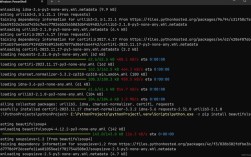
python -m pip install --upgrade pip wheel
# Install the last Scrapy version compatible with Python 3.6
python -m pip install scrapy==2.5.1
You can also check for other compatible versions by searching the PyPI Scrapy page for versions that list Python 3.6 as a supported version.
Step 3: Verify the Installation
Check if Scrapy was installed correctly and see its version.
scrapy version
# Expected output: Scrapy 2.5.1 ...
A Simple Scrapy Project (Tutorial)
Now that you have a working (but old) installation, let's create a basic spider to scrape quotes from http://quotes.toscrape.com/.
Step 1: Create a New Scrapy Project
Run the startproject command in your terminal.
scrapy startproject tutorial
This will create a tutorial directory with the following structure:
tutorial/
    scrapy.cfg            # deploy configuration file
    tutorial/             # project's Python module, you'll import your code from here
        __init__.py
        items.py          # project items definition file
        middlewares.py    # project middlewares file
        pipelines.py      # project pipelines file
        settings.py       # project settings file
        spiders/          # a directory where you'll put your spiders
            __init__.py
Step 2: Define an Item
An "Item" is a Python class that defines the fields you want to scrape. Open tutorial/items.py and define the fields for a quote: text, author, and tags.
# tutorial/items.py
import scrapy
class QuoteItem(scrapy.Item):
    # define the fields for your item here like:
    # name = scrapy.Field()
    text = scrapy.Field()
    author = scrapy.Field()
    tags = scrapy.Field()
Step 3: Create a Spider
A Spider is a class that you define, and Scrapy uses it to scrape information from a website (or a group of websites).
- Create a new file named
quotes_spider.pyinside thetutorial/spiders/directory. - Add the following code to the file.
# tutorial/spiders/quotes_spider.py
import scrapy
from tutorial.items import QuoteItem # Import the Item we defined
class QuotesSpider(scrapy.Spider):
    name = "quotes"  # Unique name for the spider
    allowed_domains = ["quotes.toscrape.com"]
    start_urls = [
        "http://quotes.toscrape.com/page/1/",
    ]
    def parse(self, response):
        """
        This method is called for each response downloaded.
        It's where the parsing logic goes.
        """
        # The CSS selector to find all quote containers on the page
        quotes = response.css('div.quote')
        for quote in quotes:
            # Create an instance of our Item
            item = QuoteItem()
            # Extract data using CSS selectors and extract_first()
            # extract_first() is safer than extract()[0] as it handles empty lists
            item['text'] = quote.css('span.text::text').get().strip('"')
            item['author'] = quote.css('small.author::text').get()
            item['tags'] = quote.css('div.tags a.tag::text').getall()
            yield item
        # Follow the "Next" button to scrape the next page
        next_page = response.css('li.next a::attr(href)').get()
        if next_page is not None:
            # Construct the full URL and follow it
            yield response.follow(next_page, self.parse)
Step 4: Run the Spider
Navigate to the project's root directory (tutorial/) in your terminal and run the spider using its name.
cd tutorial
scrapy crawl quotes
You should see the scraped data being printed to your console in JSON-like format. It will scrape the first page, find the "Next" link, and continue until there are no more pages.
Step 5: Save the Output
To save the scraped data to a file (e.g., a JSON file), use the -o or --output option.
scrapy crawl quotes -o quotes.json
This will create a quotes.json file in your tutorial directory with the results.
Important Considerations and Best Practices
Using an old Python/Scrapy stack comes with significant caveats.
| Feature | Modern Scrapy (Python 3.8+) | Your Setup (Python 3.6.1 + Scrapy 2.5) |
|---|---|---|
| Security | High. Receives regular security updates. | Very Low. Contains known, unpatched vulnerabilities. |
| Bugs | Few. Actively maintained and bugs are fixed. | Likely. Many bugs from that era have been fixed. |
| Features | Latest. Supports new features like asyncio for better performance. |
Outdated. Missing years of improvements. |
| Dependencies | Can use modern, faster libraries. | Stuck with older, slower versions of dependencies like Twisted. |
| Documentation | All documentation and tutorials assume modern versions. | Some documentation may not apply, and you may encounter outdated advice. |
| Community Support | Active community on forums, Discord, etc. | Community focus has moved on. You'll have a harder time getting help for old-version-specific issues. |
Final Recommendation:
While this guide shows you how to make it work, the responsible and most effective approach is to upgrade your Python environment. A simple pyenv or venv setup can allow you to have multiple Python versions on your machine, letting you use a modern version for Scrapy projects while keeping 3.6.1 for other legacy tasks if absolutely necessary.