Of course! "Python Orange cover" can mean a few different things. I'll cover the most common interpretations, from the most literal to the most conceptual.

The Literal: Creating an Orange-Colored Cover with Python
This usually refers to generating an image with a solid orange background. You can do this easily using libraries like Pillow (PIL) or Matplotlib.
Using the Pillow Library
Pillow is the go-to library for basic image manipulation in Python.
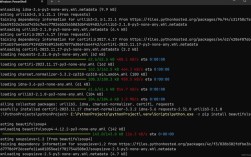
Step 1: Install Pillow
pip install Pillow
Step 2: Create the Orange Cover Image
This script will create a 1200x800 pixel image with a solid orange color and save it as orange_cover.png.

from PIL import Image
# Define the size of the cover (e.g., 1200x800 pixels)
width, height = 1200, 800
# Define the orange color (RGB format)
# Orange is a mix of high Red and Green, with some Blue.
# (255, 165, 0) is a standard orange.
orange_color = (255, 165, 0)
# Create a new image with the specified size and color
# The 'RGB' mode specifies a color image
cover_image = Image.new('RGB', (width, height), orange_color)
# Save the image to a file
cover_image.save('orange_cover.png')
print("Orange cover image created successfully!")
Result: You will have a file named orange_cover.png that is a solid orange rectangle.
Using the Matplotlib Library
Matplotlib is primarily for plotting, but it can also be used to save figures as images. This is useful if you want to add text or more complex graphics.
Step 1: Install Matplotlib
pip install matplotlib
Step 2: Create the Orange Cover with Text This script creates an orange cover and adds "My Python Project" text to it.
import matplotlib.pyplot as plt
import matplotlib.patches as patches
# Define the figure size
fig, ax = plt.subplots(figsize=(12, 8)) # 12x8 inches
# Set the background color to orange
fig.patch.set_facecolor('#FFA500') # '#FFA500' is the hex code for orange
# You can add text
ax.text(0.5, 0.5, 'My Python Project',
        horizontalalignment='center',
        verticalalignment='center',
        fontsize=40,
        color='white', # White text on orange background
        fontweight='bold')
# Remove the axes to make it a clean cover
ax.set_xticks([])
ax.set_yticks([])
ax.axis('off')
# Save the figure
plt.savefig('orange_cover_matplotlib.png',
            bbox_inches='tight',
            pad_inches=0,
            dpi=100) # dpi for resolution
print("Orange cover with text created successfully!")
# Close the plot to free memory
plt.close(fig)
Result: You'll get orange_cover_matplotlib.png with orange background and white text.
The Conceptual: The "Orange" in the Python Ecosystem
This is a very common meaning. In the Python world, "Orange" refers to Orange, an open-source data visualization and data mining toolkit.
What is Orange?
Orange is a component-based software. You build a "workflow" by connecting different widgets, each of which performs a specific task (like loading data, plotting a graph, or training a machine learning model).
It's designed for:
- Interactive Data Analysis: Great for exploring datasets visually.
- Machine Learning: Provides a visual interface for many ML algorithms.
- Education: Excellent for teaching data science concepts without needing to write much code.
Key Features of Orange:
- Visual Programming: Drag and drop widgets to create a data analysis pipeline.
- Rich Widget Library: Has dozens of widgets for data import, visualization, preprocessing, and modeling.
- Python Scripting: You can export your visual workflow as a Python script, allowing you to automate it or integrate it into larger projects.
- Add-ons: Extensible with add-ons like "Network" (for graph analysis) and "Deep Learning" (for neural networks).
Analogy: The "Cover" of Your Data Project
Think of Orange as the cover or the dashboard for your data project. It provides a high-level, visual overview of your entire analysis process from data loading to final results.
Example Workflow in Orange:
- File Widget: Load your dataset (e.g., a CSV file).
- Data Table Widget: See the raw data.
- Box Plot Widget: Visualize the distribution of a specific column.
- Scatter Plot Widget: Explore the relationship between two columns.
- Logistic Regression Widget: Train a classification model on your data.
- Confusion Matrix Widget: Evaluate the model's performance.
The "orange cover" in this sense is the main Orange application window that holds all these widgets and your workflow.
The Literal: A Book Cover about Python
This is the most straightforward interpretation. It refers to the physical or digital cover of a book whose subject is Python.
- Examples:
- "Automate the Boring Stuff with Python" by Al Sweigart
- "Python Crash Course" by Eric Matthes
- "Fluent Python" by Luciano Ramalho
While these covers aren't typically orange, the term could be used to describe any Python book cover that happens to be orange. You could use the Pillow or Matplotlib code from the first section to design and create your own custom orange book cover for a Python project.
Summary
| Interpretation | Description | Tools/Libraries |
|---|---|---|
| Literal Image | Creating an image file with an orange background. | Pillow, Matplotlib |
| Conceptual (Data) | Refers to the Orange data visualization toolkit, which acts as a "cover" or dashboard for data projects. | Orange3 (The software itself) |
| Literal (Book) | The cover of a book about the Python programming language. | N/A (Physical/Digital object) |
To get the best answer, it helps to know the context in which you heard "Python orange cover." But hopefully, this covers all the bases