Of course! Python is an excellent language for probability, statistics, and data analysis. It has a rich ecosystem of libraries that make complex calculations and simulations accessible.
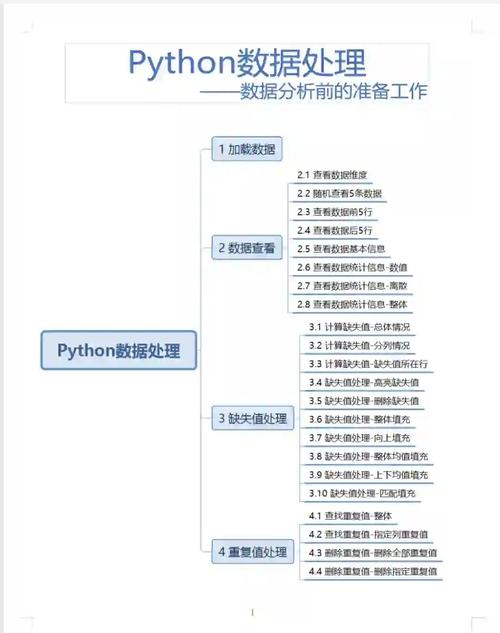
Here's a comprehensive guide to Python for probability, broken down into key concepts, essential libraries, and practical examples.
Core Concepts & The Math Behind It
Before diving into code, it's helpful to recall some fundamental probability concepts:
- Probability of an Event: A number between 0 and 1, representing the likelihood of an event occurring.
- Random Variable: A variable whose possible values are outcomes of a random phenomenon (e.g., the result of a die roll).
- Probability Distribution: A function that describes the likelihood of obtaining the possible values of a random variable.
- Discrete: For countable outcomes (e.g., dice rolls, coin flips).
- Continuous: For uncountable outcomes (e.g., height, weight).
- Expected Value: The long-run average value of repetitions of the experiment it represents.
- Variance & Standard Deviation: Measures of how spread out the values are from the expected value.
Essential Python Libraries for Probability
You'll primarily use three libraries: random, numpy, and scipy.
A. random: The Foundation
The built-in random module is great for simple simulations and generating random numbers.

random.random(): Generates a random float between 0.0 and 1.0.random.randint(a, b): Generates a random integer betweenaandb(inclusive).random.choice(sequence): Picks a random element from a sequence (list, tuple, etc.).random.shuffle(sequence): Shuffles a sequence in place.
B. numpy: Numerical Powerhouse
NumPy is the cornerstone of numerical computing in Python. Its random module is much more powerful and faster than the built-in random for array operations.
np.random.rand(d0, d1, ..., dn): Creates an array of given shape and fills it with random samples from a uniform distribution over [0, 1).np.random.randn(d0, d1, ..., dn): Creates an array of given shape and fills it with random samples from the standard normal distribution (mean=0, std=1).np.random.randint(low, high, size): Generates random integers from a low (inclusive) to high (exclusive) distribution.np.random.choice(a, size): Generates a random sample from a given 1-D array.
C. scipy.stats: The Statistics Library
SciPy builds on NumPy and provides a vast collection of probability distributions and statistical functions. This is where you'll find the "official" distributions.
scipy.stats.norm: The normal (Gaussian) distribution.scipy.stats.binom: The binomial distribution.scipy.stats.poisson: The Poisson distribution.scipy.stats.uniform: The uniform distribution.- And many more...
Each distribution object has useful methods:
.rvs(size=N): Generate N random variates (samples)..pdf(x): Probability Density Function (for continuous distributions)..pmf(k): Probability Mass Function (for discrete distributions)..cdf(x): Cumulative Distribution Function (P(X <= x))..mean(),.var(),.std(): Get the mean, variance, and standard deviation.
Practical Examples
Let's put these libraries to work.

Example 1: Simulating a Coin Flip
This is a simple example of a Bernoulli trial with a 50% chance of success (heads).
import random
def flip_coin():
    """Simulates a single coin flip."""
    return random.choice(['Heads', 'Tails'])
# Simulate 10 coin flips
print("10 Coin Flips:")
for _ in range(10):
    print(flip_coin())
Example 2: Simulating a 6-Sided Die Roll
Here, we'll use NumPy to simulate many rolls and then calculate the average. The expected value for a fair die is (1+2+3+4+5+6)/6 = 3.5.
import numpy as np
# Simulate 10,000 die rolls
num_rolls = 10000
rolls = np.random.randint(1, 7, size=num_rolls)
# Calculate the average (mean)
average_roll = np.mean(rolls)
print(f"Simulated {num_rolls} die rolls.")
print(f"Average roll: {average_roll:.2f}") # Should be close to 3.5
print(f"Expected average: 3.5")
Example 3: Analyzing a Binomial Distribution
A binomial distribution models the number of successes in a fixed number of independent trials (e.g., number of heads in 10 coin flips).
Let's model 10 coin flips and find the probability of getting exactly 7 heads. The probability of heads is p=0.5.
from scipy.stats import binom
# Parameters
n_flips = 10      # Number of trials
p_heads = 0.5     # Probability of success on each trial
k_success = 7     # Number of desired successes
# Calculate the probability of getting exactly 7 heads
prob_7_heads = binom.pmf(k_success, n_flips, p_heads)
print(f"Probability of getting exactly {k_success} heads in {n_flips} flips: {prob_7_heads:.4f}")
# Let's simulate this to see if it matches
num_simulations = 100000
count_7_heads = 0
for _ in range(num_simulations):
    # Simulate 10 flips (1 for heads, 0 for tails)
    flips = np.random.choice([0, 1], size=n_flips, p=[1-p_heads, p_heads])
    if np.sum(flips) == k_success:
        count_7_heads += 1
simulated_prob = count_7_heads / num_simulations
print(f"Simulated probability: {simulated_prob:.4f}")
Example 4: Working with a Normal Distribution
The normal distribution is everywhere (heights, test scores, measurement errors). Let's say IQ scores are normally distributed with a mean of 100 and a standard deviation of 15.
Question: What is the probability that a randomly selected person has an IQ between 115 and 130?
from scipy.stats import norm
import matplotlib.pyplot as plt
# Parameters of the normal distribution
mu = 100    # Mean
sigma = 15   # Standard deviation
# Calculate the probability of IQ being between 115 and 130
# P(115 < X < 130) = P(X < 130) - P(X < 115)
prob = norm.cdf(130, mu, sigma) - norm.cdf(115, mu, sigma)
print(f"Probability of IQ between 115 and 130: {prob:.4f}")
# --- Visualization ---
# Create a range of x values
x = np.linspace(mu - 4*sigma, mu + 4*sigma, 1000)
# Calculate the PDF for these x values
y = norm.pdf(x, mu, sigma)
# Plot the distribution
plt.figure(figsize=(10, 6))
plt.plot(x, y, label='Normal Distribution (IQ Scores)')
# Shade the area of interest
plt.fill_between(x, y, where=(x > 115) & (x < 130), color='blue', alpha=0.3, label='P(115 < IQ < 130)')
'Normal Distribution of IQ Scores')
plt.xlabel('IQ Score')
plt.ylabel('Probability Density')
plt.legend()
plt.grid(True)
plt.show()
Example 5: Monte Carlo Simulation - Estimating Pi
This is a classic and powerful demonstration of using random sampling to solve a problem.
Concept: We can use the ratio of areas of a circle inscribed in a square to estimate Pi.
- Imagine a square with side length 2, and a circle with radius 1 inside it.
- The area of the square is
2 * 2 = 4. - The area of the circle is
pi * r^2 = pi * 1^2 = pi. - The ratio of the circle's area to the square's area is
pi / 4. - If we randomly throw "darts" at the square, the probability that a dart lands inside the circle is
pi / 4. - We can simulate this and count the ratio of darts inside the circle to total darts to estimate
pi.
import numpy as np
def estimate_pi(num_points):
    """Estimates Pi using a Monte Carlo simulation."""
    # Generate random points in the square [-1, 1] x [-1, 1]
    x = np.random.uniform(-1, 1, num_points)
    y = np.random.uniform(-1, 1, num_points)
    # Calculate the distance from the origin (0,0) for each point
    distances = np.sqrt(x**2 + y**2)
    # Count points that are inside the circle (distance <= 1)
    points_inside_circle = np.sum(distances <= 1)
    # The ratio of points inside the circle to total points is an estimate of pi/4
    estimated_pi = 4 * points_inside_circle / num_points
    return estimated_pi
# Run the simulation with a large number of points
num_points = 1000000
pi_estimate = estimate_pi(num_points)
print(f"Estimated Pi with {num_points:,} points: {pi_estimate:.6f}")
print(f"Actual value of Pi: {np.pi:.6f}")
Next Steps & Advanced Topics
Once you're comfortable with the basics, you can explore:
- Pandas: For analyzing real-world datasets and calculating descriptive statistics (mean, median, standard deviation, etc.).
- Matplotlib & Seaborn: For creating more sophisticated statistical plots like histograms, box plots, and violin plots.
- Hypothesis Testing: Using
scipy.statsto perform tests like t-tests, chi-squared tests, and ANOVA to determine if observed results are statistically significant. - Bayesian Statistics: Libraries like
PyMCorStanallow for building complex probabilistic models to update beliefs as new data comes in. This is a huge and powerful field.