Of course! Let's dive deep into Java's Class.forName(). This is a fundamental and powerful mechanism in Java for reflection.

What is Class.forName()?
In simple terms, Class.forName() is a method in Java that dynamically loads a class by its fully qualified name (a String).
It's part of the java.lang.Class class and is the primary way to use Java's Reflection API to work with classes whose names are not known until runtime.
The Core Concept: Loading a Class
When you write Java code, the compiler and the Java Virtual Machine (JVM) work together to manage classes. Here's a simplified view:
- Compile Time: The compiler checks if all the classes you reference in your code exist.
- Load Time: When the JVM starts, it loads the classes that are explicitly referenced in your code (the ones you use directly) into a memory area called the method area. This process is called "static loading" or "loading at compile time."
Class.forName() is a way to force the JVM to load a class dynamically at runtime, even if it wasn't referenced anywhere in your compiled code.
The Syntax
The method is straightforward:
public static Class<?> forName(String className)
    throws ClassNotFoundException
className: AStringrepresenting the fully qualified name of the class you want to load. This includes the package name. For example,"java.lang.String"or"com.example.MyDatabaseDriver".- Return Value: It returns a
Classobject that represents the loaded class. ThisClassobject is the "entry point" to the class's metadata (its fields, methods, constructors, etc.). - Exception: It throws a
ClassNotFoundExceptionif the class cannot be found by the ClassLoader.
How It Works: The Role of the ClassLoader
When you call Class.forName("MyClass"), the JVM doesn't just magically find the class. It uses a ClassLoader to do the work. The process is:
Class.forName()delegates the request to the current context ClassLoader.- The ClassLoader looks for the bytecode for
MyClass(usually in a.classfile). - If found, it loads the class definition into the method area and returns a
Classobject. - If not found, it throws a
ClassNotFoundException.
Important Note: For most applications, the "current context ClassLoader" is the same one that loaded the application itself. This is why you often see Class.forName() used with JDBC drivers.
Common Use Cases
Class.forName() is most commonly used in two scenarios:
JDBC Drivers (The Classic Example)
Before JDBC 4.0, you had to explicitly load the database driver class. The driver class had a static block of code that would register the driver with the DriverManager.
The Old Way (Pre-JDBC 4.0):
import java.sql.Connection;
import java.sql.DriverManager;
import java.sql.SQLException;
public class JdbcExample {
    public static void main(String[] args) {
        String url = "jdbc:mysql://localhost:3306/mydatabase";
        String user = "root";
        String password = "password";
        try {
            // 1. Dynamically load the MySQL driver class
            // This step is no longer strictly necessary in modern JDBC (4.0+)
            // but it's the classic example of Class.forName()
            Class.forName("com.mysql.cj.jdbc.Driver");
            // 2. Get a connection to the database
            // The DriverManager now knows about the driver because it was registered.
            Connection connection = DriverManager.getConnection(url, user, password);
            System.out.println("Connection established successfully!");
            // ... use the connection ...
            connection.close();
        } catch (ClassNotFoundException e) {
            System.err.println("MySQL Driver not found. Please check the classpath.");
            e.printStackTrace();
        } catch (SQLException e) {
            System.err.println("Database connection failed.");
            e.printStackTrace();
        }
    }
}
Why did this work?
The com.mysql.cj.jdbc.Driver class contains a static initializer block:
// Inside the com.mysql.cj.jdbc.Driver class
static {
    java.sql.DriverManager.registerDriver(new Driver());
}
When Class.forName("com.mysql.cj.jdbc.Driver") is called, the JVM loads the class. As part of the loading process, it executes all static blocks, which in this case registers the driver with DriverManager.
Reflection (Creating Instances and Accessing Members)
This is the most powerful use case. You can use the Class object returned by forName() to inspect and manipulate objects at runtime.
import java.lang.reflect.Constructor;
import java.lang.reflect.Field;
import java.lang.reflect.Method;
public class ReflectionExample {
    public static void main(String[] args) {
        try {
            // 1. Load the class dynamically
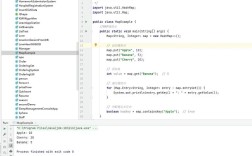
            Class<?> clazz = Class.forName("java.util.ArrayList");
            // 2. Get information about the class
            System.out.println("Class Name: " + clazz.getName());
            System.out.println("Simple Name: " + clazz.getSimpleName());
            System.out.println("Package: " + clazz.getPackage());
            System.out.println("Is it an interface? " + clazz.isInterface());
            System.out.println("\n--- Methods ---");
            // 3. Get all public methods
            Method[] methods = clazz.getMethods();
            for (Method method : methods) {
                System.out.println(method);
            }
            System.out.println("\n--- Fields ---");
            // 4. Get all public fields
            Field[] fields = clazz.getFields();
            for (Field field : fields) {
                System.out.println(field);
            }
            System.out.println("\n--- Creating an instance ---");
            // 5. Create a new instance of the class
            // We use the no-arg constructor
            Constructor<?> constructor = clazz.getConstructor();
            Object arrayListInstance = constructor.newInstance();
            // 6. Invoke a method on the new instance
            Method addMethod = clazz.getMethod("add", Object.class);
            addMethod.invoke(arrayListInstance, "Hello, Reflection!");
            addMethod.invoke(arrayListInstance, 123);
            System.out.println("Created ArrayList: " + arrayListInstance);
        } catch (Exception e) {
            e.printStackTrace();
        }
    }
}
Class.forName() vs. .class
You might see another way to get a Class object: MyClass.class. What's the difference?
| Feature | Class.forName(String name) |
MyClass.class (or myObject.getClass()) |
|---|---|---|
| When it's resolved | Runtime. The name is a String, so it's not known until the code runs. |
Compile Time. The compiler knows the exact class. |
| Use Case | Dynamic Loading. Use when the class name is not known until runtime (e.g., loading plugins, drivers from a config file). | Static/Compile-Time. Use when you know the class at compile time. It's simpler, safer, and more efficient. |
| Exception | Can throw ClassNotFoundException. |
Cannot throw ClassNotFoundException. It's a compile-time constant. |
| Example | Class.forName("com.example.MyPlugin") |
MyClass.class or String.class |
Example:
// Dynamic - name is in a variable
String driverClassName = "oracle.jdbc.driver.OracleDriver";
Class<?> driverClass = Class.forName(driverClassName); // Resolved at runtime
// Static - name is known at compile time
Class<?> stringClass = String.class; // Resolved at compile time
Important Considerations and Best Practices
- Performance: Reflection is slow. Avoid using it in performance-critical code (e.g., inside a tight loop). Use it for configuration, plugin loading, or testing frameworks, not for core application logic.
- Type Safety: Reflection bypasses compile-time type checking. If you try to call a method that doesn't exist, you'll get a
NoSuchMethodExceptionat runtime, not a compiler error. - Security: Reflection can access private members (if you use
setAccessible(true)). This can break encapsulation and is a security risk in environments with a Security Manager. - Modern Alternatives:
- ServiceLoader (Java 6+): For loading plugins or service providers, the
java.util.ServiceLoaderis a more standardized and type-safe approach thanClass.forName(). - Dependency Injection (DI) Frameworks (e.g., Spring, CDI): Modern frameworks use a combination of scanning and reflection to manage beans, but they often provide a cleaner abstraction over raw
Class.forName().
- ServiceLoader (Java 6+): For loading plugins or service providers, the
Summary
Class.forName() is a powerful tool in Java's reflection API that allows you to load a class dynamically at runtime using its name as a string. While its most famous use case in JDBC is now largely optional, it remains essential for:
- Dynamic Loading: Loading classes whose names are determined at runtime.
- Reflection: Gaining a
Classobject to inspect metadata (methods, fields) and create/ manipulate objects.
Use it when you need flexibility and dynamic behavior, but be mindful of its performance and security implications. For static, known-at-compile-time scenarios, prefer the simpler .class syntax.