Of course! The phrase "python startcheck" isn't a standard command, but it's very likely you're looking for a way to start a Python script or check if it's running.
I'll break this down into the most common scenarios. Please see which one matches your goal.
Scenario 1: You want to RUN a Python script for the first time.
This is the most common meaning. You have a file (e.g., my_script.py) and you want to execute it from your computer's terminal or command prompt.
Step 1: Make sure you have Python installed
Open your terminal (Command Prompt on Windows, Terminal on macOS/Linux) and type:
python --version
or if that doesn't work (on some systems, especially Linux or macOS):
python3 --version
If you see a version number (e.g., Python 3.10.8), you're good to go. If not, you need to install Python from python.org.
Step 2: Navigate to your script's directory
Use the cd (change directory) command to go to the folder where your Python file is saved.
For example, if your file is on your Desktop:
cd Desktop
On Windows, you might need to use cd C:\Users\YourUsername\Desktop.
Step 3: Run the script
Use the python or python3 command followed by the name of your file.
python my_script.py
or
python3 my_script.py
Example:
If you have a file named startcheck.py with this content:
# startcheck.py
import time
import datetime
print("Starting the check process...")
print(f"Current time: {datetime.datetime.now()}")
for i in range(5):
    print(f"Check {i+1} passed.")
    time.sleep(1) # Wait for 1 second
print("All checks completed successfully.")
You would run it like this:
python startcheck.py
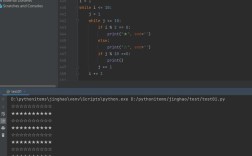
Output:
Starting the check process...
Current time: 2025-10-27 10:30:00.123456
Check 1 passed.
Check 2 passed.
Check 3 passed.
Check 4 passed.
Check 5 passed.
All checks completed successfully.
Scenario 2: You want to "startcheck" as a BACKGROUND SERVICE.
This means you want your script to run continuously, even after you close the terminal window. This is common for monitoring tasks, web servers, or automation.
Option A: On Linux or macOS
Use the nohup (no hang up) command. This runs your script and ignores the "hang up" signal that closes programs when the terminal is closed.
nohup python my_script.py &
nohup: Keeps the script running after you log out.&: Runs the process in the background.
You can check if it's running using:
ps aux | grep my_script.py
Option B: On Windows
Use start with the /B switch to run the program in a separate window without waiting for it to finish.
start /B python my_script.py
You can check if it's running using the Task Manager (Ctrl+Shift+Esc) and looking for python.exe.
Scenario 3: You want to CHECK IF a Python script is already running.
You might want to prevent a second instance of your script from starting.
Option A: Simple File Lock (Cross-Platform)
This is a common and robust method. Your script creates a special "lock" file when it starts. If the lock file already exists when the script tries to start, it knows another instance is running.
Example startcheck.py:
import os
import sys
import time
LOCK_FILE = "startcheck.lock"
# Check if the lock file exists
if os.path.exists(LOCK_FILE):
    print("Error: Script is already running!")
    sys.exit(1) # Exit with an error code
# Create the lock file
print("Starting script. Creating lock file...")
with open(LOCK_FILE, 'w') as f:
    f.write(str(os.getpid())) # Optional: Write the Process ID
try:
    # --- Your main script logic goes here ---
    print("Running the main check process...")
    time.sleep(10) # Simulate a long-running task
    print("Main process finished.")
    # -----------------------------------------
finally:
    # IMPORTANT: Always remove the lock file when the script exits
    print("Cleaning up. Removing lock file.")
    os.remove(LOCK_FILE)
When you run this, the first time it will work. If you try to run a second instance while the first is still sleeping, you'll see the "Error: Script is already running!" message.
Option B: Using a Process Library (More Robust)
The psutil library is excellent for cross-platform process management.
Install psutil:
pip install psutil
Example startcheck.py with psutil:
import psutil
import sys
def is_script_already_running(script_name):
    """Checks if a process with the given script name is already running."""
    for proc in psutil.process_iter(['name', 'cmdline']):
        try:
            # Check if the command line contains our script name
            if script_name in proc.info['cmdline']:
                print(f"Found already running process: {proc.info['cmdline']}")
                return True
        except (psutil.NoSuchProcess, psutil.AccessDenied, psutil.ZombieProcess):
            pass
    return False
if is_script_already_running("startcheck.py"):
    print("Error: Script is already running!")
    sys.exit(1)
print("No other instances found. Starting script...")
# --- Your main script logic goes here ---
# e.g., time.sleep(60)
print("Script finished.")
Summary
| Your Goal | The Solution |
|---|---|
| Run a Python script once | python my_script.py in your terminal. |
| Run a script in the background | nohup python my_script.py & (Linux/macOS) or start /B python my_script.py (Windows). |
| Check if a script is already running | Use a lock file (simple) or the psutil library (more robust) to detect other instances of the script. |
If you can provide more context about what "startcheck" is supposed to do (e.g., check a website, monitor a file, run a test suite), I can give you a more specific example