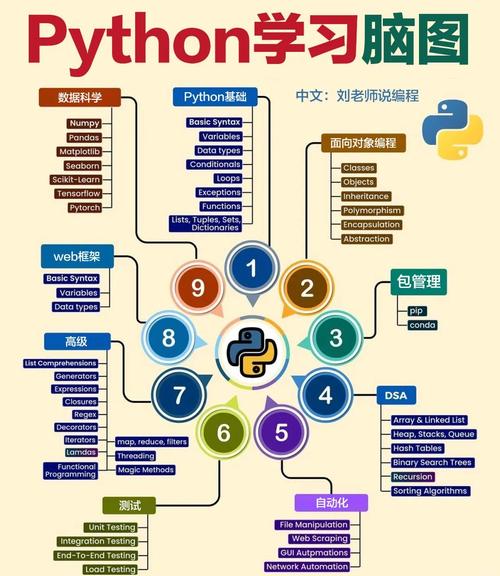
Of course! "Learn more Python" is a fantastic goal. Python is a versatile and powerful language with a huge ecosystem. To give you the best path forward, I'll break this down into a structured roadmap, from foundational concepts to advanced topics and specializations.
Phase 1: Solidify the Fundamentals
If you're comfortable with the basics (variables, loops, conditionals, functions), it's time to deepen your understanding. Don't skip this phase—strong fundamentals are the key to writing clean, efficient, and maintainable code.
Data Structures: Go Beyond the Basics
You know lists and dictionaries, but do you really know them?
-
Lists:
- Comprehensions: Master list comprehensions (
[x*2 for x in range(10)]). They are a hallmark of Pythonic code. - Slicing & Dicing: Get very comfortable with slicing (
my_list[1:5:2]). - Common Methods: Deep dive into
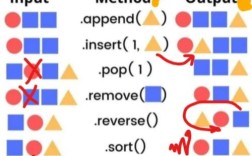
append(),extend(),pop(),remove(),sort(), andsorted().
- Comprehensions: Master list comprehensions (
-
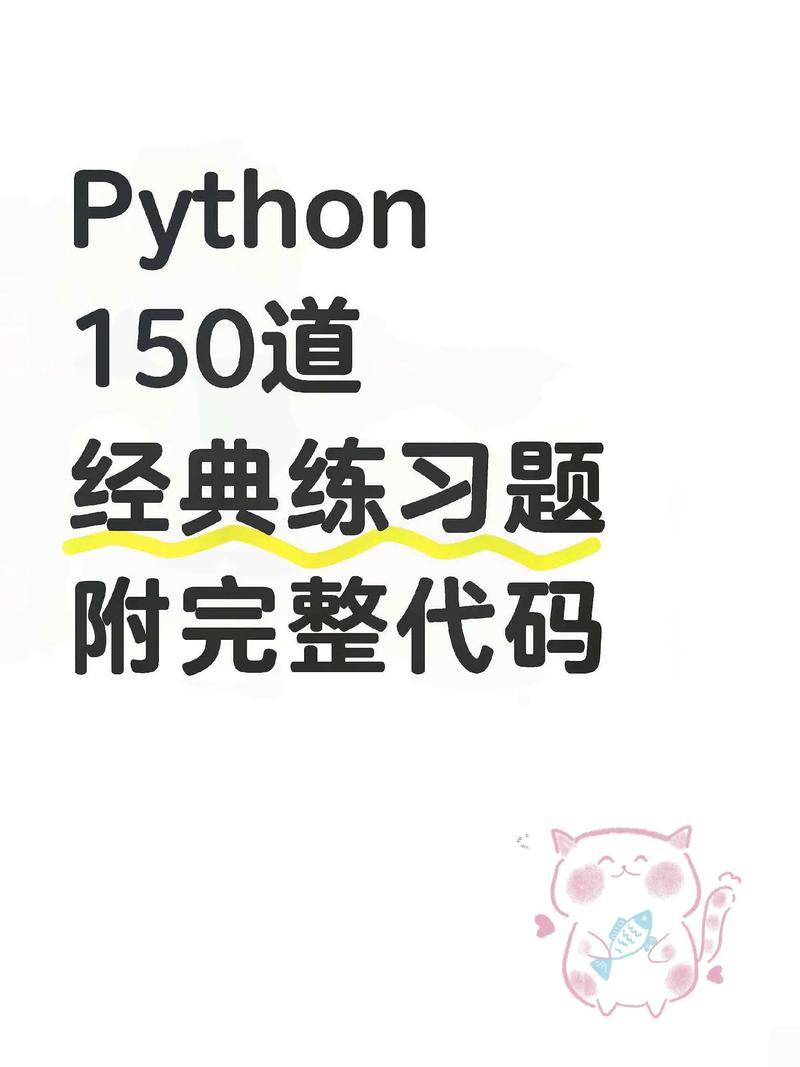
Dictionaries:
 (图片来源网络,侵删)
- Dictionary Comprehensions:
{x: x*2 for x in range(10)}. - Methods:
keys(),values(),items(). Understand the.get()method to avoidKeyErrorexceptions. collections.defaultdict: Learn how to create dictionaries that automatically handle missing keys.
- Dictionary Comprehensions:
-
Sets:
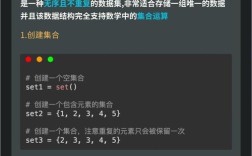
- Understand when to use sets (for uniqueness and fast membership testing).
- Learn set operations:
union,intersection,difference.
-
Tuples:
Understand their immutability and why it's useful (e.g., as dictionary keys).
Functions are First-Class Citizens
Think of functions not just as blocks of code, but as objects.
- Lambda Functions: Learn to create small, anonymous functions (
lambda x: x * 2). map(),filter(),reduce(): Understand how to use these higher-order functions to operate on sequences. (Note: list comprehensions are often preferred overmap()andfilter()for readability).- *`args
andkwargs`: Master these to write flexible functions that can accept any number of positional and keyword arguments.
The Power of Imports
Don't just import. Understand how to import.
import modulevs.from module import function: Know the difference and the pros/cons.- Aliasing:
import pandas as pd. Why is this done? - Creating Your Own Modules: Learn how to structure your code into multiple
.pyfiles and import them between each other.
Phase 2: Intermediate Python & Core OOP
This is where you start writing more structured and robust applications.
Object-Oriented Programming (OOP)
This is a critical paradigm for building large applications.
- Classes and Objects: Go beyond the syntax. Understand why you'd use a class.
__init__(The Constructor): Understand its role in initializing an object's state.self: Understand what it represents (the instance of the class).- Instance vs. Class Attributes: Know the difference between data belonging to one object vs. all objects of a class.
- Methods:
- Instance methods (the standard).
- Class methods (
@classmethod): Operate on the class itself, not an instance. - Static methods (
@staticmethod): Utility functions that don't need access to the class or instance.
- Inheritance: Learn how to create a new class that inherits attributes and methods from an existing one. Use the
super()function correctly. - Encapsulation & Abstraction: Understand the concepts of "private" attributes (using a leading underscore
_) and how to expose only necessary functionality.
Error Handling
Your programs will fail. A good programmer handles failures gracefully.
try...except...finally: Learn how to "try" a block of code and "catch" specific errors.- Raising Exceptions: Learn to create your own errors with
raise ValueError("Something went wrong"). - Common Exceptions: Get familiar with
TypeError,ValueError,KeyError,FileNotFoundError,IndexError.
File I/O & Working with Data
- Reading/Writing Files: Use the
with open(...)context manager. It's the safe, modern way to handle files. jsonModule: Learn to serialize and deserialize Python objects to and from JSON, the standard for web APIs.csvModule: Learn to read and write CSV files.pathlibModule: This is the modern, object-oriented way to handle filesystem paths. It's more powerful and less error-prone thanos.path.
Phase 3: Advanced Topics & The Standard Library
Now you're getting into the "expert" territory. These topics will make your code faster, more professional, and more powerful.
Generators & Iterators
- Iterators: Understand the protocol behind
forloops (__iter__and__next__). - Generators: Learn to write functions that
yieldvalues one at a time. They are memory-efficient for handling large datasets. This is a cornerstone of Pythonic data processing.
Decorators
This is a more advanced but incredibly powerful concept. A decorator is a function that takes another function and extends its behavior without explicitly modifying it.
- Common Use Cases: Logging, timing function execution, access control, and caching (
@lru_cachefromfunctoolsis a great built-in example).
Virtual Environments
This is non-negotiable for any real project. It isolates your project's dependencies from your system's global Python installation.
- Tools: Learn
venv(built-in) orpipenv(more user-friendly). - Workflow:
python -m venv myenv,source myenv/bin/activate(on Mac/Linux) ormyenv\Scripts\activate(on Windows), thenpip install package_name.
Context Managers
You've seen with open(...). Now learn to write your own. They are used for setup and teardown actions (like opening a database connection or acquiring a lock).
Concurrency & Parallelism
For making your programs faster when dealing with I/O (network requests, file reads) or CPU-intensive tasks.
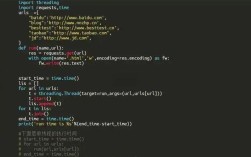
threading: For I/O-bound tasks. Be aware of the Global Interpreter Lock (GIL).multiprocessing: For CPU-bound tasks. It bypasses the GIL by creating separate processes.asyncio: The modern, high-performance way to handle many I/O-bound tasks concurrently. This is a very valuable skill for web development and APIs.
Phase 4: Choose Your Path (Specialization)
Python's power comes from its libraries. Now is the time to pick an area and dive deep.
| Path | Key Libraries | What You'll Build | Resources |
|---|---|---|---|
| Data Science & Machine Learning | NumPy, Pandas, Matplotlib, Seaborn, Scikit-learn, TensorFlow/PyTorch |
Analyze datasets, build predictive models, create data visualizations. | Kaggle Learn, DataCamp |
| Web Development | Django (batteries-included), Flask (microframework), FastAPI (modern & fast) |
Build RESTful APIs, full-stack web applications, backend services. | The Django Tutorial, Flask Tutorial |
| Automation & Scripting | os, shutil, glob, requests, BeautifulSoup, Selenium, Pillow |
Automate file management, scrape websites, interact with APIs, process images. | Automate the Boring Stuff with Python |
| DevOps & Cloud | boto3 (AWS), azure-mgmt (Azure), google-cloud, Fabric |
Deploy applications, manage cloud infrastructure, automate server tasks. | AWS Python SDK Docs |
How to Keep Learning
- Read Other People's Code: Go to GitHub and find open-source projects in an area you're interested in. Try to understand how they're structured.
- Contribute to Open Source: Even fixing a typo in a project's documentation is a valuable contribution.
- Code Challenges: Use sites like LeetCode (for interviews), Exercism (for mentorship), or Codewars (for fun).
- Build a Portfolio Project: Don't just follow tutorials. Build something you care about from scratch. A personal project is the best way to solidify your knowledge.
- Follow Python News: Keep an eye on the official Python What's New pages to stay updated on new features.