Of course. Let's break down the combination of static and private in Java. This is a very common and important concept.

In short: private static is a valid and frequently used modifier combination in Java. It means that the member (variable or method) belongs to the class itself, not to any specific instance of the class, and it can only be accessed from within that class.
Let's break down each keyword and then see how they work together.
The static Keyword
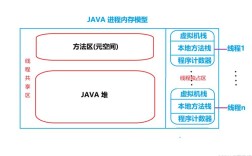
When you declare a member (variable or method) as static, you are saying that it is associated with the class, not with an object of the class.
- Shared Memory: There is only one copy of a
staticmember, regardless of how many objects (instances) of the class are created. All instances share the samestaticvariable. - Access via Class: You can access a
staticmember directly using the class name (ClassName.memberName), without needing to create an object. - Lifetime: It exists for as long as the class is loaded in memory (typically for the duration of the application).
Example: A static variable

public class Counter {
    // This variable is shared by ALL instances of Counter.
    // If one Counter object increments it, all other Counter objects will see the new value.
    private static int instanceCount = 0;
    public Counter() {
        // Every time a new Counter is created, we increment the shared count.
        instanceCount++;
        System.out.println("A new Counter has been created. Total: " + instanceCount);
    }
    public static int getInstanceCount() {
        // A static method can access a static variable.
        return instanceCount;
    }
}
Usage:
public class Main {
    public static void main(String[] args) {
        // Accessing the static variable directly via the class name
        System.out.println("Initial count: " + Counter.getInstanceCount());
        Counter c1 = new Counter(); // Output: A new Counter... Total: 1
        Counter c2 = new Counter(); // Output: A new Counter... Total: 2
        Counter c3 = new Counter(); // Output: A new Counter... Total: 3
        // We get the shared count from the class, not from an instance
        System.out.println("Final count: " + Counter.getInstanceCount()); // Output: 3
    }
}
The private Keyword
When you declare a member as private, you are enforcing strict encapsulation. It means the member can only be accessed from within the class that declares it.
- No External Access: Code outside the class (even subclasses) cannot see or modify a
privatemember directly. - Controlled Access: To allow controlled access, you typically provide
publicmethods (often called "getters" and "setters") that can read or modify theprivatemember.
Example: A private variable
public class BankAccount {
    // This balance is private. No one can change it directly from outside the BankAccount class.
    private double balance;
    public BankAccount(double initialBalance) {
        this.balance = initialBalance;
    }
    // A public "getter" method to safely access the private balance.
    public double getBalance() {
        return this.balance;
    }
    // A public "setter" method to safely modify the private balance.
    public void deposit(double amount) {
        if (amount > 0) {
            this.balance += amount;
        }
    }
}
Usage:

public class Main {
    public static void main(String[] args) {
        BankAccount account = new BankAccount(1000.00);
        // This would cause a COMPILE ERROR because 'balance' is private.
        // account.balance = 5000.00; // Error: balance has private access in BankAccount
        // We must use the public methods to interact with the private data.
        System.out.println("Initial balance: " + account.getBalance()); // Output: 1000.0
        account.deposit(500.00);
        System.out.println("Balance after deposit: " + account.getBalance()); // Output: 1500.0
    }
}
The Power Combo: private static
Now, let's combine them. A private static member is a member that:
- Belongs to the class (
static). - Is hidden from the outside world (
private).
This is perfect for utility variables and methods that don't need to be exposed but need to be shared across the class or accessed without an instance.
Common Use Cases for private static
Constants
This is the most common use case. Constants are values that never change and are shared by all instances. They are typically declared as public static final, but sometimes they are private static final if they are only for internal use within the class.
public class MathUtils {
    // PI is a constant. It's private because we don't want anyone to change it.
    // It's static because all instances of MathUtils should share the same value of PI.
    private static final double PI = 3.14159;
    // A public static method that uses the private static constant.
    public static double calculateCircumference(double radius) {
        return 2 * PI * radius;
    }
}
Usage:
public class Main {
    public static void main(String[] args) {
        double circumference = MathUtils.calculateCircumference(10);
        System.out.println("Circumference: " + circumference); // Output: Circumference: 62.8318
    }
}
Internal Utility or Helper Methods
Sometimes you need a helper method that performs a task for other methods within the same class, but it doesn't need to be exposed to the outside world. Making it private static is perfect because:
private: It's an implementation detail.static: It can be called from any other method in the class without needing an instance.
public class StringUtils {
    // This method is for internal use only.
    private static boolean isValidChar(char c) {
        return Character.isLetterOrDigit(c);
    }
    // This public method uses the private static helper.
    public static String cleanString(String input) {
        if (input == null) {
            return "";
        }
        StringBuilder sb = new StringBuilder();
        for (char c : input.toCharArray()) {
            if (isValidChar(c)) { // Calling the private static method
                sb.append(c);
            }
        }
        return sb.toString();
    }
}
Usage:
public class Main {
    public static void main(String[] args) {
        String dirtyString = "H-e!!llo, W0rld!";
        String clean = StringUtils.cleanString(dirtyString);
        System.out.println("Cleaned string: " + clean); // Output: Cleaned string: HelloW0rld
    }
}
Shared State or Counters
As shown in the first Counter example, private static is ideal for maintaining state that should be shared across all instances of a class.
Key Differences: static vs. instance
| Feature | static Member (Variable/Method) |
instance Member (Variable/Method) |
|---|---|---|
| Belongs to | The class itself. | An object (instance) of the class. |
| Memory | Only one copy exists for the entire class. | Each object has its own separate copy. |
| Access | Via the class name (ClassName.member). |
Via an object reference (object.member). |
this keyword |
Cannot use this in a static method/variable. |
Can use this to refer to the current object's instance members. |
| Example | Math.PI, System.out.println() |
myAccount.balance, myString.length() |
Summary: private static
private: Hides the member from the outside world, enforcing encapsulation.static: Makes the member a class-level member, shared by all instances.
Together, private static creates a class-level member that is an internal implementation detail of the class. It's not tied to any single object, and it cannot be accessed or modified from outside the class. It's a powerful tool for creating constants, utility methods, and shared state that should remain hidden.