Of course! This is a classic and very important question in the software development world. Let's break down Java and Python in the context of web development, comparing them across various aspects to help you understand their strengths and weaknesses.
(图片来源网络,侵删)
Here’s a detailed comparison of Java and Python for web development.
At a Glance: The Core Difference
- Java: A statically-typed, class-based, object-oriented language. It's known for its performance, robustness, and enterprise-grade reliability. It's like building a heavy-duty, meticulously engineered bridge.
- Python: A dynamically-typed, interpreted language. It's known for its simplicity, readability, and rapid development. It's like building a sleek, modern prototype that can be quickly iterated on.
Head-to-Head Comparison Table
| Feature | Java | Python |
|---|---|---|
| Performance | High. Compiled to bytecode (JVM), which is then compiled to native machine code (JIT). Excellent for high-throughput, low-latency applications. | Good. Interpreted, which can be slower than Java. However, performance is often "good enough" and can be optimized with tools like PyPy or C extensions. |
| Syntax & Readability | More verbose and rigid. Requires explicit type declarations and boilerplate code. | Extremely clean, simple, and readable. Often described as "executable pseudocode." Great for beginners. |
| Development Speed | Slower initial development due to verbosity and compilation steps. | Very fast. Dynamic typing and concise syntax allow for rapid prototyping and iteration. |
| Scalability | Excellent. Proven to scale to massive systems (e.g., LinkedIn, Amazon). Strong support for multi-threading and distributed systems. | Good for scaling, but can be more challenging. Often relies on asynchronous programming (asyncio) and multiple processes instead of threads. |
| Ecosystem & Frameworks | Mature and massive. Spring (and Spring Boot) is the undisputed king of the Java enterprise world. Huge community and vast libraries. | Rich and diverse. Django (batteries-included), Flask (micro), and FastAPI (modern, async) are popular choices. PyPI is one of the largest package repositories. |
| Community & Jobs | Very large, established community, especially in large enterprises and Fortune 500 companies. High demand for specific roles. | Extremely large and rapidly growing community. Huge demand in startups, data science, AI/ML, and web development. |
| Learning Curve | Steeper. Concepts like OOP, the JVM, and complex frameworks can be intimidating for beginners. | Gentle. Easy to learn the basics, but mastering advanced concepts and large-scale applications still takes time. |
| Best For | Large-scale enterprise applications, financial systems, high-performance backend services, Android apps. | Rapid prototyping, startups, data-intensive applications (with integrations), AI/ML-powered web services, and simple to medium-sized projects. |
Detailed Breakdown
Performance and Architecture
-
Java:
- How it works: Java code is compiled into platform-independent bytecode, which runs on the Java Virtual Machine (JVM). The JVM uses a Just-In-Time (JIT) compiler to optimize bytecode execution at runtime, making it very fast after the initial "warm-up."
- Pros: Excellent performance, especially for CPU-bound tasks. The strong type system catches many errors at compile time, leading to more stable applications. The JVM is a mature and highly optimized platform.
- Cons: The JVM has a significant memory footprint and can be slow to start up, making it less ideal for serverless functions or very short-lived processes.
-
Python:
- How it works: Python is an interpreted language, meaning code is executed line by line at runtime, which is inherently slower than compiled languages.
- Pros: For many web applications (I/O bound), the performance bottleneck is the database or network calls, not the Python code itself. In these cases, Python's speed is perfectly adequate.
- Cons: For CPU-intensive tasks, Python can be 10-100x slower than Java. This is why high-performance computing or complex mathematical computations are often done in C/C++ and wrapped in Python.
Syntax and Developer Experience
-
Java:
 (图片来源网络,侵删)
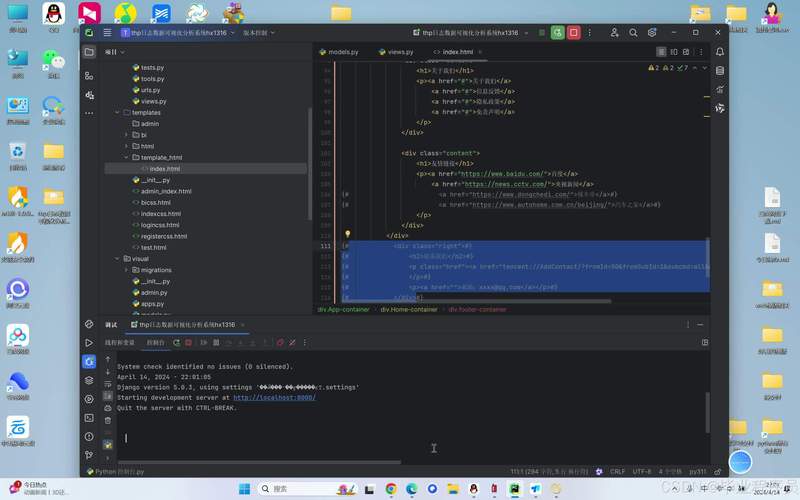
// Java: Hello World Web Endpoint @RestController public class GreetingController { @GetMapping("/greeting") public String greeting(@RequestParam(value = "name", defaultValue = "World") String name) { return "Hello, " + name + "!"; } }- Pros: The strict syntax enforces a consistent coding style, which is crucial in large teams. The type system provides clarity and helps prevent bugs.
- Cons: Verbose. You often need to write more "boilerplate" code to accomplish the same task.
-
Python:
# Python: Hello World Web Endpoint from fastapi import FastAPI app = FastAPI() @app.get("/greeting") def greeting(name: str = "World"): return {"message": f"Hello, {name}!"}- Pros: Incredibly readable and concise. Less boilerplate means developers can focus on solving business problems faster. The dynamic typing allows for more flexible code.
- Cons: The lack of static types can lead to runtime errors that would have been caught at compile-time in Java. This requires more comprehensive testing.
Frameworks: The Heart of Web Development
-
Java: The Spring Ecosystem
- Spring Framework: The original, comprehensive framework for building Java applications. It's powerful but can be complex.
- Spring Boot: The modern standard. It simplifies Spring by providing auto-configuration, an embedded server (like Tomcat), and a massive ecosystem of "Starters" that make getting started incredibly easy. It's the go-to for almost all new Java projects.
- Micronaut / Quarkus: Newer frameworks designed for cloud-native, serverless, and microservices architectures. They have much faster startup times and lower memory usage than Spring Boot.
-
Python: A Trio of Champions
- Django: A "batteries-included" framework. It provides everything you need out of the box: an ORM (Object-Relational Mapper), an admin panel, authentication, and more. Perfect for building complex, database-driven web applications quickly.
- Flask: A "micro-framework." It's lightweight and unopinionated, giving you the core tools to build a web app but leaving the choice of database, authentication, etc., up to you. Great for smaller projects and APIs.
- FastAPI: A modern, high-performance framework for building APIs. It's built on Starlette and Pydantic, which provide automatic data validation and interactive API documentation. It's gaining massive popularity for its speed and ease of use.
Scalability
- Java: The undisputed winner for traditional, multi-threaded scalability. The JVM is exceptionally good at handling many concurrent requests efficiently. This is why it's the backbone of massive, high-traffic sites like LinkedIn and eBay.
- Python: Scaling Python applications often means a different approach. Because of the Global Interpreter Lock (GIL) in CPython, true multi-threading for CPU-bound tasks is limited. Therefore, Python applications scale by:
- Asynchronous I/O (asyncio): Frameworks like FastAPI and Starlette use this model to handle thousands of concurrent connections on a single thread, which is perfect for I/O-bound applications.
- Horizontal Scaling: Running multiple processes (e.g., with Gunicorn or uWSGI) and load balancing between them. This is a very common and effective strategy.
Which One Should You Choose?
Choose Java if:
- You are building a large-scale, enterprise-grade application where stability, maintainability, and long-term support are critical.
- Performance is the absolute top priority, especially for CPU-intensive tasks.
- Your team is already experienced with Java or you're building a system that will integrate with the vast Java ecosystem (e.g., Hadoop, Spark, Android).
- You need strong, static typing to manage a large codebase with many developers.
Choose Python if:
- You need to develop a Minimum Viable Product (MVP) or a startup very quickly.
- Your project involves data science, machine learning, or AI components that need to be integrated with the web backend.
- Developer productivity and readability are more important than squeezing out every last drop of performance.
- You are a beginner or your team prefers a more flexible and expressive language.
Conclusion: It's Not About "Best," It's About "Right"
Java and Python are both excellent, powerful languages for web development. The choice is not about which one is objectively better, but which one is the right tool for your specific job.
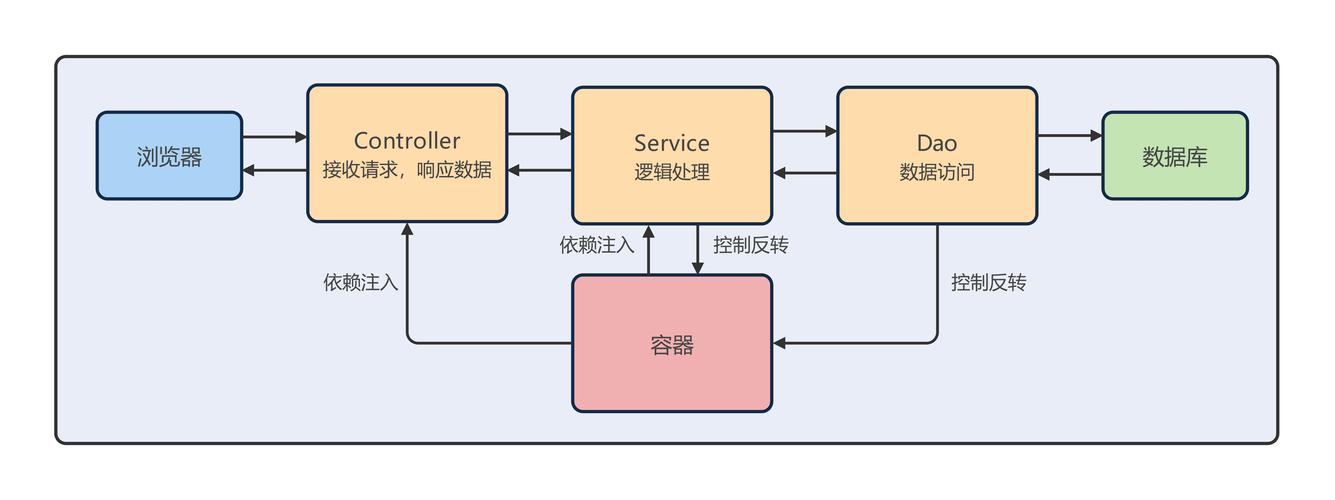
(图片来源网络,侵删)
| Java | Python | |
|---|---|---|
| Analogy | A heavy-duty, reliable truck. | A fast, agile sports car. |
| Motto | "Build it once, run it anywhere." | "Simple is better than complex." |