Of course! pandastable is a fantastic and easy-to-use Python library for creating interactive tables within a graphical user interface (GUI). It's built on top of the popular pandas library and Tkinter, which comes built-in with Python, so you don't need to install any heavy GUI frameworks.
Here's a comprehensive guide covering what it is, how to install it, and how to use it with plenty of examples.
What is pandastable?
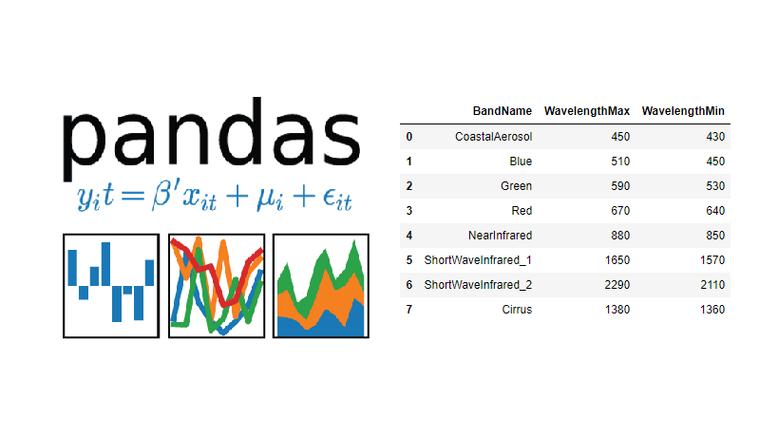
pandastable allows you to display a pandas DataFrame in a window where you can:
- Sort by clicking on column headers.
- Resize columns.
- Filter data.
- Search for values.
- Edit cell values directly.
- Plot data directly from the table.
- Export the data to a CSV file.
It's perfect for data exploration, simple data entry applications, or any time you need a user-friendly way to view and interact with a dataset.
Installation
First, you need to install the library using pip. It's a good practice to do this in a virtual environment.

pip install pandastable
You will also need pandas and tkinter. pandas is installed automatically, but tkinter usually comes pre-installed with Python. If you're on Linux and it's missing, you might need to install it via your system's package manager (e.g., sudo apt-get install python3-tk on Ubuntu).
A Simple "Hello World" Example
Let's start by displaying a simple DataFrame. This example shows the basic structure of a pandastable application.
import tkinter as tk
from pandastable import Table
# 1. Create the main window
root = tk.Tk()"Simple PandasTable Example")
# 2. Create a DataFrame
import pandas as pd
data = {'Name': ['Alice', 'Bob', 'Charlie', 'David'],
        'Age': [24, 27, 22, 32],
        'City': ['New York', 'Los Angeles', 'Chicago', 'Houston']}
df = pd.DataFrame(data)
# 3. Create a frame to hold the table
frame = tk.Frame(root)
frame.pack(fill='both', expand=True)
# 4. Create the Table
# The parent widget is the frame, and the data is our DataFrame
table = Table(frame, dataframe=df, showtoolbar=True, showstatusbar=True)
# 5. Set the table to fill the frame and make it visible
table.show()
# 6. Start the Tkinter event loop
root.mainloop()
When you run this code, a window will appear with your data in an interactive table. You can already click on the "Age" column header to sort by age!
Core Functionality and Customization
Let's explore some of the most useful features.
A. Basic Customization
You can easily change the appearance of the table.
import tkinter as tk
from pandastable import Table
import pandas as pd
root = tk.Tk()
root.geometry("600x400") # Set window size
data = {'Product': ['A', 'B', 'C', 'D'],
        'Sales': [500, 750, 200, 950],
        'Region': ['East', 'West', 'East', 'North']}
df = pd.DataFrame(data)
frame = tk.Frame(root)
frame.pack(fill='both', expand=True)
# --- Customization Options ---
table = Table(frame,
              dataframe=df,
              showtoolbar=True, # Show the toolbar
              showstatusbar=True, # Show the status bar
              width=500, # Table width
              height=200, # Table height
              font=('Arial', 12), # Font style and size
              rowheight=25, # Height of each row
              editable=True, # Allow editing cells
              # Cell colors
              cellwidth=80,
              textcolors={'header': 'blue', 'data': 'black'},
              bgcolors={'header': '#f0f0f0', 'data': 'white', 'evenrow': '#f9f9f9'})
table.show()
root.mainloop()
B. Handling Cell Clicks and Events
You can define functions to run when a user clicks on a cell or a row.
import tkinter as tk
from pandastable import Table
import pandas as pd
root = tk.Tk()"Event Handling Example")
df = pd.DataFrame({'ID': [1, 2, 3], 'Value': ['X', 'Y', 'Z']})
frame = tk.Frame(root)
frame.pack(fill='both', expand=True)
# Define a function to handle cell clicks
def cell_click(event):
    # Get the row and column of the clicked cell
    row = event.row
    col = event.col
    value = table.model.getValueAt(row, col)
    print(f"Cell clicked at Row: {row}, Col: {col}. Value: '{value}'")
# Define a function to handle row selections
def row_selected(event):
    selected_rows = table.getSelectedRows()
    if selected_rows:
        print(f"Selected rows: {selected_rows}")
        # You can get the data for the selected rows like this:
        # selected_data = table.model.df.iloc[selected_rows]
table = Table(frame, dataframe=df, showtoolbar=False)
table.show()
# Bind the event to our function
table.bind('<ButtonRelease-1>', cell_click) # On mouse click release
table.bind('<<TreeviewSelect>>', row_selected) # On row selection
root.mainloop()
C. Filtering and Searching
The Table object has built-in methods for filtering and searching, which are accessible via the toolbar.
D. Plotting Data from the Table
This is one of the killer features. You can select columns and plot them directly.
import tkinter as tk
from pandastable import Table
import pandas as pd
import numpy as np
# Generate some sample data for plotting
np.random.seed(42)
dates = pd.date_range(start='2025-01-01', periods=50)
values = np.cumsum(np.random.randn(50))
df = pd.DataFrame({'Date': dates, 'Value': values})
root = tk.Tk()"Plotting Example")
frame = tk.Frame(root)
frame.pack(fill='both', expand=True)
# Enable plotting by setting a parent frame for the plot window
pt = Table(frame, dataframe=df, showtoolbar=True, showstatusbar=True)
pt.show()
# You can also trigger a plot programmatically
# pt.plot(xcol='Date', ycol='Value')
root.mainloop()
When you run this, you can use the toolbar to select the 'Value' column and click the plot button to generate a line chart.
Complete Example: An Interactive Data Explorer
Let's combine several features into a single, more useful application.
import tkinter as tk
from tkinter import ttk, filedialog, messagebox
from pandastable import Table
import pandas as pd
class DataExplorerApp:
    def __init__(self, root):
        self.root = root
        self.root.title("PandasTable Data Explorer")
        self.root.geometry("800x600")
        self.df = None # To hold the DataFrame
        self.table = None # To hold the Table widget
        self.create_widgets()
    def create_widgets(self):
        # --- Top Frame for Controls ---
        control_frame = ttk.Frame(self.root, padding="10")
        control_frame.pack(fill=tk.X)
        self.load_button = ttk.Button(control_frame, text="Load CSV", command=self.load_csv)
        self.load_button.pack(side=tk.LEFT, padx=5)
        self.save_button = ttk.Button(control_frame, text="Save CSV", command=self.save_csv)
        self.save_button.pack(side=tk.LEFT, padx=5)
        self.search_label = ttk.Label(control_frame, text="Search:")
        self.search_label.pack(side=tk.LEFT, padx=(20, 5))
        self.search_entry = ttk.Entry(control_frame)
        self.search_entry.pack(side=tk.LEFT, fill=tk.X, expand=True, padx=5)
        self.search_button = ttk.Button(control_frame, text="Go", command=self.search_table)
        self.search_button.pack(side=tk.LEFT, padx=5)
        # --- Bottom Frame for the Table ---
        self.table_frame = ttk.Frame(self.root)
        self.table_frame.pack(fill=tk.BOTH, expand=True, padx=10, pady=10)
        # --- Status Bar ---
        self.status_var = tk.StringVar()
        self.status_var.set("Ready. Load a CSV file to begin.")
        status_bar = ttk.Label(self.root, textvariable=self.status_var, relief=tk.SUNKEN, anchor=tk.W)
        status_bar.pack(fill=tk.X, side=tk.BOTTOM)
    def load_csv(self):
        file_path = filedialog.askopenfilename(
            title="Select a CSV file",
            filetypes=[("CSV files", "*.csv"), ("All files", "*.*")]
        )
        if file_path:
            try:
                self.df = pd.read_csv(file_path)
                self.status_var.set(f"Loaded {len(self.df)} rows from {file_path}")
                # Clear old table if it exists
                if self.table:
                    self.table.destroy()
                # Create new table
                self.table = Table(self.table_frame, dataframe=self.df, showtoolbar=True, showstatusbar=True)
                self.table.show()
            except Exception as e:
                messagebox.showerror("Error", f"Could not load file:\n{e}")
                self.status_var.set("Error loading file.")
    def save_csv(self):
        if self.df is None:
            messagebox.showwarning("Warning", "No data to save. Please load a CSV file first.")
            return
        file_path = filedialog.asksaveasfilename(
            title="Save CSV As",
            defaultextension=".csv",
            filetypes=[("CSV files", "*.csv"), ("All files", "*.*")]
        )
        if file_path:
            try:
                self.df.to_csv(file_path, index=False)
                self.status_var.set(f"Data saved to {file_path}")
                messagebox.showinfo("Success", "File saved successfully!")
            except Exception as e:
                messagebox.showerror("Error", f"Could not save file:\n{e}")
    def search_table(self):
        if self.df is None or self.table is None:
            return
        search_term = self.search_entry.get().lower()
        if not search_term:
            self.table.model.df = self.df # Reset to original
            self.table.redraw()
            return
        # Filter the DataFrame
        mask = self.df.apply(lambda col: col.astype(str).str.contains(search_term, case=False)).any(axis=1)
        filtered_df = self.df[mask]
        # Update the table with the filtered data
        self.table.model.df = filtered_df
        self.table.redraw()
        self.status_var.set(f"Found {len(filtered_df)} rows matching '{search_term}'")
if __name__ == "__main__":
    root = tk.Tk()
    app = DataExplorerApp(root)
    root.mainloop()
This final example is a mini-application that you can use to load, view, search, and save CSV files, showcasing the power of integrating pandastable into a larger GUI.
Alternatives
While pandastable is great for simple, built-in GUIs, it's not the only option. Here are some alternatives for different use cases:
| Library/Framework | Pros | Cons | Best For |
|---|---|---|---|
pandastable |
- Very easy to use. - No extra GUI framework needed (uses Tkinter). - Simple and lightweight. |
- Based on Tkinter, which can look dated. - Less suited for complex, multi-window professional apps. |
Quick data exploration, simple data entry tools, educational purposes. |
QtPandas (with PyQt/PySide) |
- Modern, professional look and feel. - Highly customizable and powerful. - Part of a full-featured application framework. |
- Steeper learning curve. - Requires installing a separate GUI framework ( PyQt5/PySide6). |
Professional desktop applications, complex data analysis tools. |
Dash (by Plotly) |
- Web-based (runs in a browser). - Excellent for interactive dashboards and data visualization. - Easy to deploy and share. |
- Not a traditional desktop GUI. - Requires a web server to run. |
Dashboards, web-based data reporting, applications that need to be accessed over a network. |
ipywidgets (in Jupyter) |
- Interactive widgets directly in Jupyter notebooks. - Seamless integration with the data science workflow. |
- Only works within a Jupyter environment. | Interactive data analysis and exploration inside a Jupyter Notebook. |
Summary
pandastable is an excellent choice when you need a fast and simple way to display a pandas DataFrame in a graphical window. Its low barrier to entry makes it perfect for prototyping, creating small utilities, or for anyone who wants to add interactivity to their data without the complexity of a full GUI framework.