
Of course. Here is a comprehensive guide to getting Java 1.6 (also known as Java 6) running on a modern Mac.
⚠️ Important Warning: Java 1.6 is Extremely Outdated and Insecure
Before you proceed, you must understand the following:
- Security Vulnerabilities: Java 1.6 was released in 2006. It has not received any security updates since 2025. Running it on your Mac exposes you to significant security risks. Malware and viruses can easily exploit known vulnerabilities in this version.
- No Modern Support: It does not support modern features, has poor performance compared to newer versions, and is incompatible with most modern software and libraries.
- Apple's Deprecation: Apple officially removed Java 1.6 from macOS starting with OS X Lion (10.7). It is not supported on any version of macOS from 10.7 onwards.
You should only use Java 1.6 if you have a very specific, legacy requirement and you understand the risks.
Method 1: The Official Way (for older Macs)
If you are running a very old version of macOS that is still supported by Apple (like Snow Leopard 10.6), you can get Java 1.6 directly from Apple.
-
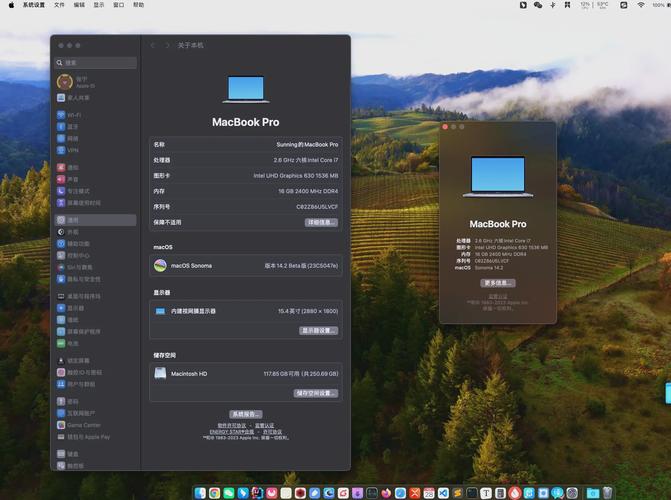
Check Your macOS Version: Click the Apple menu in the top-left corner and select "About This Mac". Look for the version number.
 (图片来源网络,侵删)
- macOS 10.6 (Snow Leopard): This is the last version of macOS that included Java 1.6 by default. You can install it using the "Software Update" utility if it's missing.
- macOS 10.7 (Lion) or newer: Apple no longer provides Java 1.6. You must use Method 2.
-
Install on Snow Leopard:
- Go to Apple menu > System Preferences... > Software Update.
- Look for an update named "Java for Mac OS X 10.6". Install it.
- After installation, you can verify it by opening Terminal and typing
java -version. It should reportjava version "1.6.0_..._x86".
Method 2: The "Hackintosh" Way (for modern Macs)
This is the most common method for getting Java 1.6 on modern macOS versions (like macOS 10.12 Sierra and later). It involves downloading a legacy Java Development Kit (JDK) package and installing it manually.
⚠️ Security Note: You are downloading software from an unofficial source. While this specific package is widely trusted in the developer community, be aware of the inherent risks.
Step 1: Download the Legacy JDK
The most reliable source for these old packages is a third-party archive. The best-known source is maintained by a developer named "Adoptium" (formerly AdoptOpenJDK) for their "Eclipse Temurin" builds.
-
Go to the Eclipse Temurin Previous Releases page: https://adoptium.net/temurin/releases/?version=6
-
You will see a list of old releases. Look for a version that is for macOS x64. A good, stable choice is JDK 6u45-b06.
-
Click the download link for the
.dmgfile for your Mac's architecture (Intel or Apple Silicon - M1/M2/M3).
Step 2: Install the JDK
- Once the
.dmgfile is downloaded, open it from yourDownloadsfolder. - A window will appear with the JDK installer package (e.g.,
JDK 6u45.pkg). Drag it into theApplicationsfolder icon. - Open your
Applicationsfolder, find the.pkgfile you just copied, and double-click it to launch the installer. - Follow the on-screen instructions. You will likely need to enter your administrator password to complete the installation.
Step 3: Set the Java Home Environment Variable
This is the most critical step. The installer places Java 1.6 in a non-standard location, so you need to tell your system where to find it using an environment variable.
-
Open Terminal: You can find it in
Applications > Utilities > Terminal, or search for it with Spotlight (Cmd+Space). -
Edit the Profile File: You need to add a line to your shell's configuration file. The most common file is
~/.bash_profile. If you use Zsh (the default on newer macOS), you'll edit~/.zshrc.- For Bash (older systems):
open -e ~/.bash_profile
- For Zsh (macOS Catalina and newer):
open -e ~/.zshrc
- For Bash (older systems):
-
Add the Java Path: A text editor will open. Add the following line to the very end of the file. The path
/Library/Java/JavaVirtualMachines/jdk1.6.0_45.jdk/Contents/Homeis the standard location for JDK 6u45.export JAVA_HOME="/Library/Java/JavaVirtualMachines/jdk1.6.0_45.jdk/Contents/Home"
Note: If you installed a different version (e.g., 6u41), you will need to change the path accordingly. The folder name in
/Library/Java/JavaVirtualMachines/will reflect the version you installed. -
Save and Close: Save the file in the text editor and quit it.
-
Apply the Changes: The new environment variable will not be active in your current Terminal session. You need to "source" the file or open a new Terminal window.
- Option A (Recommended): Close the Terminal window and open a new one.
- Option B: In the same terminal, type the following command and press Enter:
source ~/.zshrc # or source ~/.bash_profile
Step 4: Verify the Installation
Now, let's check if everything is working.
-
Check the Java Version: In your new Terminal window, type:
java -version
The output should be:
java version "1.6.0_45" Java(TM) SE Runtime Environment (build 1.6.0_45-b06-344) Java HotSpot(TM) 64-Bit Server VM (build 20.45-b01-434, mixed mode) -
Check the Java Home Variable: Type:
echo $JAVA_HOME
The output should be the path you added:
/Library/Java/JavaVirtualMachines/jdk1.6.0_45.jdk/Contents/Home
If both commands give the correct output, Java 1.6 is successfully installed and configured on your Mac.
Method 3: Using a Docker Container (The Safest Modern Approach)
If your goal is to run an old application that requires Java 1.6, the best practice is to run it in a container. This isolates the insecure software from your main operating system.
-
Install Docker Desktop for Mac: If you don't have it, download it from https://www.docker.com/products/docker-desktop/.
-
Pull a Java 1.6 Image: Docker Hub has pre-built images. Open a terminal and run:
docker pull adoptopenjdk/openjdk6:latest
-
Run a Container: You can now run a shell inside this container to use Java 1.6.
docker run -it --rm adoptopenjdk/openjdk6:latest /bin/bash
Once inside the container's shell, you can run
java -versionand it will show version 1.6. You can build and run your legacy application inside this isolated environment.
This method is the safest because the legacy Java environment is completely contained and cannot affect your host macOS system.


