Of course! This is a classic and very important topic in software development. Let's break down how to create a web service in both C and Java, comparing the approaches, technologies, and use cases.
What is a Web Service?
At its core, a web service is a method of communication between two electronic devices over a network. It's a software system designed to support interoperable machine-to-machine interaction over a network. The most common standards for web services are:
- SOAP (Simple Object Access Protocol): A protocol for exchanging structured information. It's XML-based, highly extensible, and designed to be platform-independent. It often uses WSDL (Web Services Description Language) to describe the service.
- REST (Representational State Transfer): An architectural style for designing networked applications. It uses standard HTTP methods (GET, POST, PUT, DELETE) and is typically lighter and easier to use than SOAP, often returning data in JSON format.
Part 1: Web Services in Java
Java has been a dominant force in the enterprise world for decades, and its ecosystem for web services is mature, robust, and feature-rich.
Key Technologies in Java
- JAX-WS (Java API for XML Web Services): The standard API for creating SOAP-based web services in Java. It's part of the Java EE (now Jakarta EE) specification.
- JAX-RS (Java API for RESTful Web Services): The standard API for creating RESTful web services. The reference implementation is Jersey, and another popular one is RESTEasy.
- Spring Framework: The de-facto standard for building modern Java applications. Spring Boot makes creating web services incredibly simple and fast.
- Jakarta EE (formerly Java EE): The official platform for enterprise-grade Java applications, which includes the specifications for web services.
Example 1: Creating a RESTful Web Service with Spring Boot (The Modern & Easiest Way)
Spring Boot is the most popular choice today due to its "convention over configuration" philosophy, which drastically reduces boilerplate code.
Step 1: Set up the Project
You can use the Spring Initializr (start.spring.io) to generate a project with the following dependencies:
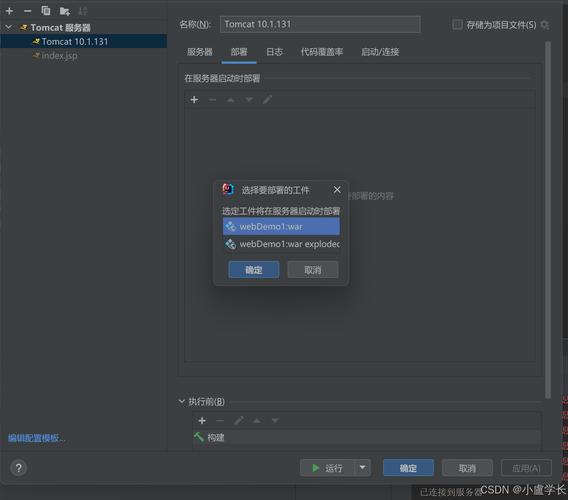
- Spring Web: For building web applications, including RESTful services.
Step 2: Create the Service Class
Create a simple Java class. The @RestController annotation marks it as a controller where every method returns a domain object instead of a view.
src/main/java/com/example/demo/HelloController.java
package com.example.demo;
import org.springframework.web.bind.annotation.GetMapping;
import org.springframework.web.bind.annotation.PathVariable;
import org.springframework.web.bind.annotation.RequestParam;
import org.springframework.web.bind.annotation.RestController;
@RestController
public class HelloController {
    // A simple GET endpoint
    @GetMapping("/hello")
    public String sayHello() {
        return "Hello, World from Spring Boot REST API!";
    }
    // A GET endpoint with a path variable
    @GetMapping("/hello/{name}")
    public String sayHelloToUser(@PathVariable String name) {
        return "Hello, " + name + "!";
    }
    // A GET endpoint with a query parameter
    @GetMapping("/greet")
    public String greetUser(@RequestParam(defaultValue = "Guest") String name) {
        return "Greetings, " + name + "!";
    }
}
Step 3: Run the Application
The main class with @SpringBootApplication can be run directly from your IDE.
src/main/java/com/example/demo/DemoApplication.java
package com.example.demo;
import org.springframework.boot.SpringApplication;
import org.springframework.boot.autoconfigure.SpringBootApplication;
@SpringBootApplication
public class DemoApplication {
    public static void main(String[] args) {
        SpringApplication.run(DemoApplication.class, args);
    }
}
Step 4: Test the Service
Run the application. By default, it starts on port 8080. You can test it using a browser or a tool like curl or Postman.
# Get the default hello message
curl http://localhost:8080/hello
# Get a personalized message
curl http://localhost:8080/hello/Alice
# Use a query parameter
curl http://localhost:8080/greet?name=Bob
Example 2: Creating a SOAP Web Service with JAX-WS (The Standard Java EE Way)
This is more traditional and involves more manual setup but is useful for integrating with legacy systems or strict enterprise environments.
Step 1: Create the Service Endpoint Interface (SEI)
This interface defines the methods that will be exposed as the web service. The @WebService annotation marks it.
src/main/java/com/example/demo/HelloService.java
import javax.jws.WebService;
import javax.jws.WebMethod;
@WebService
public interface HelloService {
    @WebMethod
    String getHelloMessage(String name);
}
Step 2: Create the Service Implementation
This class implements the SEI. The @WebService annotation links it to the interface.
src/main/java/com/example/demo/HelloServiceImpl.java
import javax.jws.WebService;
@WebService(endpointInterface = "com.example.demo.HelloService")
public class HelloServiceImpl implements HelloService {
    @Override
    public String getHelloMessage(String name) {
        return "Hello, " + name + " from SOAP!";
    }
}
Step 3: Publish the Service
You need a publisher to expose the service on a network endpoint. This can be done with a simple main class.
src/main/java/com/example/demo/HelloServicePublisher.java
import javax.xml.ws.Endpoint;
public class HelloServicePublisher {
    public static void main(String[] args) {
        String address = "http://localhost:9876/hello";
        Endpoint.publish(address, new HelloServiceImpl());
        System.out.println("SOAP Service is published at: " + address);
    }
}
Step 4: Test the Service
Run the HelloServicePublisher. To test, you can use a SOAP client like SoapUI or generate a client stub using wsimport.
# To generate client stub from the WSDL (which is automatically generated at http://localhost:9876/hello?wsdl)
# wsimport -keep http://localhost:9876/hello?wsdl
Part 2: Web Services in C
C is a lower-level language, so creating web services is not as straightforward as in Java. You typically don't use a high-level framework like Spring. Instead, you use libraries to handle the HTTP protocol and serialization. The approach is more manual and gives you full control but requires more code.
Key Technologies/Libraries in C
- libcurl: A powerful and popular client-side URL transfer library. It's great for consuming (calling) web services from a C application.
- libmicrohttpd: A small, portable HTTP server library. It's excellent for creating a simple web server in C that can serve REST endpoints.
- CJSON: A very fast and lightweight JSON parser and generator for C. Essential for REST services.
- gSOAP: A C/C++ toolkit for SOAP web services. It can generate server-side skeletons and client-side stubs from a WSDL file, similar to Java's
wsimport.
Example: Creating a Simple RESTful Web Service in C
We'll combine libmicrohttpd for the server and cJSON for handling JSON.
Step 1: Install Dependencies
You'll need to install the libraries on your system.
On Debian/Ubuntu:
sudo apt-get update
sudo apt-get install libmicrohttpd-dev libcurl4-openssl-dev libjson-c-dev
Step 2: Write the C Code
This code sets up a simple HTTP server that listens for GET requests on /api/user/{id} and returns a hardcoded JSON response.
rest_server.c
#include <stdio.h>
#include <string.h>
#include <microhttpd.h>
#include <json-c/json.h>
#define PORT 8888
// This function will be called for every request
int answer_to_connection (void *cls, struct MHD_Connection *connection,
                          const char *url, const char *method,
                          const char *version, const char *upload_data,
                          size_t *upload_data_size, void **con_cls) {
    // We only handle GET requests
    if (strcmp(method, "GET") != 0) {
        return MHD_NO;
    }
    // Check if the URL matches our endpoint
    if (strncmp(url, "/api/user/", 10) == 0) {
        // Extract user ID from the URL (e.g., "/api/user/123" -> "123")
        const char *user_id = url + 10;
        // Create a JSON object
        json_object *jobj = json_object_new_object();
        json_object_object_add(jobj, "id", json_object_new_int(atoi(user_id)));
        json_object_object_add(jobj, "name", json_object_new_string("John Doe"));
        json_object_object_add(jobj, "status", json_object_new_string("active"));
        const char *json_str = json_object_to_json_string(jobj);
        // Set the response headers
        struct MHD_Response *response = MHD_create_response_from_buffer(strlen(json_str), (void*)json_str, MHD_RESPMEM_MUST_COPY);
        MHD_add_response_header(response, MHD_HTTP_HEADER_CONTENT_TYPE, "application/json");
        // Queue the response
        int ret = MHD_queue_response(connection, MHD_HTTP_OK, response);
        // Cleanup
        MHD_destroy_response(response);
        json_object_put(jobj);
        return ret;
    }
    // If URL doesn't match, return 404 Not Found
    struct MHD_Response *response = MHD_create_response_from_buffer(0, NULL, MHD_RESPMEM_PERSISTENT);
    int ret = MHD_queue_response(connection, MHD_HTTP_NOT_FOUND, response);
    MHD_destroy_response(response);
    return ret;
}
int main () {
    struct MHD_Daemon *daemon;
    // Start the HTTP daemon
    daemon = MHD_start_daemon(MHD_USE_THREAD_PER_CONNECTION, PORT, NULL, NULL,
                              &answer_to_connection, NULL, MHD_OPTION_END);
    if (NULL == daemon) {
        return 1;
    }
    printf("Server is running on http://localhost:%d\n", PORT);
    printf("Try accessing: http://localhost:%d/api/user/123\n", PORT);
    // Keep the server running
    getchar();
    MHD_stop_daemon(daemon);
    return 0;
}
Step 3: Compile and Run
Compile the code, linking against the necessary libraries.
gcc rest_server.c -o rest_server -lmicrohttpd -ljson-c
Run the executable:
./rest_server
Step 4: Test the Service
In another terminal, use curl to test the endpoint.
# Get user with ID 123
curl http://localhost:8888/api/user/123
# Expected Output:
# {"id":123,"name":"John Doe","status":"active"}
# Try a non-existent endpoint
curl http://localhost:8888/api/product/456
# Expected Output:
# (empty response with HTTP 404 status code)
Comparison: C vs. Java for Web Services
| Feature | Java (Spring Boot) | C (libmicrohttpd/cJSON) |
|---|---|---|
| Ease of Development | Very High. Frameworks like Spring Boot handle routing, serialization, and server setup automatically. | Low. Requires manual handling of HTTP parsing, routing, and JSON generation. More boilerplate code. |
| Performance | Good. The JVM has excellent Just-In-Time (JIT) compilation, leading to high throughput for many applications. | Excellent. C is compiled to native code, resulting in extremely low memory footprint and high raw performance, ideal for high-frequency, low-latency systems. |
| Ecosystem & Libraries | Massive. Huge ecosystem for everything: security, databases, messaging, testing, etc. Maven/Gradle dependency management is superb. | Smaller & More Specialized. You find focused, high-performance libraries (like OpenSSL, cURL, hiredis) but not all-in-one frameworks. |
| Type Safety | High. Strong static typing helps catch errors at compile time. | Low. C is weakly typed. Prone to memory management errors (segfaults, leaks) and type-related bugs. |
| Platform Independence | High. "Write once, run anywhere" (WORA) is a core Java tenet. | Low. Code needs to be recompiled for different operating systems and architectures. |
| Use Cases | - Enterprise applications - Large-scale microservices - Rapid application development - Systems with complex business logic |
- High-performance systems (e.g., trading platforms, embedded systems) - Low-level network services - Systems where memory and CPU efficiency are critical - Interfacing with legacy C/C++ code |
Summary
-
Choose Java (especially Spring Boot) when you need to develop quickly, leverage a rich ecosystem, build complex business logic, and prioritize developer productivity and maintainability. It's the go-to for most modern web applications and microservices.
-
Choose C when you need to squeeze out the maximum performance and have the smallest possible memory footprint. It's the right choice for high-frequency trading systems, embedded devices, network daemons, or any situation where every CPU cycle and byte of RAM counts. Be prepared for a steeper development curve and more responsibility for low-level details.