Of course! These three technologies—Linux, Oracle, and Java—are foundational pillars of the modern enterprise IT world. They are often used together, but each is a distinct and powerful technology on its own.

Let's break them down individually and then explore how they work together.
Linux: The Operating System
What is it? Linux is a family of open-source, Unix-like operating systems. The most important part of Linux is the Linux kernel, which is the core program that manages your computer's hardware (CPU, memory, storage, etc.) and provides essential services.
- Key Idea: It's the foundation, the "brain" of a server or a computer.
- Famous Distributions (Distros): Linux comes in many flavors called "distributions." Each distro bundles the Linux kernel with different software packages and user interfaces.
- Server-focused: Red Hat Enterprise Linux (RHEL), CentOS (a community version of RHEL), Ubuntu Server, Debian, SUSE Linux Enterprise Server (SLES).
- Desktop-focused: Ubuntu Desktop, Fedora, Linux Mint.
Why is it so popular?
- Stability & Reliability: Linux servers are known for running for years without needing a reboot.
- Security: Its open-source nature allows thousands of developers to review the code for vulnerabilities. It also has a robust permission system.
- Performance: It's lightweight and highly efficient, making it ideal for running servers, containers, and even supercomputers.
- Cost: The vast majority of Linux distributions are free to use and modify.
- Flexibility & Customization: You can configure a Linux system to do almost anything.
In short: Linux is the rock-solid, free, and powerful operating system that runs a huge portion of the internet, from web servers to cloud infrastructure.

Oracle: The Database Company
What is it? Oracle is a multinational corporation, but in a technology context, it almost always refers to its flagship product: the Oracle Database.
- Key Idea: It's a sophisticated, highly reliable, and extremely powerful Relational Database Management System (RDBMS). Think of it as a super-organized, high-security digital filing cabinet for massive amounts of structured data.
- Other Oracle Products: The company also sells a vast suite of business software, including:
- Oracle Fusion Cloud ERP/HCM: Modern cloud-based enterprise resource planning software.
- Oracle Java Development Kit (JDK): (More on this below!)
- Oracle VirtualBox: A free virtualization product for your desktop.
- MySQL/MariaDB: Popular open-source databases that Oracle also owns.
Why is it so popular?
- Scalability: It can handle enormous amounts of data and thousands of concurrent users.
- Performance & Reliability: It's the gold standard for mission-critical applications where data integrity and uptime are non-negotiable (e.g., banking, large e-commerce, telecom).
- Advanced Features: It includes powerful features like advanced security, partitioning, and in-memory processing.
- Support: Enterprises pay top dollar for premium 24/7 support from Oracle.
In short: Oracle is the go-to choice for enterprises that need a robust, scalable, and secure database to run their most critical business applications.
Java: The Programming Language
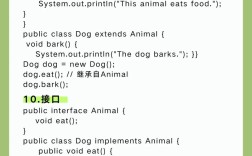
What is it? Java is a high-level, class-based, object-oriented programming language designed to have as few implementation dependencies as possible.

- Key Idea: It's a "write once, run anywhere" language. You write your code in a
.javafile, compile it into an intermediate format called bytecode (.classfile), and then run that bytecode on any machine that has a Java Virtual Machine (JVM). - The Java Ecosystem:
- Java Development Kit (JDK): The software you need to write Java code. It includes the compiler (
javac), the JVM (java), and other tools. - Java Runtime Environment (JRE): The software you need only to run Java code. It contains the JVM. (Note: The JRE is now included in the JDK).
- Java Virtual Machine (JVM): The magic engine that executes the bytecode. It's what makes Java platform-independent.
- Java Development Kit (JDK): The software you need to write Java code. It includes the compiler (
Why is it so popular?
- Portability ("Write Once, Run Anywhere"): This is Java's killer feature. The same compiled code can run on Windows, Linux, macOS, etc., as long as a JVM is installed.
- Object-Oriented: Promotes clean, modular, and maintainable code.
- Vast Ecosystem & Libraries: The Maven and Gradle build tools and the Maven Central repository provide access to millions of free, pre-built libraries for almost any task imaginable (web servers, databases, UI frameworks, etc.).
- Strong Community & Backing: Backed by Oracle (and previously Sun Microsystems), it has a massive developer community and is one of the most widely used languages in the world.
In short: Java is a versatile, portable, and powerful language used to build everything from massive enterprise backend systems and Android apps to big data processing frameworks.
How They Work Together: The Classic Trio
These three technologies are a powerhouse combination, especially for building large-scale enterprise applications.
Here is a typical architecture for a web application using all three:
-
The Foundation: Linux
- You deploy your entire application stack on a Linux server (e.g., a Red Hat or Ubuntu server in a data center or cloud). This provides the stable, secure, and scalable operating environment.
-
The Data Store: Oracle Database
- Your application needs to store and retrieve data. You install the Oracle Database on a separate (or sometimes the same) Linux server. Your Java application will connect to this database to save user information, product catalogs, orders, etc.
-
The Brain: Java Application
- You write your application's business logic in Java.
- This Java application is packaged as a WAR (Web Application Archive) or JAR (Java Archive) file.
- You run this Java application inside a Java Application Server (like WildFly, Tomcat, or WebLogic) which is, in turn, running on your Linux server.
- The application uses a JDBC (Java Database Connectivity) driver to communicate with the Oracle Database.
Visualizing the Flow:
[User's Browser]
        |
        | (HTTP Request)
        V
[Linux Server]
        |
        | (Hosts the Java Application)
        V
[Java Application Server (e.g., Tomcat)]
        |
        | (Runs your Java code)
        V
[Java Application Code (Business Logic)]
        |
        | (Uses JDBC to query the database)
        V
[Oracle Database (Running on Linux)]
        |
        | (Stores and retrieves data)
        V
[Data on Disk]
Other Key Interactions
- Oracle's JDK: As mentioned, Oracle is also the primary steward of Java. While there are open-source alternatives (like OpenJDK and Adoptium), many enterprises use Oracle's JDK for its certified, long-term support.
- Big Data: The Hadoop ecosystem, which runs almost exclusively on Linux clusters, is heavily written in Java. While it often uses open-source databases like HBase or NoSQL databases, it can also integrate with an Oracle data warehouse.
- Cloud: All major cloud providers (AWS, Azure, Google Cloud) offer Linux virtual machines. They also offer managed Oracle database services (like "Oracle Autonomous Database on AWS/Azure") and provide runtimes for Java applications.