Of course. This is a fundamental and often confusing concept for Java developers. Let's break it down clearly.
The Short Answer
No, Java's char type is not unsigned in the way you might think of a C/C++ unsigned char. It's a 16-bit unsigned value.
This means:
- It holds a numeric value from 0 to 65,535 (inclusive).
- It cannot hold negative numbers.
- However, it is not a general-purpose numeric type. Its primary purpose is to represent a character from the Unicode character set.
The Detailed Explanation
The Technical Definition: 16-bit Unsigned Integer
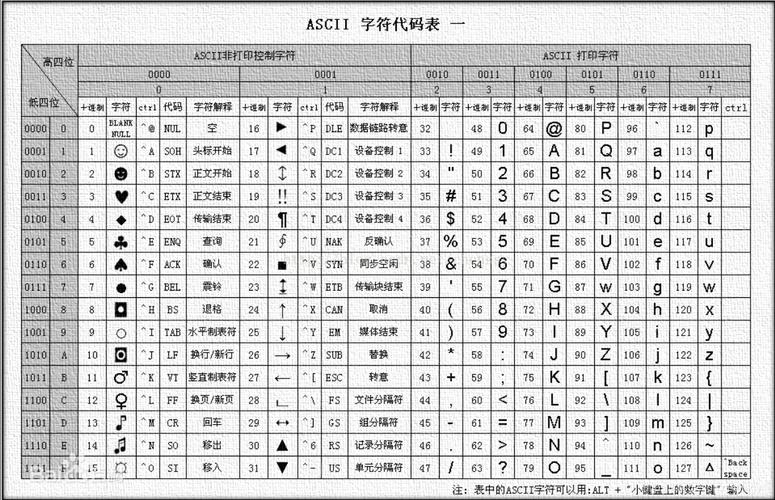
From a low-level memory perspective, a char in Java is an unsigned 16-bit integer. This means it can store any 16-bit binary value, from 0000 0000 0000 0000 (which is 0 in decimal) to 1111 1111 1111 1111 (which is 65,535 in decimal).
You can prove this by trying to assign a negative number to a char. The compiler will stop you.

// This code will NOT compile!
char myChar = -1; // Error: incompatible types: possible lossy conversion from int to char
This behavior is identical to how Java treats other primitive types like byte or short when you try to assign a value outside their range. It's a compile-time safety check.
The Practical Reality: A Character, Not a Number
While char has the range of an unsigned 16-bit integer, it is designed and used as a character type. This is the key difference from C/C++, where unsigned char is a true 8-bit byte used for both characters and raw data.
The Java Language Specification defines char as "the primitive type for a single 16-bit Unicode character."
Why is this important?
- Unicode: Java was designed from the start for internationalization. Using a 16-bit
charallows it to represent a vast number of characters from languages all over the world (the Basic Multilingual Plane of Unicode). - No Arithmetic: You generally don't perform arithmetic on
charvalues in the same way you would on anintorbyte. You don't addchar aandchar bto get achar c. You work with them as characters.
char a = 'A'; // The character 'A'
char b = 'B'; // The character 'B'
// This is legal, but it's character arithmetic, not numerical.
// It results in the character 'C' (because 'A' + 2 = 'C').
char c = (char)(a + 2);
System.out.println(c); // Output: C
// You cannot do this directly. You must cast.
int sum = a + b; // Error: incompatible types: possible lossy conversion from int to char
int sum = (int)a + (int)b; // Correct: You must cast to a numeric type first
How to Treat a char as a Number (When You Need To)
Sometimes, you do want to use the numeric value of a char (e.g., to get its Unicode code point). You can do this by casting it to a larger numeric type like int.
char ch = 'A';
int codePoint = ch; // Legal! An implicit widening conversion from char to int.
System.out.println("The character is: " + ch);
System.out.println("Its Unicode code point (int value) is: " + codePoint);
// Output:
// The character is: A
// Its Unicode code point (int value) is: 65
The Character Wrapper Class
The java.lang.Character class provides utility methods for working with char values. It also has methods to check the category of a character (e.g., is it a digit, a letter, an uppercase letter?).
char digit = '7';
char letter = 'z';
System.out.println(Character.isDigit(digit));   // true
System.out.println(Character.isLetter(letter)); // true
System.out.println(Character.toUpperCase(letter)); // 'Z'
System.out.println(Character.getNumericValue(digit)); // 7 (as an int)
Comparison with C/C++
This table highlights the key differences and similarities.
| Feature | Java char |
C/C++ char |
C/C++ unsigned char |
|---|---|---|---|
| Size | 16 bits | 8 bits | 8 bits |
| Signedness | Unsigned (in range) | Signed (can be -128 to 127) | Unsigned (0 to 255) |
| Primary Purpose | Represent a single Unicode character. | Represent a character or a small integer. | Represent a raw byte or small integer. |
| Negative Values? | No. | Yes. | No. |
| Example Value | 'A' is 65. | 'A' is 65. | 'A' is 65. |
| Example Value | (No negative chars) | 'a' is 97. | 'a' is 97. |
| Raw Byte Array? | No. Use byte[]. |
Yes. | Yes. |
Key Takeaway from the Table: In C/C++, unsigned char is the go-to type for representing raw 8-bit data (like from a file or network socket). In Java, you always use the byte type for this purpose. char is strictly for characters.
Summary
- Is
charunsigned? Yes, in the sense that its 16-bit value is always from 0 to 65,535. It cannot be negative. - Is it a general-purpose unsigned integer? No. Its semantic meaning is that of a Unicode character.
- How do I get its numeric value? Cast it to an
int. - What type should I use for raw 8-bit data? Use
byte, notchar.